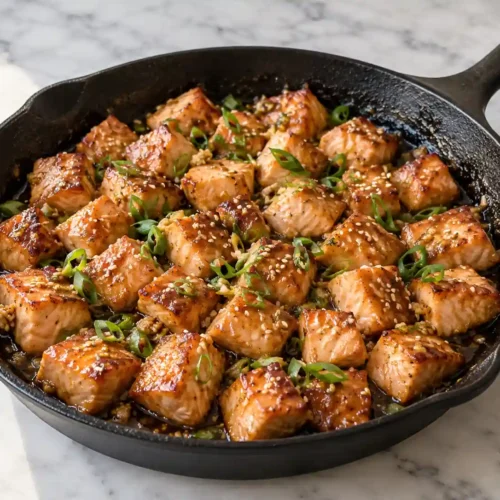
Crispy Honey Garlic Salmon Bites
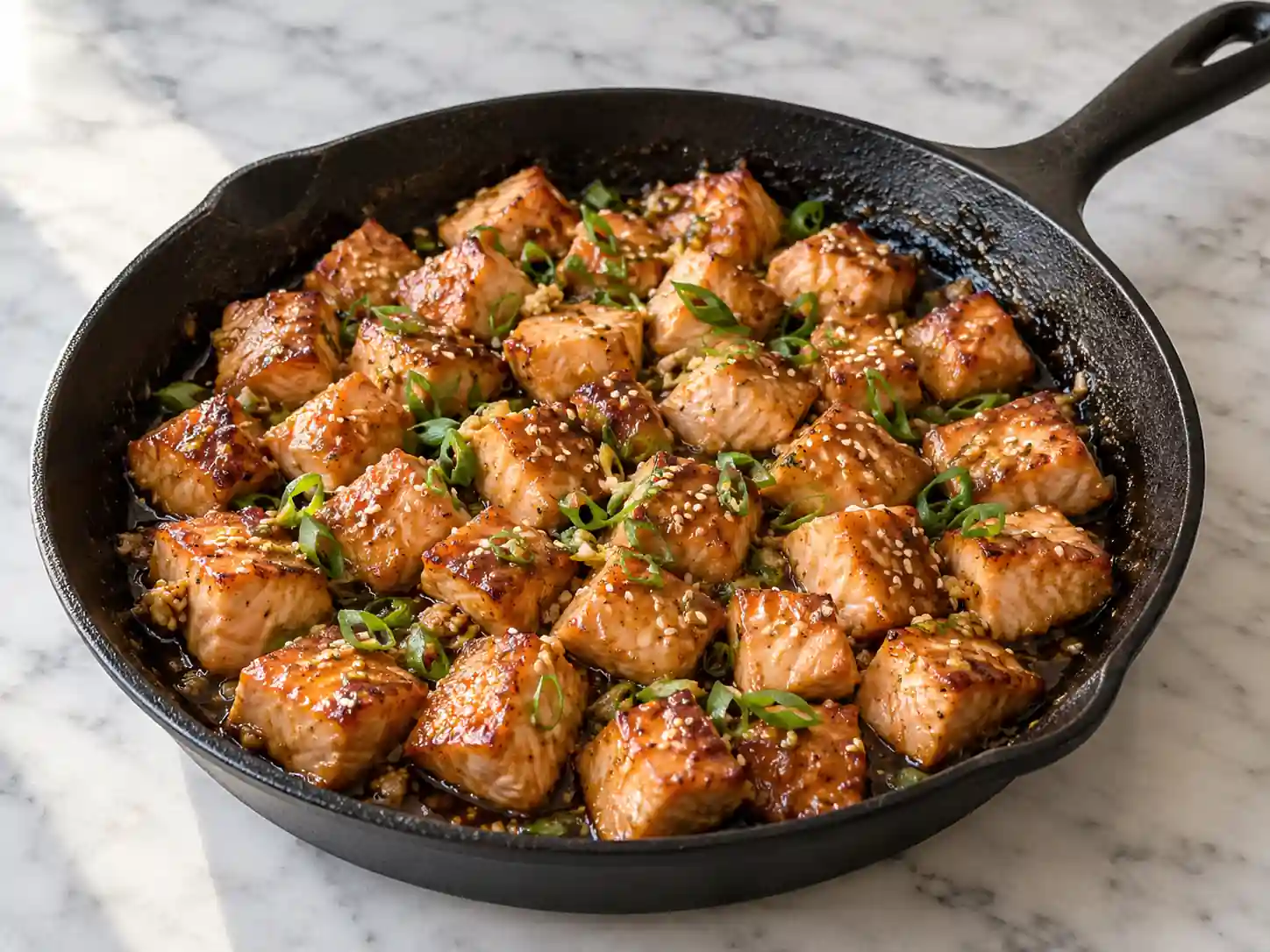
Pan-seared salmon bites with browned edges and a glossy honey garlic glaze. Cook the salmon in batches, reduce the sauce separately, and toss just before serving.
Equipment
- 12-inch cast-iron or heavy stainless-steel skillet
- Instant-read thermometer
- Mixing bowl
- Small bowl
- Thin spatula
- Clean plate
- Chef's knife and cutting board
Ingredients
Salmon and Light Coating
- 1.5 lbs skinless, boneless Atlantic salmon 680 g, cut into even 1-inch (2.5 cm) cubes
- 2 tsp cornstarch 6 g
- 3/4 tsp Diamond Crystal kosher salt 2.1 g; use this weight if substituting another salt
- 1/2 tsp smoked paprika 1.2 g
- 1/2 tsp freshly cracked black pepper 1 g
- 1.5 tbsp avocado oil 20 g, divided between batches
Honey Garlic Glaze and Optional Garnishes
- 1 tbsp unsalted butter 14 g
- 4 cloves fresh garlic 15 g, finely grated or minced
- 3 tbsp pure clover or wildflower honey 63 g
- 3 tbsp low-sodium soy sauce 45 ml (about 48 g); sodium varies by brand
- 1 tbsp unseasoned rice vinegar 15 ml
- 1 tsp toasted white sesame seeds 3 g, optional garnish
- 2 stalks fresh green onions 20 g, optional garnish
Instructions
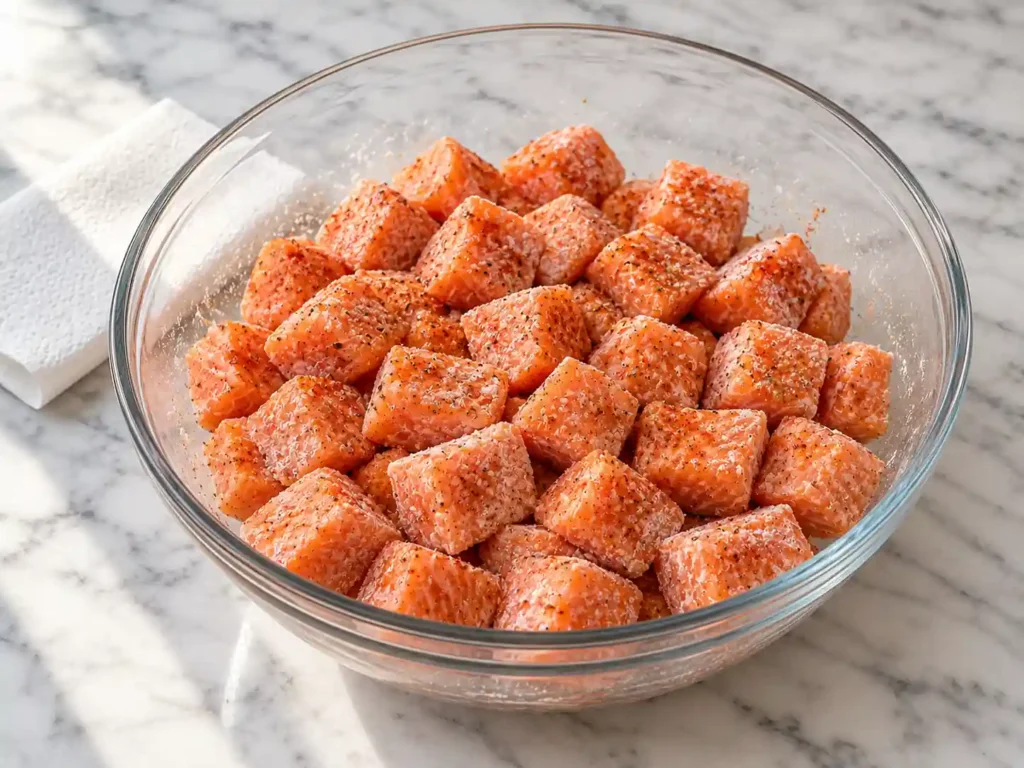
- Whisk the honey, low-sodium soy sauce, and rice vinegar in a small bowl. Keep the butter and garlic separate. Pat the salmon cubes very dry with paper towels. Toss gently with the cornstarch, Diamond Crystal kosher salt, smoked paprika, and black pepper immediately before cooking.
- Heat the skillet over medium-high heat for about 2 minutes, then add half the avocado oil. Add half the salmon in a single uncrowded layer. Sear undisturbed for about 2 minutes, until the undersides are golden and release with a thin spatula. Turn and cook for another 2–3 minutes, turning an additional face if needed, until the center of the thickest cube reaches 145°F (63°C). Insert the thermometer sideways into the center. Timing is a guide; use the temperature as the endpoint. Transfer the cooked salmon to a clean plate.
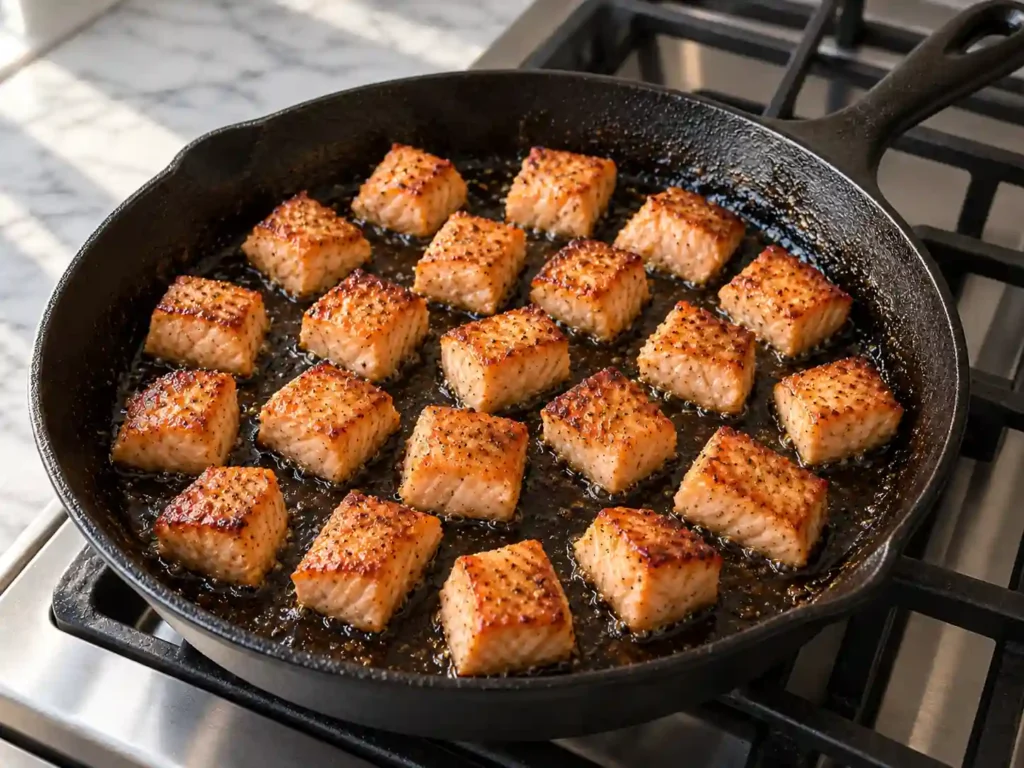
- Add the remaining avocado oil and repeat with the second half of the salmon, adjusting the heat if the coating darkens too quickly. Transfer to the clean plate once the largest pieces reach 145°F (63°C). Keep the salmon out of the pan while you make the sauce.
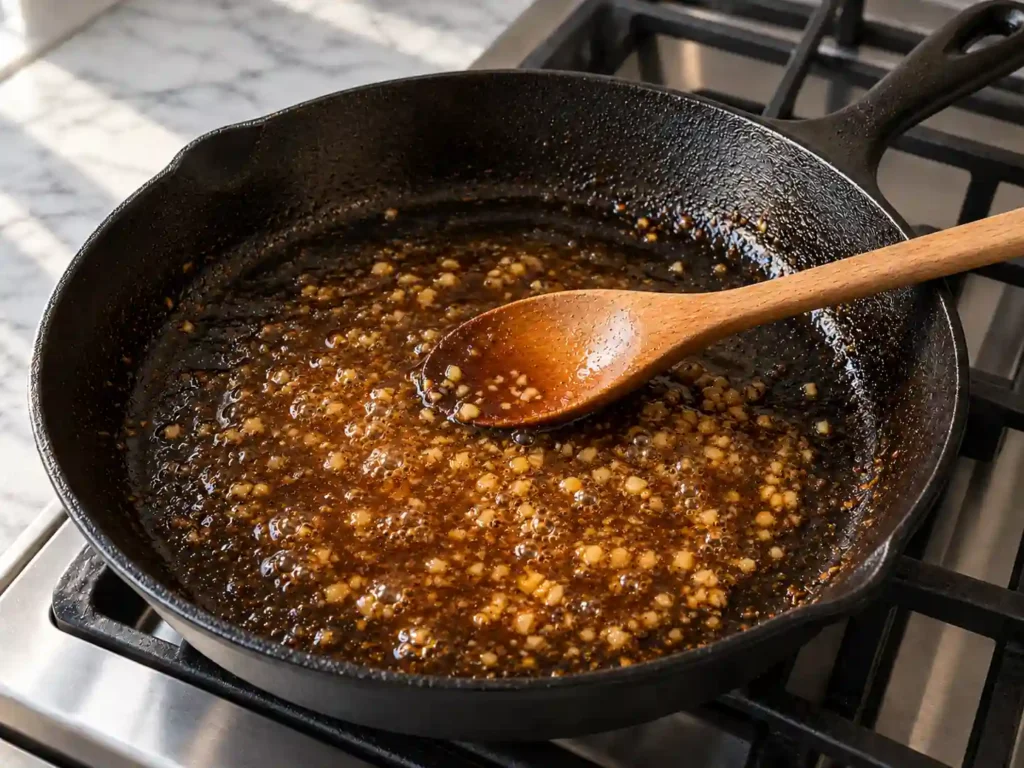
- Lower the heat to medium-low and move the skillet off the burner briefly if it is smoking. If any residue is blackened, carefully wipe it out before continuing. Add the butter, then the garlic, and stir for about 20 seconds until fragrant without browning. Pour in the prepared honey mixture. Simmer gently for about 1–2 minutes, stirring, until the sauce lightly coats a spoon. If it becomes too thick, stir in water 1 teaspoon at a time.
- Turn off the heat. Return the cooked salmon and gently turn it in the glaze just until coated. Finish with the optional sesame seeds and green onions and serve immediately. Add rice and vegetables separately if desired; side dishes are not included in the recipe timing or nutrition.
Notes
Serving: One serving is one-quarter of the cooked salmon and sauce, starting from 6 oz (170 g) raw salmon. Rice and vegetables are separate.
Timing: Allow about 25 minutes, including two batches in a 12-inch skillet. Smaller pans, thicker cubes, or a slower stove can take longer. Cook fish to 145°F (63°C); do not rely on carryover heat from a lower temperature.
Texture: A thin cornstarch coating supports browned edges, but the glaze softens them. Toss immediately before serving; this is lightly coated salmon, not a thick crunchy breading.
Storage: Refrigerate in a shallow covered container within 2 hours (1 hour above 90°F/32°C). Keep at 40°F (4°C) or below and use within 3 days. Reheat gently in a covered skillet with a splash of water until the center reaches 165°F (74°C). The coating will soften. Freeze airtight for up to 2 months for best quality; thaw in the refrigerator before reheating.
Make ahead: Prepare the honey-soy-vinegar mixture separately and refrigerate. Cube the salmon up to 1 day ahead, refrigerate promptly, then dry and coat just before cooking.
Frozen salmon: Follow the package instructions and remove vacuum-packed fish from its reduced-oxygen packaging before thawing in the refrigerator. Pat dry thoroughly.
Swaps: Certified gluten-free tamari may replace soy sauce by volume; check sodium and all other ingredient labels. Avoid assuming coconut aminos or another starch will behave identically.
Tried this recipe?Let us know how it was!