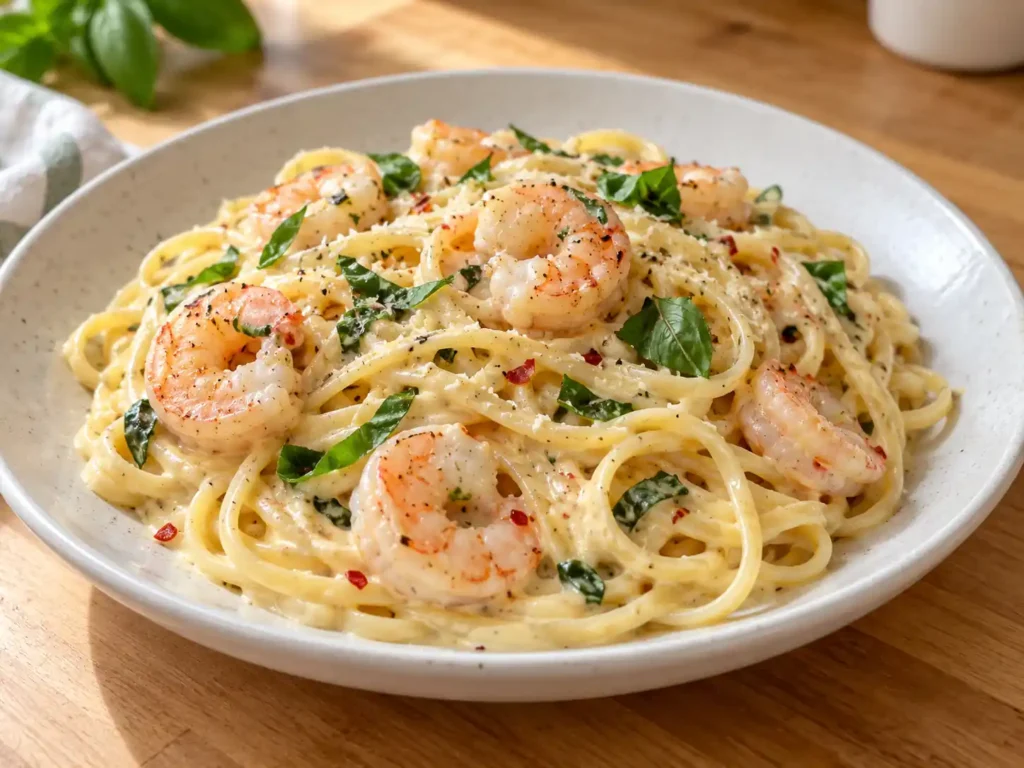
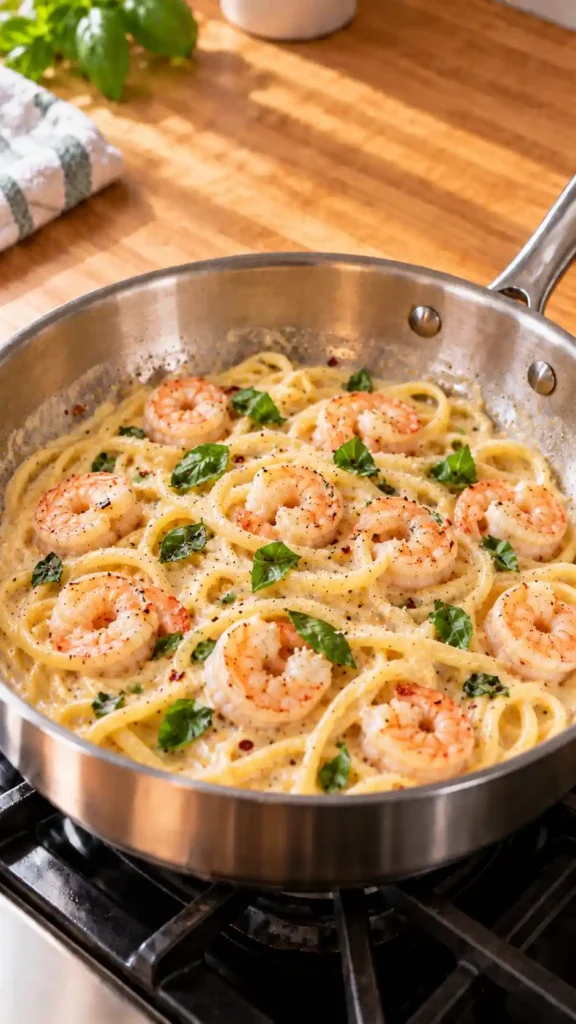
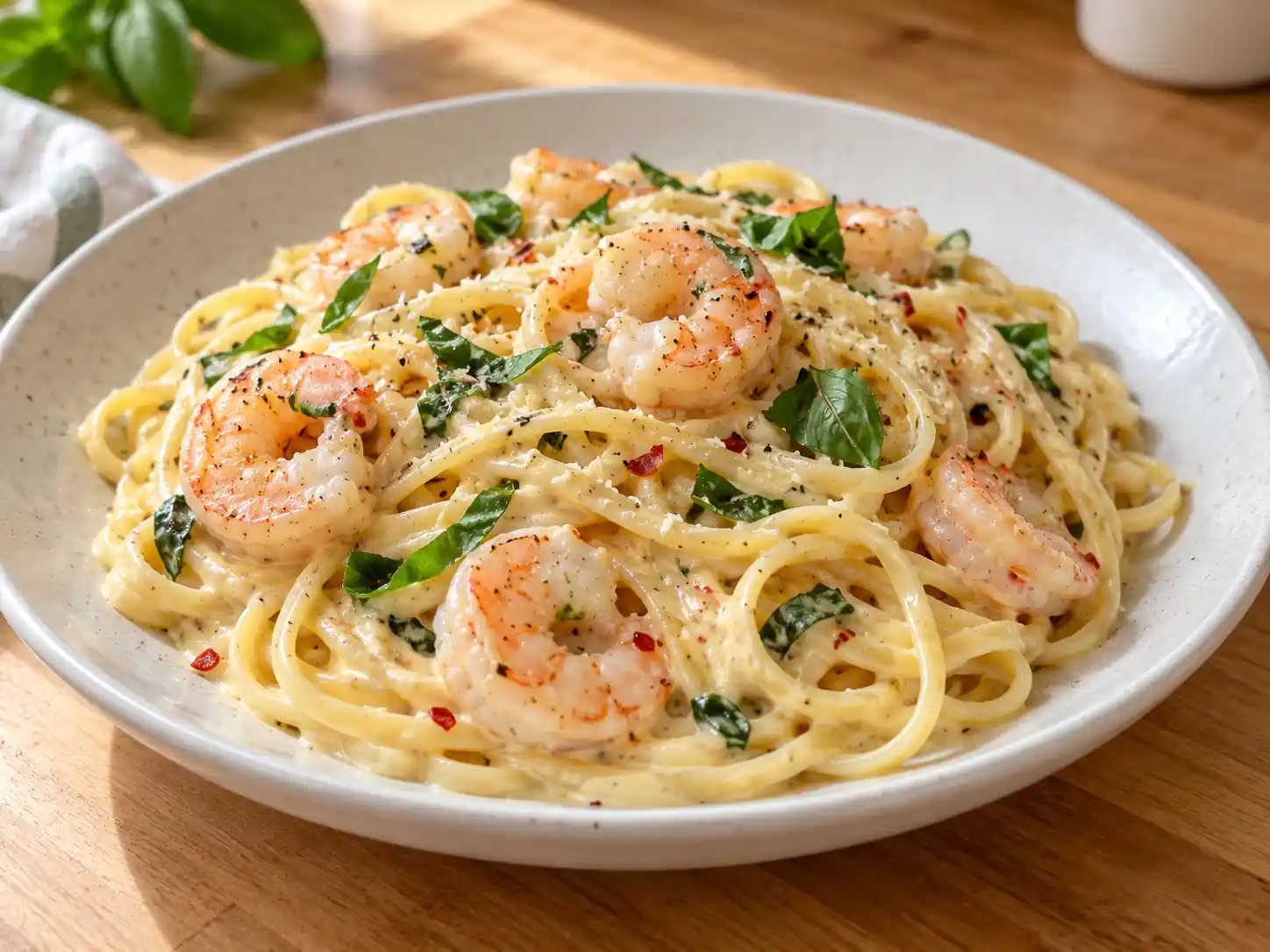
This creamy garlic shrimp pasta brings together tender pan-seared shrimp, al dente linguine, freshly grated Parmesan, bright lemon juice, and sweet basil in one skillet in just 25 minutes. Instead of drowning the noodles in heavy cream, the sauce uses starchy pasta cooking water to bind the garlic-infused cream and cheese into a glossy, restaurant-style coating that clings to every strand. At 630 calories and 39 grams of protein per serving, it is a reliable, stress-free weeknight dinner for four.
Table of Contents
Ingredients for Creamy Garlic Shrimp Pasta
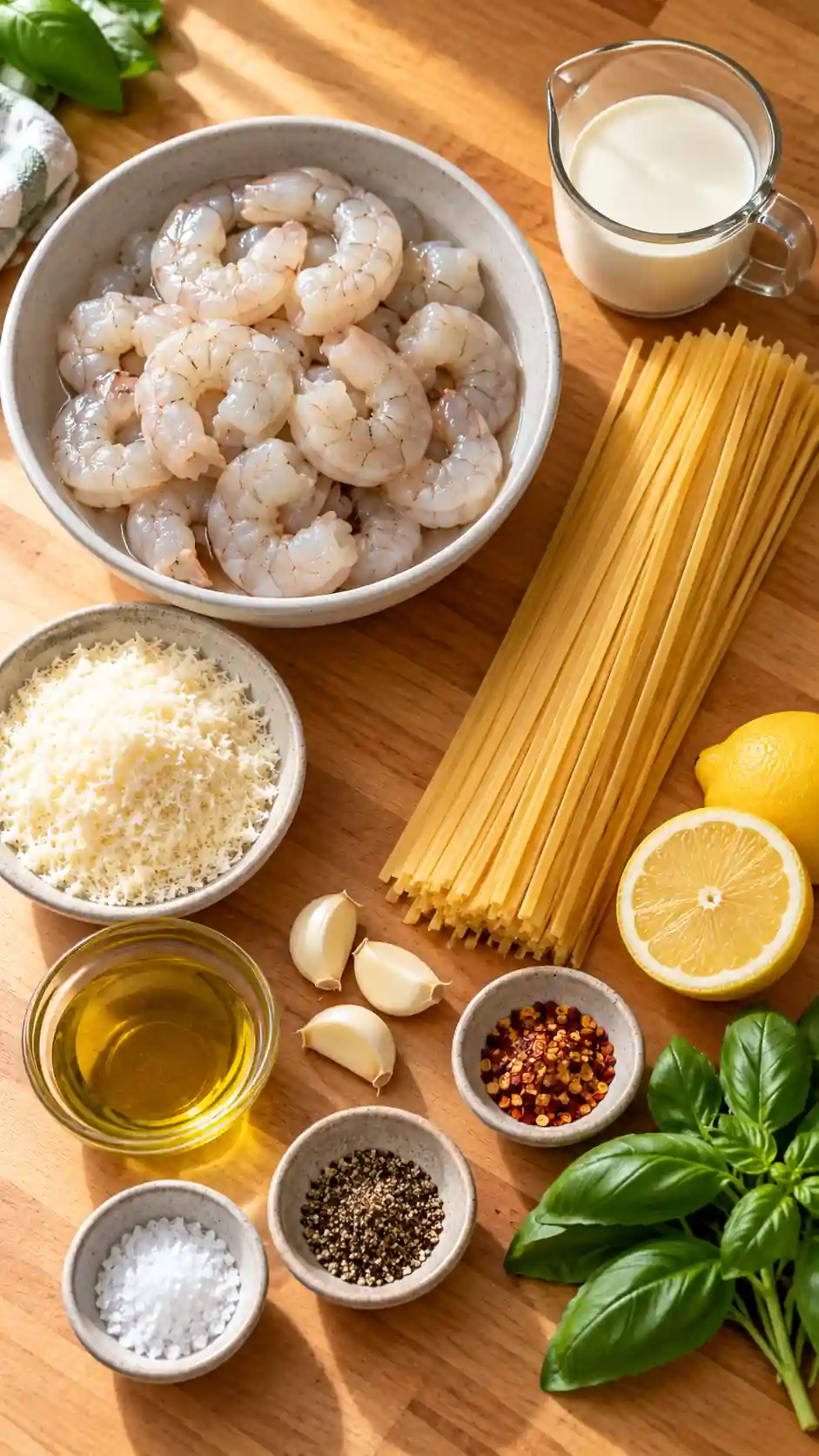
Because this stovetop shrimp pasta moves from cold skillet to the table in under half an hour, measuring your aromatics and grating your cheese before turning on the burner keeps the garlic from scorching and the shrimp from overcooking:
- Raw Peeled and Deveined Shrimp (1 lb / 454 g): Choose large raw shrimp (21–25 count per pound) so they sear quickly and evenly. Frozen shrimp work just as well when thawed in cold water and blotted thoroughly dry with paper towels.
- Dry Linguine (12 oz / 340 g): Long flat ribbons of linguine hold a creamy pan sauce beautifully, though fettuccine or spaghetti can be swapped at the exact same dry weight.
- Heavy Whipping Cream (1/2 cup / 120 ml) & Freshly Grated Parmesan (1/2 cup / 50 g): Heavy cream provides a stable fat base, while finely grated wedge Parmesan melts smoothly to thicken and season the sauce. Avoid pre-shredded bagged cheese, which contains cellulose powder that prevents smooth melting.
- Garlic, Red Pepper Flakes, Lemon Juice, and Fresh Basil: Three minced garlic cloves (10 g) and a pinch of crushed red pepper flakes (0.5 g) bloom in the warm olive oil and shrimp fond, while 1 tablespoon (15 ml) fresh lemon juice and sliced basil leaves (10 g) cut through the richness at the very end. If you enjoy building quick, aromatic pan sauces from scratch, take a look at our Homemade Garlic Parmesan Sauce for another weeknight staple.
- Reserved Starchy Pasta Water (Up to 1 cup / 240 ml): Scooped directly from the boiling pot before draining, this cloudy liquid is the secret binder that turns heavy cream and Parmesan into a cohesive, silky glaze without adding extra fat.
How to Keep Shrimp Tender and Juicy (145°F Thermal Control)
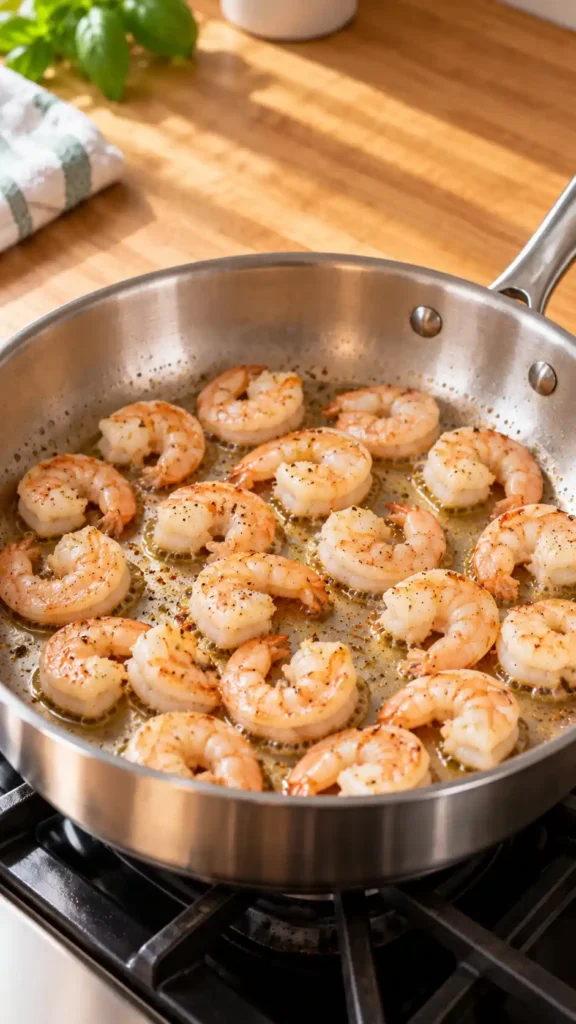
The number one mistake in homemade shrimp pasta recipes is leaving the shellfish in the skillet too long. Shrimp muscle fibers contract rapidly above 150°F (65.5°C), squeezing out moisture and turning rubbery. Start by blotting the raw shrimp bone-dry on both sides with paper towels so surface water does not steam them grey, and arrange them in a single uncrowded layer in your 12-inch skillet (searing in two quick batches if needed).
Over medium-high heat, large shrimp need only 60 to 90 seconds per side. Per official FoodSafety.gov seafood cooking guidelines, shrimp are safely cooked as soon as the flesh turns pearly and opaque throughout (reaching an internal temperature of 145°F / 63°C) and curls into a loose “C” shape. Transfer them immediately to a clean warm plate while you build the garlic cream sauce, then fold them back in off the heat for the final 30 seconds. If you love baked seafood pasta casseroles or lighter fish dishes, compare this quick sear method with our Shrimp Fettuccine Alfredo Bake and our Smoked Salmon Pasta with Lemon and Dill.
Starchy Pasta Water Emulsification: Preventing a Grainy Sauce
A silky Parmesan cream sauce relies on gentle temperature control and dissolved wheat starch. When boiling the linguine, use slightly less water than usual (about 3 quarts / 2.8 L) so the cooking water turns cloudy and concentrated with amylose starch. Never rinse your drained pasta.
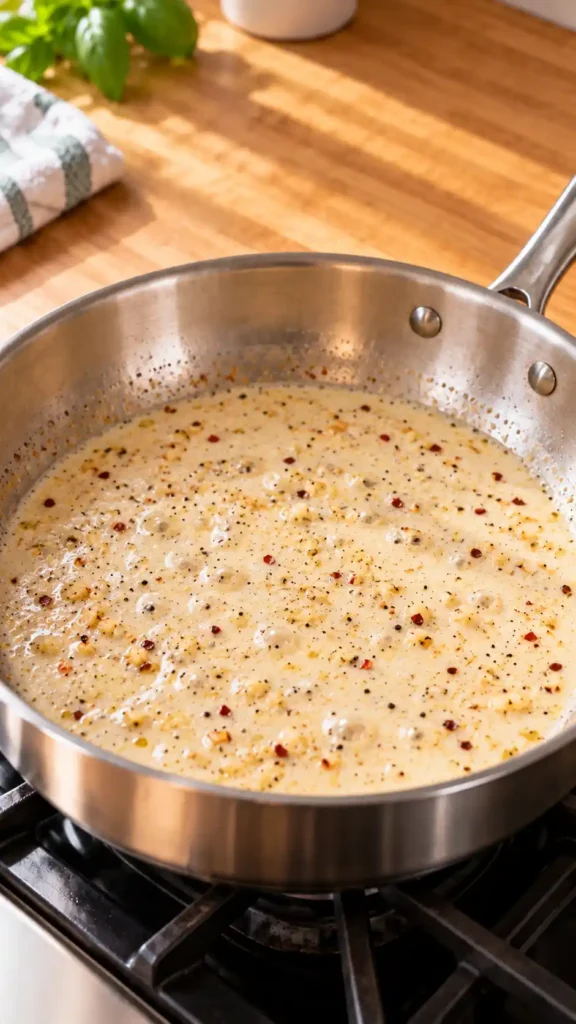
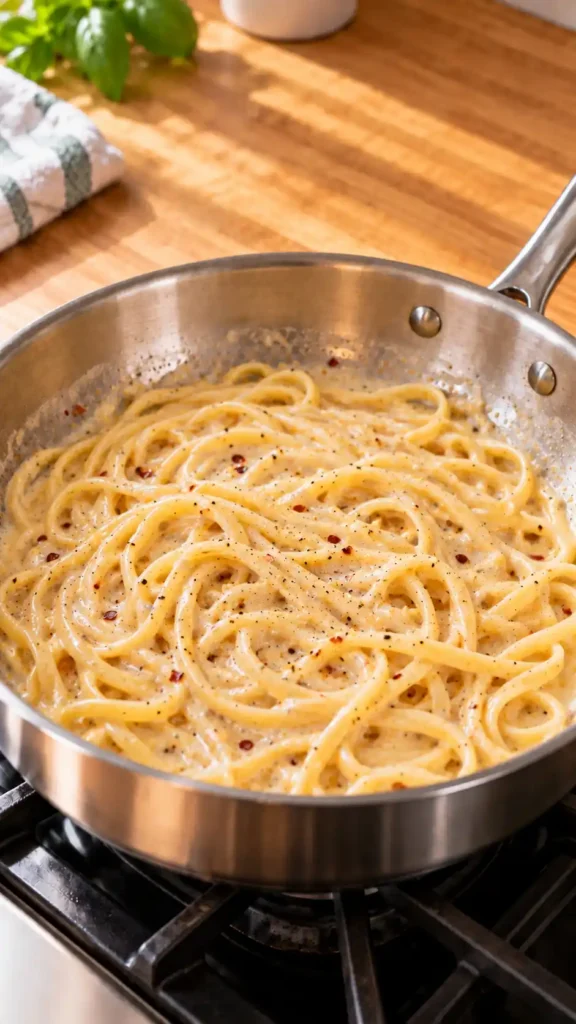
Once the garlic and red pepper flakes have bloomed for 30 seconds over medium-low heat, pour in the 1/2 cup (120 ml) heavy cream and 1/4 cup (60 ml) reserved pasta water and bring to a gentle bubble. Lower the burner to low heat before adding the finely grated Parmesan gradually; a hard boil causes cheese proteins to tighten into grainy strings and separates the butterfat. As you toss the hot linguine in the skillet with tongs, add extra splashes of reserved pasta water 1 to 2 tablespoons (15 to 30 ml) at a time—the agitation and starch emulsify the dairy into a glossy coating. Always stir in the fresh lemon juice after removing the skillet from the burner so citric acid never curdles the hot cream.
6-Minute Air Fryer Shrimp Shortcut & Easy Variations
On busy weeknights, you can cook the shrimp hands-free in your air fryer while the linguine boils and the garlic cream sauce simmers on the stove, or customize the skillet with simple pantry swaps:
- Air Fryer Shrimp Method: Preheat your air fryer to 400°F (200°C) for 3 minutes. Toss the patted-dry shrimp with 1 tablespoon (15 ml) olive oil, 1/2 teaspoon (3 g) kosher salt, and 1/4 teaspoon (0.8 g) black pepper. Arrange in a single layer in the basket and air fry at 400°F (200°C) for 5 to 6 minutes, shaking halfway through, until pearly and opaque. Fold directly into the finished pasta at Step 5.
- Leafy Greens Boost: Fold 2 cups (60 g) of fresh baby spinach into the skillet right after adding the hot drained linguine; the residual heat wilts the leaves in 60 seconds.
- Herb & Spice Swaps: Increase the crushed red pepper flakes to 1/2 teaspoon (1 g) for a spicy Arrabbiata-style kick, or swap fresh flat-leaf Italian parsley in place of sweet basil.
Storage, Refrigeration, and Gentle Reheating
Serve this dish fresh from the skillet alongside a crisp green salad like our Grilled Chicken Caesar Salad to balance the rich Parmesan cream sauce. If you have leftovers, follow these steps to protect both food safety and texture:
- Refrigeration: Transfer cooled pasta into a shallow airtight container within two hours of cooking (or within one hour if the room is above 90°F / 32°C). Store in the refrigerator at 40°F (4°C) or below and consume within 3 to 4 days.
- Low-Heat Stovetop Reheating: Warm leftovers in a skillet over medium-low heat with 1 to 2 tablespoons (15 to 30 ml) of water or milk per serving, stirring gently until heated through to 165°F (74°C) so the cream emulsion does not split.
- Freezing Note: Freezing is not recommended, as thawed dairy-and-Parmesan emulsions separate and cooked linguine turns soft.
Creamy Garlic Shrimp Pasta Recipe Card
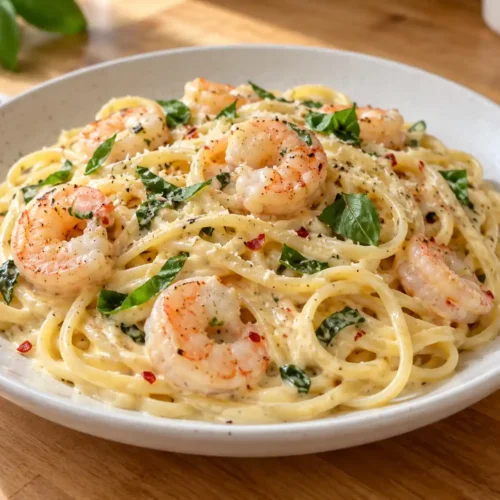
Creamy Garlic Shrimp Pasta
Ingredients
- 12 oz dry linguine 340 g
- 1 lb raw shrimp 454 g, peeled and deveined, thawed if frozen
- 2 tbsp olive oil
- 3 cloves garlic minced
- 1/4 tsp red pepper flakes or to taste
- 1/2 cup heavy cream 120 ml
- 1/2 cup Parmesan finely grated, about 50 g
- 1 tbsp fresh lemon juice
- salt and black pepper to taste
- fresh basil for serving
- 1 cup reserved pasta cooking water up to 1 cup, as needed
Instructions
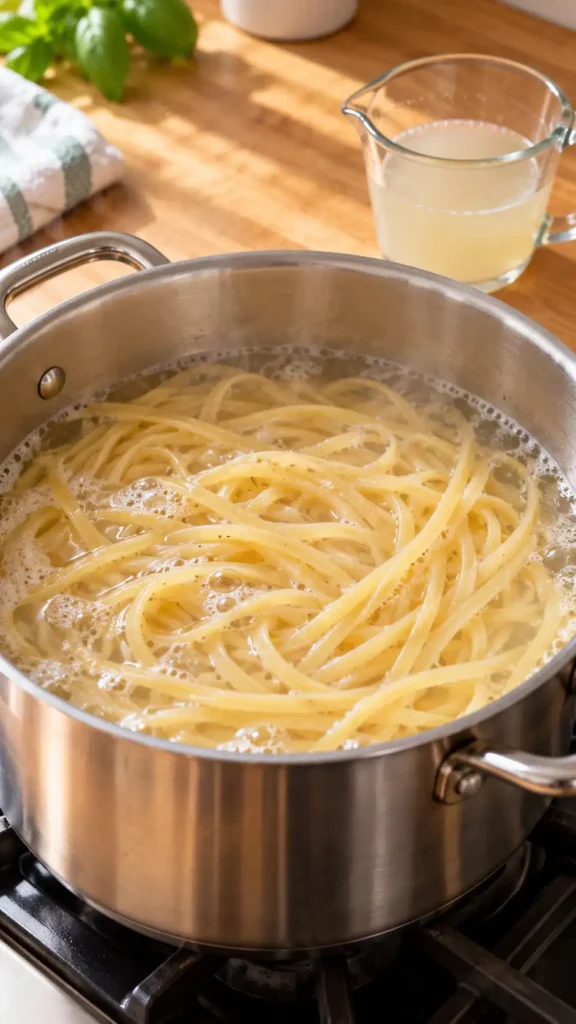
- Bring a large pot of salted water to a boil. Cook the linguine according to the package directions until just al dente. Before draining, reserve 1 cup of the cooking water. Drain the pasta.
- Meanwhile, pat the shrimp dry and season lightly with salt and black pepper. Heat the olive oil in a 12-inch skillet over medium heat. Arrange the shrimp in a single layer, cooking in batches if necessary. Cook about 1–2 minutes per side, until the flesh is pearly and opaque throughout. Transfer to a clean plate; timing varies with shrimp size.
- Reduce the heat to medium-low. Add the garlic and red pepper flakes to the skillet and stir for about 30 seconds, until fragrant but not browned. Add the cream and 1/4 cup of the reserved pasta water. Bring to a gentle simmer and cook for about 1 minute.
- Reduce the heat to low. Add the Parmesan gradually, stirring until incorporated. Add the drained pasta and toss, adding more reserved pasta water a little at a time until the sauce coats the noodles.
- Return the shrimp and any juices from the clean plate to the skillet and toss briefly until heated through. Remove from the heat, stir in the lemon juice, and taste for salt and pepper. Serve with basil.
Notes
Nutrition
Frequently Asked Questions
Can I use pre-cooked shrimp for this pasta?
Yes. If using pre-cooked frozen shrimp, thaw them completely in cold water and pat dry, then skip Step 2 entirely. Fold the cooked shrimp into the finished pasta during the final 60 seconds of Step 5 just until warmed through so they do not toughen.
Why did my garlic Parmesan cream sauce turn grainy?
Boiling the sauce after adding cheese or using bagged pre-shredded Parmesan coated in anti-caking cellulose causes the dairy proteins to clump. Always lower the burner to low before stirring in freshly grated block Parmesan, and use starchy pasta water to keep the emulsion smooth.
Can I make creamy shrimp pasta with half-and-half instead of heavy cream?
Heavy whipping cream (36% milkfat) provides the most stable, split-resistant body. You can substitute half-and-half, but the sauce will be thinner and more sensitive to heat—keep the burner on its lowest setting and reduce the added pasta water by half.
How many calories and grams of protein are in one serving?
Calculated per serving (1/4 of the skillet, approx. 345 g) using USDA FoodData Central reference values, each portion contains 630 calories, 39 grams of protein, 66 grams of carbohydrates, 3 grams of dietary fiber, and 23 grams of fat.
Originally published on October 27, 2024. Thoroughly updated and re-tested on October 30, 2026 by Amanda S with step-by-step process photos, dual-unit measurements, and verified USDA nutrition facts.
1 thought on “Creamy Garlic Shrimp Pasta (Easy 25-Minute Recipe)”
Comments are closed.