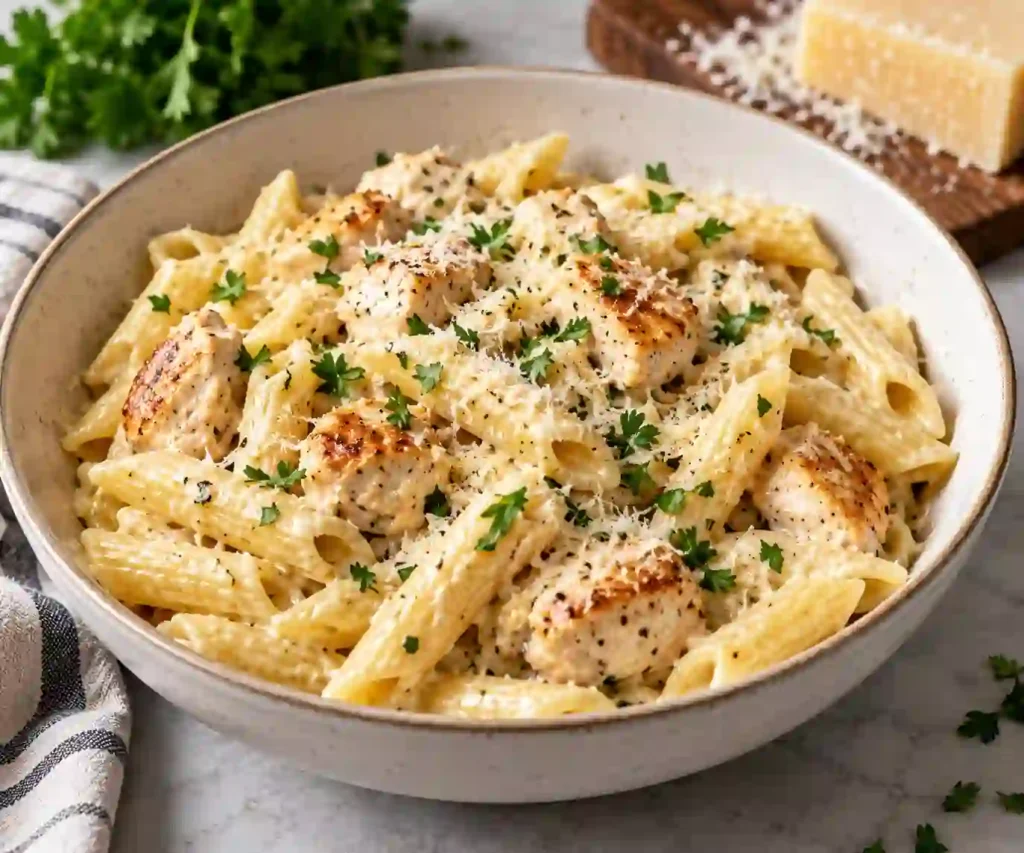
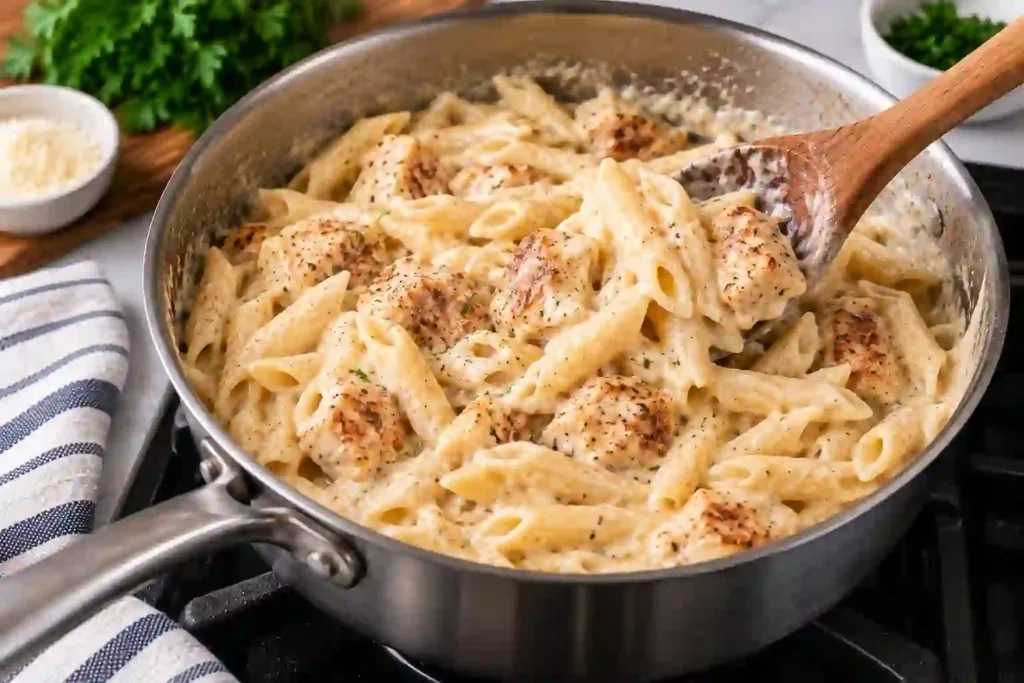
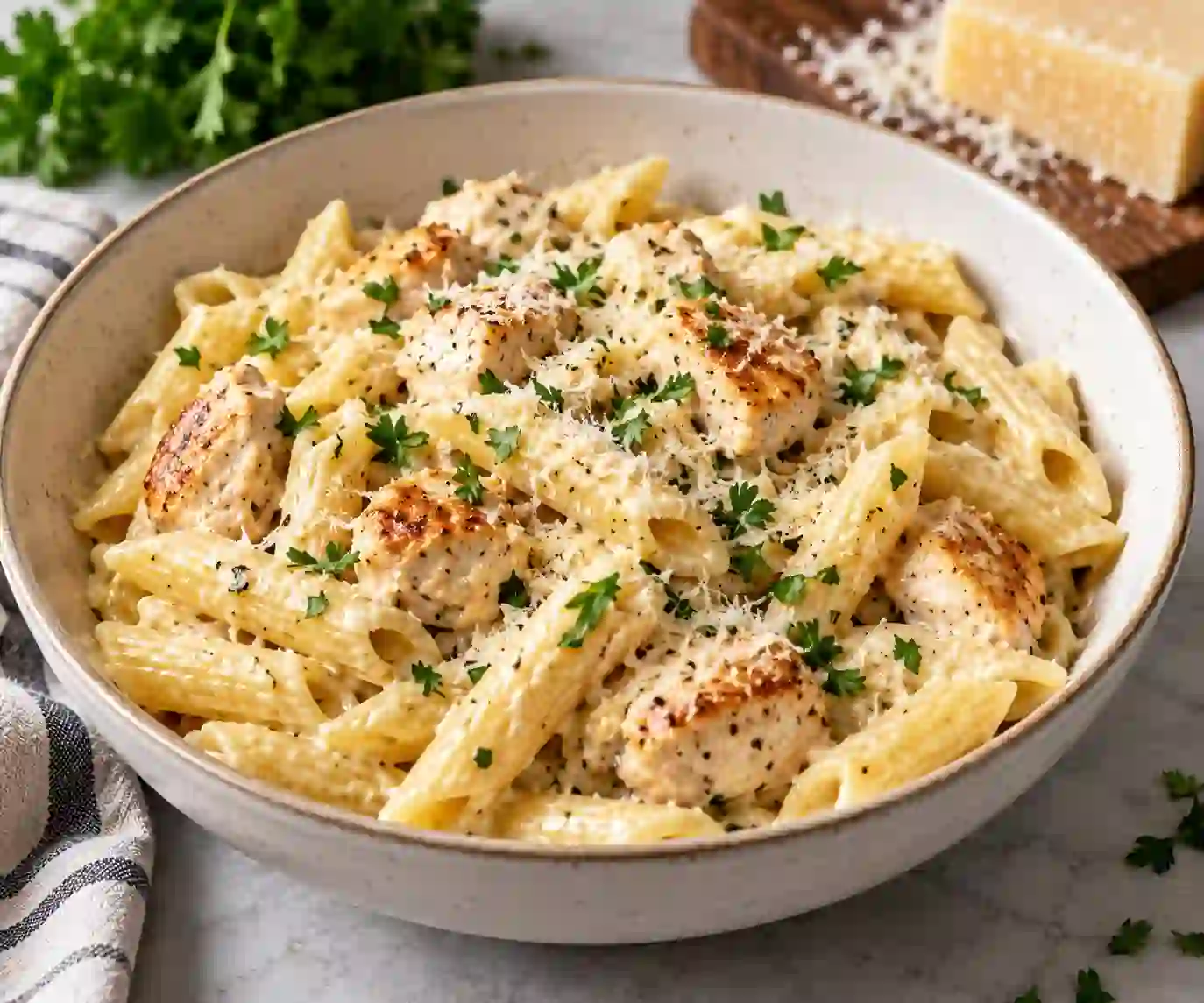
This creamy garlic parmesan chicken pasta combines tender bites of chicken, al dente penne, and a creamy homemade garlic Parmesan sauce in an easy dinner that comes together in about 30 minutes.
The chicken is browned first for extra flavor, then the sauce is built in the same skillet with butter, fresh garlic, chicken broth, heavy cream, and freshly grated Parmesan. A little reserved pasta water helps the sauce coat every piece of pasta without becoming too thick.
Table of Contents
Table of Contents
Why You’ll Love This Garlic Parmesan Chicken Pasta
- Ready in about 30 minutes: The pasta and chicken can cook at the same time, making this practical for busy weeknights. For more low-prep ideas, see our sheet pan dinners for busy weeknights.
- One skillet for the sauce: Browning the chicken first leaves flavorful bits in the pan that become part of the sauce.
- Creamy without being complicated: Heavy cream, Parmesan, and pasta water create a smooth sauce with simple ingredients.
- Family-friendly: The garlic and Parmesan flavors are savory and familiar without relying on a spicy sauce.
Ingredients You’ll Need
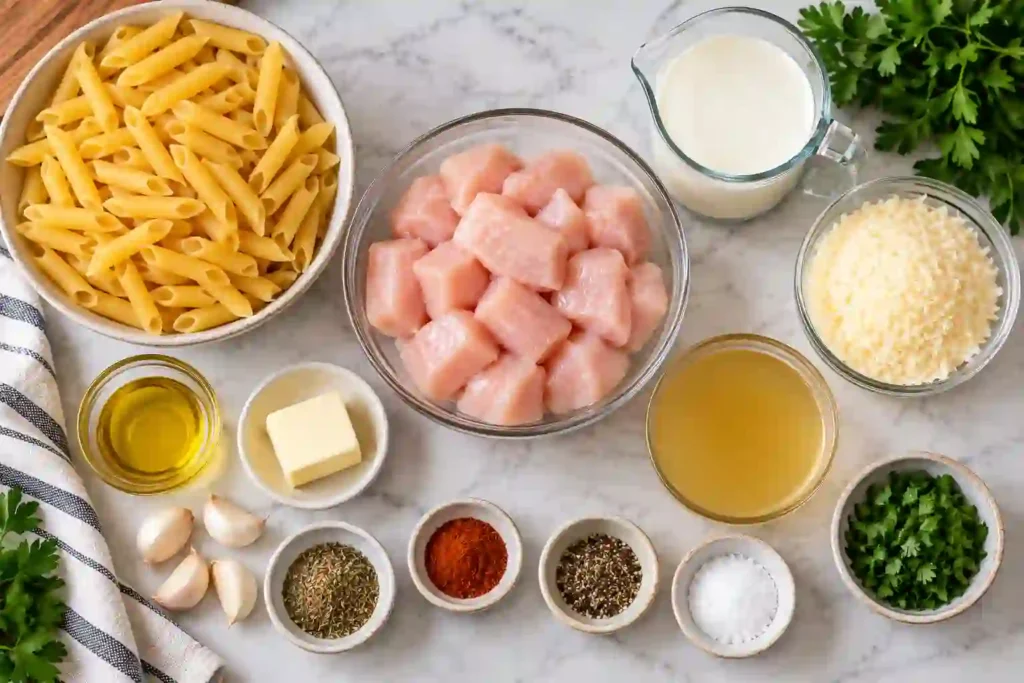
Chicken breast: Boneless, skinless chicken breast cooks quickly when cut into bite-size pieces. Italian seasoning and paprika add savory flavor and color.
Penne or rigatoni: Short pasta shapes work especially well because the ridges and hollow centers hold the creamy sauce.
Fresh garlic: Finely minced garlic provides the main aromatic flavor. Cook it only briefly so it becomes fragrant without browning.
Heavy cream and chicken broth: Heavy cream gives the sauce body while low-sodium chicken broth adds savory flavor and keeps it from feeling overly heavy.
Freshly grated Parmesan: Freshly grated cheese melts more smoothly than many pre-shredded options. If you want more sauce-specific tips, see our easy garlic Parmesan sauce.
How to Make Garlic Parmesan Chicken Pasta
This parmesan garlic chicken pasta comes together in six straightforward steps: cook the pasta, season and brown the chicken, build the garlic cream sauce, melt in the Parmesan over low heat, then toss everything together. Keep some pasta water before draining so you can loosen the sauce at the end if needed.
Garlic Parmesan Chicken Pasta
Ingredients
Chicken
- 1 lb boneless, skinless chicken breasts cut into bite-size pieces
- 1 tbsp olive oil
- 1 tsp Italian seasoning
- 1/2 tsp paprika
- 1/2 tsp salt
- 1/4 tsp black pepper
Pasta
- 12 oz penne or rigatoni
- salt for pasta water
Garlic Parmesan Sauce
- 2 tbsp unsalted butter
- 4 garlic cloves finely minced
- 1/2 cup low-sodium chicken broth
- 1 cup heavy cream
- 1 cup freshly grated Parmesan cheese
- 1/4 tsp black pepper
- 1/4-1/2 cup reserved pasta water as needed
Finish
- 2 tbsp fresh parsley chopped
- freshly grated Parmesan optional, for serving
Instructions
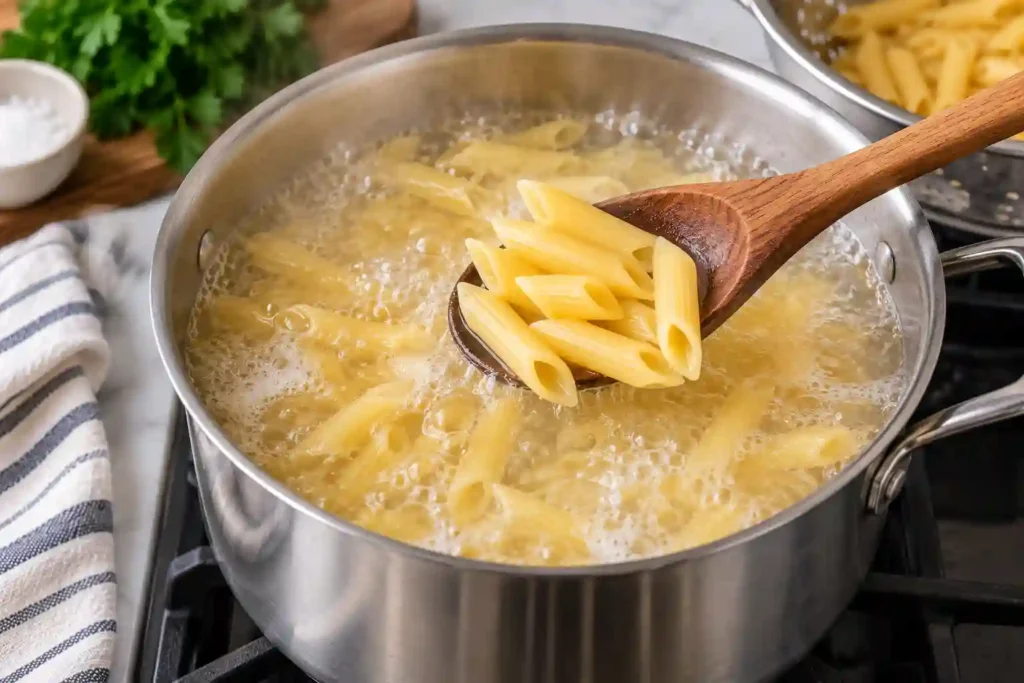
- Bring a large pot of salted water to a boil. Cook the penne or rigatoni until al dente according to the package directions. Reserve 1/2 cup pasta water, then drain.
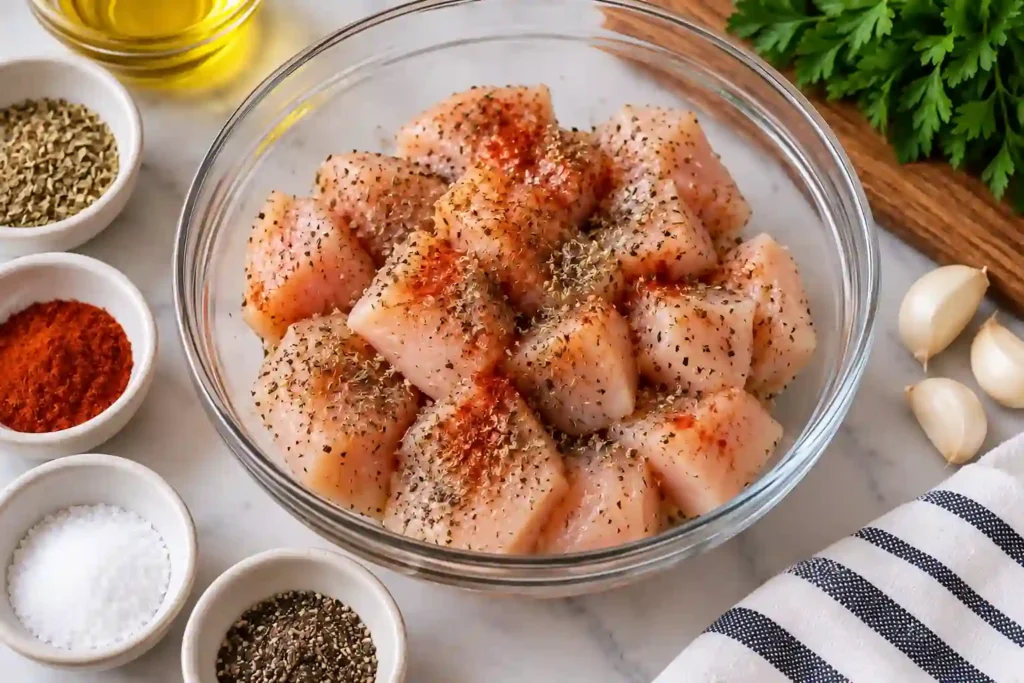
- While the pasta cooks, season the chicken pieces evenly with Italian seasoning, paprika, salt, and black pepper.
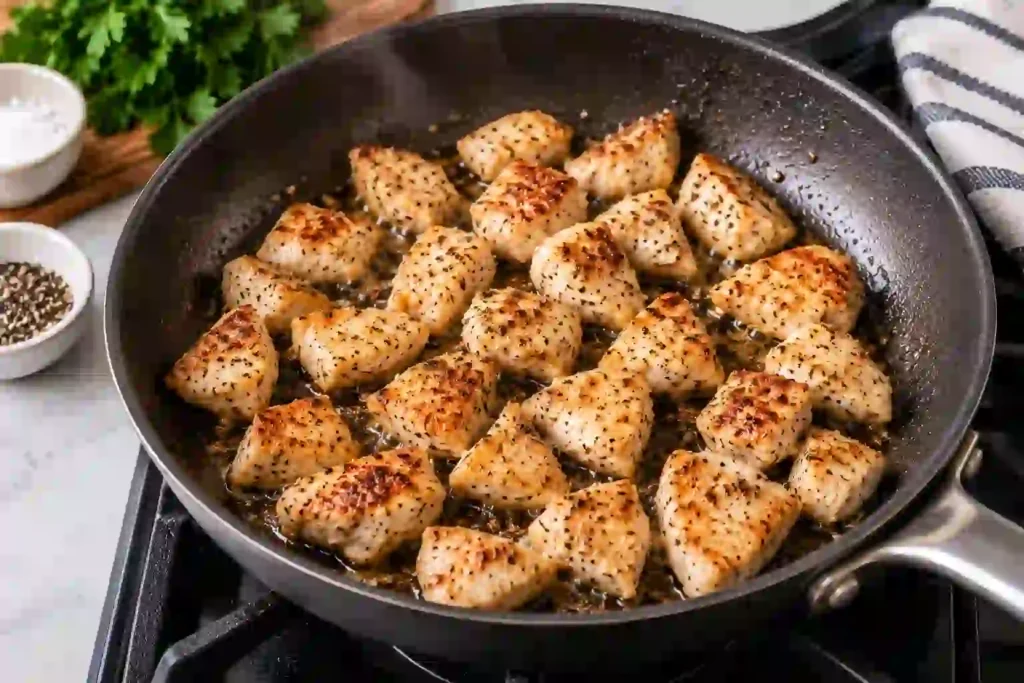
- Heat the olive oil in a large skillet over medium-high heat. Add the chicken in a single layer and cook until browned and fully cooked, turning as needed. The thickest pieces should reach 165°F. Transfer to a plate.
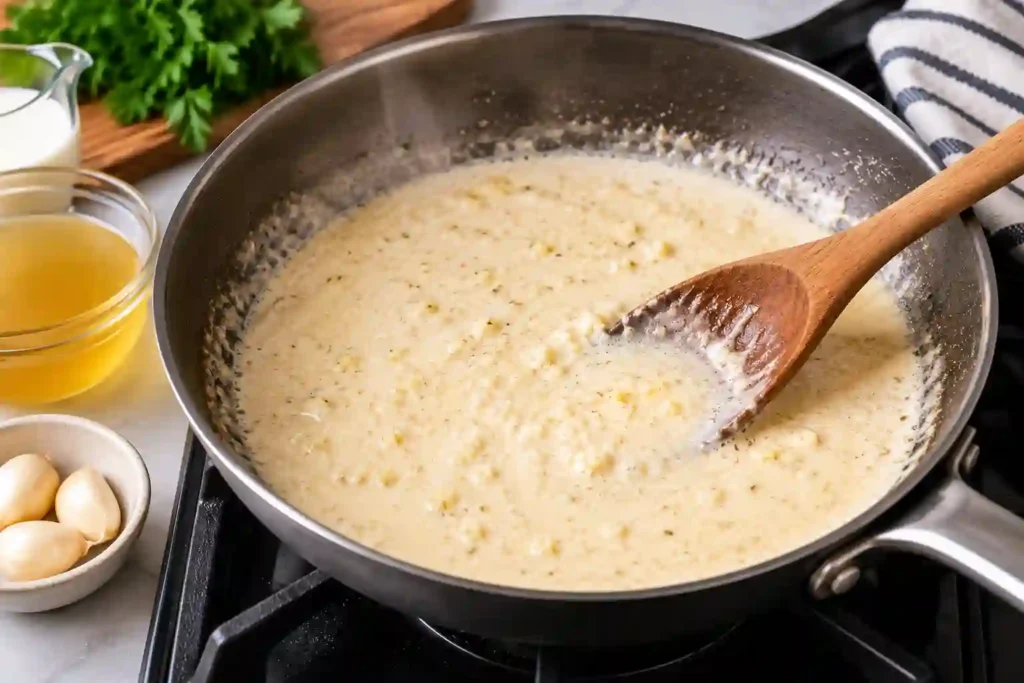
- Reduce the heat to medium-low. Melt the butter in the same skillet, add the garlic, and cook for about 30 seconds until fragrant. Pour in the chicken broth, scrape up the browned bits, then add the heavy cream and bring to a gentle simmer.
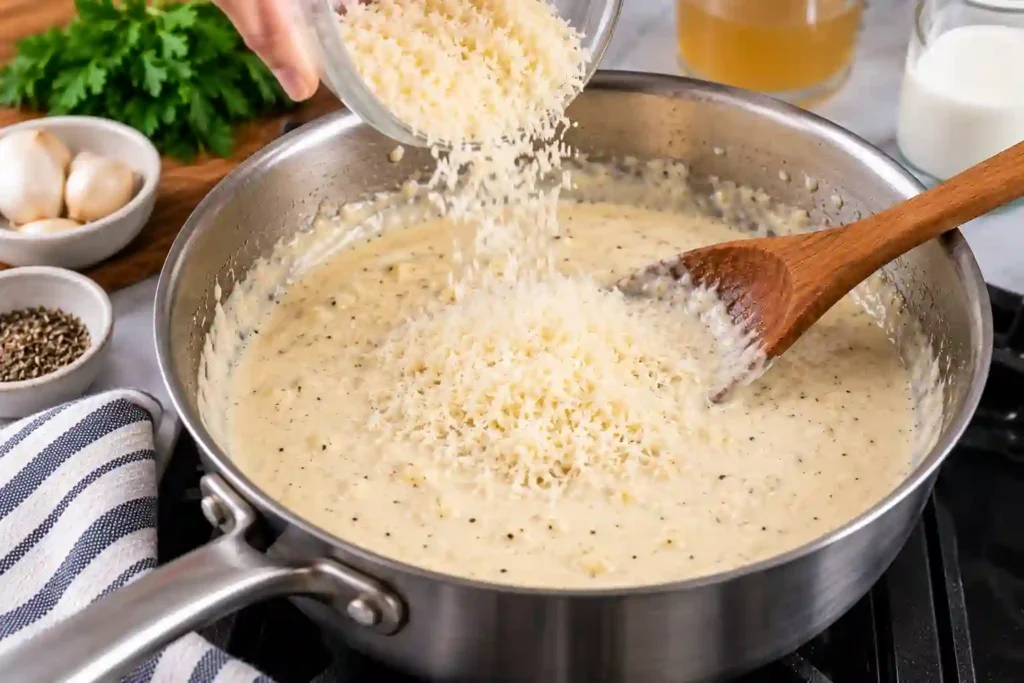
- Reduce the heat to low. Gradually stir in the freshly grated Parmesan until melted and smooth. If needed, add reserved pasta water a little at a time to adjust the consistency. Do not boil the sauce after adding the cheese.
- Return the chicken to the skillet and add the drained pasta. Toss until evenly coated in the garlic Parmesan sauce. Finish with chopped parsley, black pepper, and additional Parmesan if desired. Serve immediately.
Notes
Nutrition
Tips for a Smooth, Creamy Sauce
Grate the Parmesan Yourself
Finely grated Parmesan generally melts more smoothly than thicker pre-shredded cheese. Add it gradually rather than all at once.
Lower the Heat Before Adding Cheese
Once the cream base is ready, reduce the heat to low before stirring in the Parmesan. Avoid boiling the sauce after the cheese has been added because excessive heat can make the texture grainy.
Use Pasta Water a Little at a Time
Reserved pasta water contains starch that helps loosen the sauce while keeping it cohesive. Start with one or two tablespoons and add more only if needed.
Do Not Overcook the Chicken
Bite-size chicken pieces cook quickly. Brown them until fully cooked and the thickest pieces reach 165°F, the USDA safe minimum internal temperature for poultry, then remove them from the skillet while you make the sauce.
Easy Variations
- Chicken thighs: Use boneless, skinless thighs cut into similar-size pieces and cook them through before removing them from the skillet.
- Spinach: Stir in a few handfuls of baby spinach just before adding the pasta and let it wilt.
- Broccoli: Add small cooked broccoli florets when you combine the pasta and chicken.
- A little heat: Add a pinch of crushed red pepper flakes to the finished sauce.
- Lemon: A small squeeze of fresh lemon juice at serving time can balance the richness. Add it after removing the skillet from the heat.
Quick Weeknight Shortcuts
Short on time? Use shredded rotisserie chicken instead of cooking chicken breast from scratch. Stir it into the finished garlic Parmesan sauce just long enough to heat through, then add the cooked pasta.
You can also grate the Parmesan and mince the garlic earlier in the day, then refrigerate them separately until dinner. For the fastest workflow, boil the pasta while the sauce comes together so everything is ready at about the same time.
What to Serve With Garlic Parmesan Chicken Pasta
Because the pasta is rich and creamy, lighter sides work especially well. A simple green salad, steamed broccoli, roasted asparagus, green beans, or roasted vegetables can balance the meal. Garlic bread is another easy option when you want something more comforting. For another family-friendly chicken-and-pasta dinner, try our healthy chicken spaghetti recipe.
Storage and Reheating
Transfer leftovers to a covered container and refrigerate promptly. Cream sauces thicken after chilling, so add a small splash of milk, broth, or water when reheating.
Warm the pasta gently on the stovetop over low heat or microwave it in short intervals, stirring between each interval. High heat can cause the Parmesan sauce to separate.
Frequently Asked Questions
Can I use rotisserie chicken for garlic Parmesan chicken pasta?
Yes. Use about 3 cups of shredded cooked rotisserie chicken. Skip the chicken-browning step and stir the chicken into the finished sauce just long enough to heat through before adding the pasta.
What pasta works best for garlic Parmesan chicken pasta?
Penne and rigatoni are excellent because they hold creamy sauce well. Rotini, cavatappi, or another short pasta shape can also work.
Can I make garlic Parmesan chicken pasta ahead of time?
For the best texture, prepare the chicken and sauce ahead and refrigerate them separately from the pasta. Reheat the sauce gently with a splash of broth, milk, or water, then toss with freshly cooked pasta before serving.
Can I freeze garlic Parmesan chicken pasta?
Freezing the fully assembled pasta is not ideal because the cream sauce can separate and the pasta can soften after thawing. For better texture, freeze the cooked chicken and sauce separately, thaw them in the refrigerator, reheat gently, and serve with freshly cooked pasta.
Can I make it without heavy cream?
Half-and-half can produce a lighter sauce, but it will be thinner. Keep the heat gentle because lower-fat dairy is more likely to separate.
How do I reheat creamy chicken pasta without separating the sauce?
Reheat it gently over low heat with a small splash of milk, chicken broth, or water. Stir often and avoid boiling. If using a microwave, heat in short intervals and stir between each one.