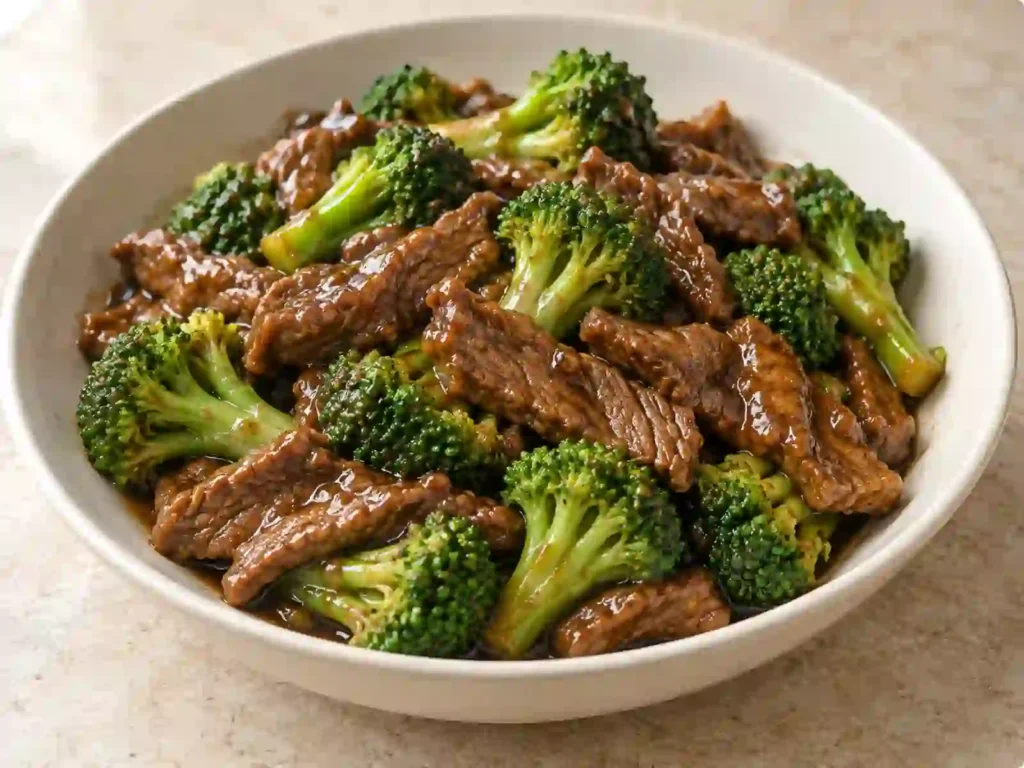
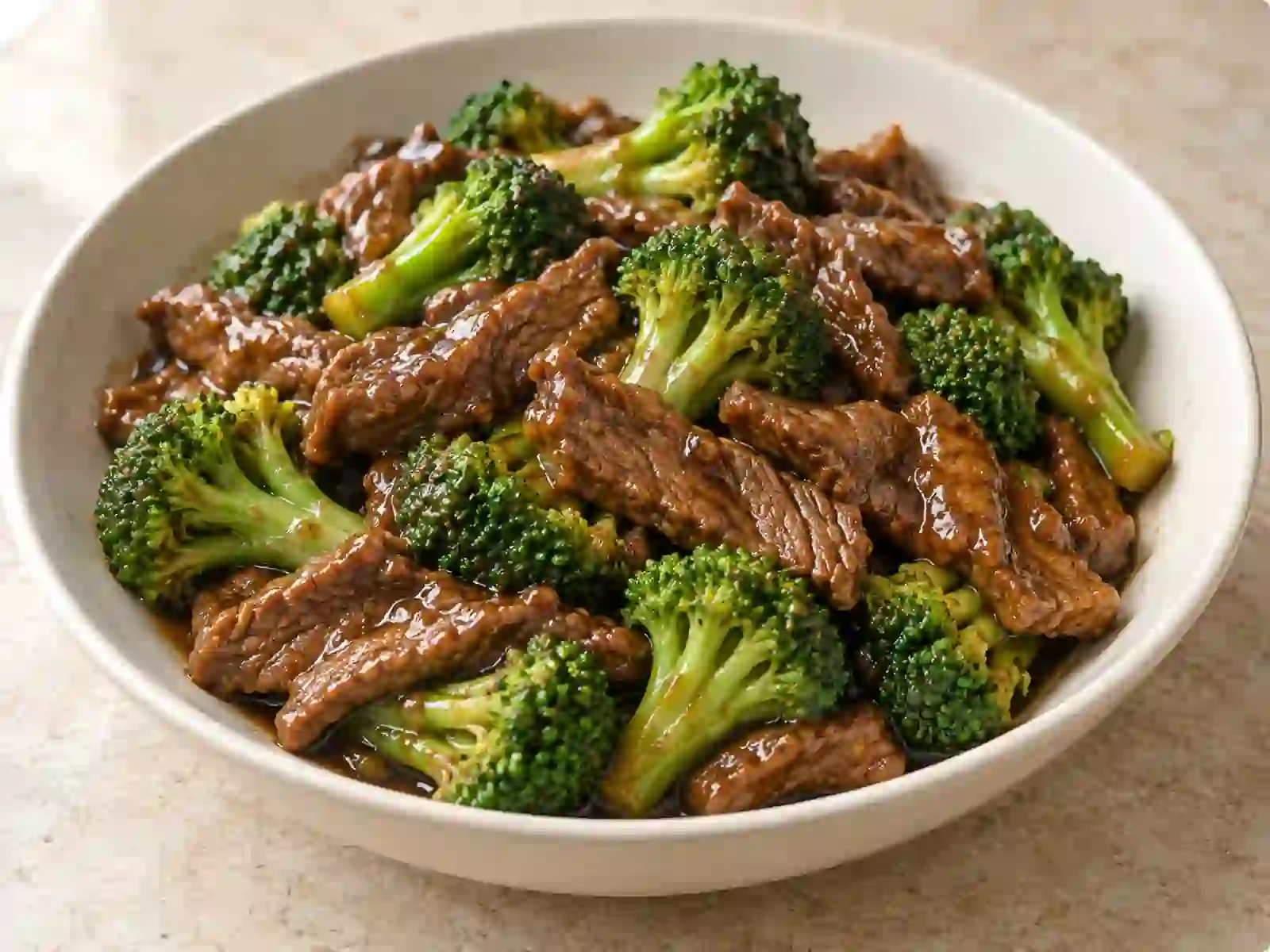
This beef and broccoli recipe gives you the Chinese-American takeout-style combination most home cooks are looking for: thin slices of beef with browned edges, broccoli that stays crisp-tender, and a glossy savory sauce that coats the food instead of pooling in the skillet. The method is designed for a regular home stove and a large skillet, so you do not need restaurant-style wok heat to get a good result.
Why This Method Works on a Home Stove
The biggest difference between a good beef-and-broccoli stir-fry and a watery one is heat management. A home skillet loses heat quickly when too much cold beef goes in at once. Cooking the meat in smaller batches gives the surface time to brown instead of releasing enough liquid to steam.
The broccoli is handled separately for the same reason. It gets a brief steam-sear until bright green and crisp-tender, then leaves the pan while the beef cooks. Bringing both components back only after the sauce has started to thicken protects the broccoli from turning soft while still giving everything an even coating.
Choosing Beef for Tender, Thin Slices
Flank steak works especially well because it is easy to slice into thin strips and has a visible grain. Cutting across the grain shortens the muscle fibers, which matters more here than adding extra cook time. Top sirloin is a practical substitute, but the texture will be slightly different.
If slicing feels difficult, chill the beef briefly until it is firm but not frozen solid. The goal is thin, even pieces that can sear quickly. Thick or irregular strips are more likely to be browned outside while staying underdone in the center, or to overcook by the time the sauce is finished.
What Makes the Sauce Glossy Instead of Watery
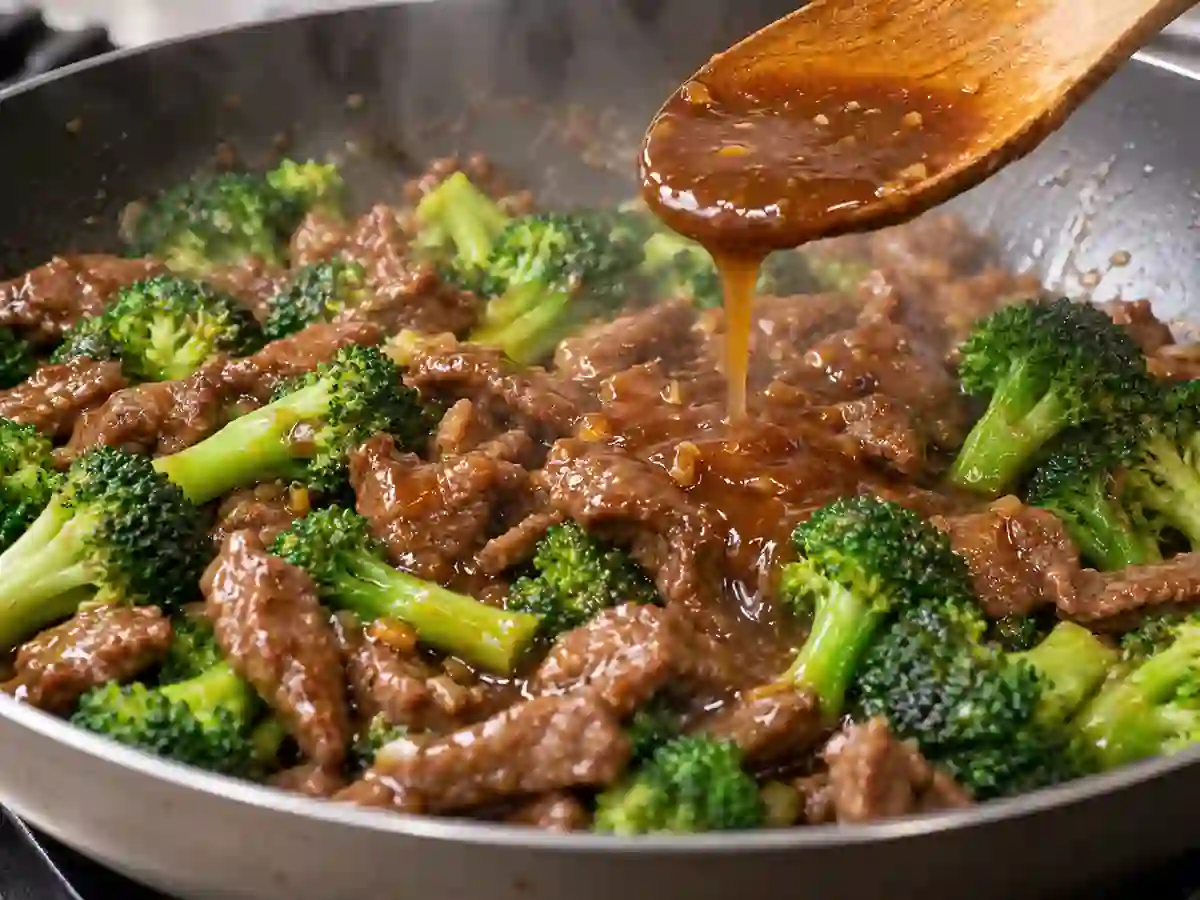
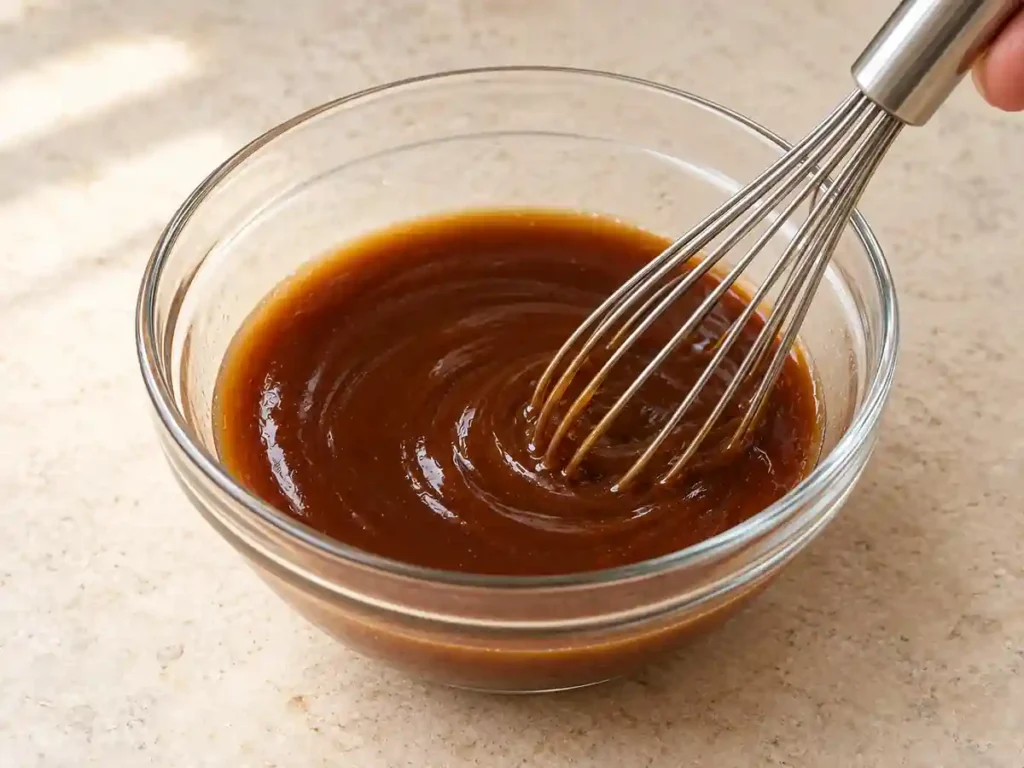
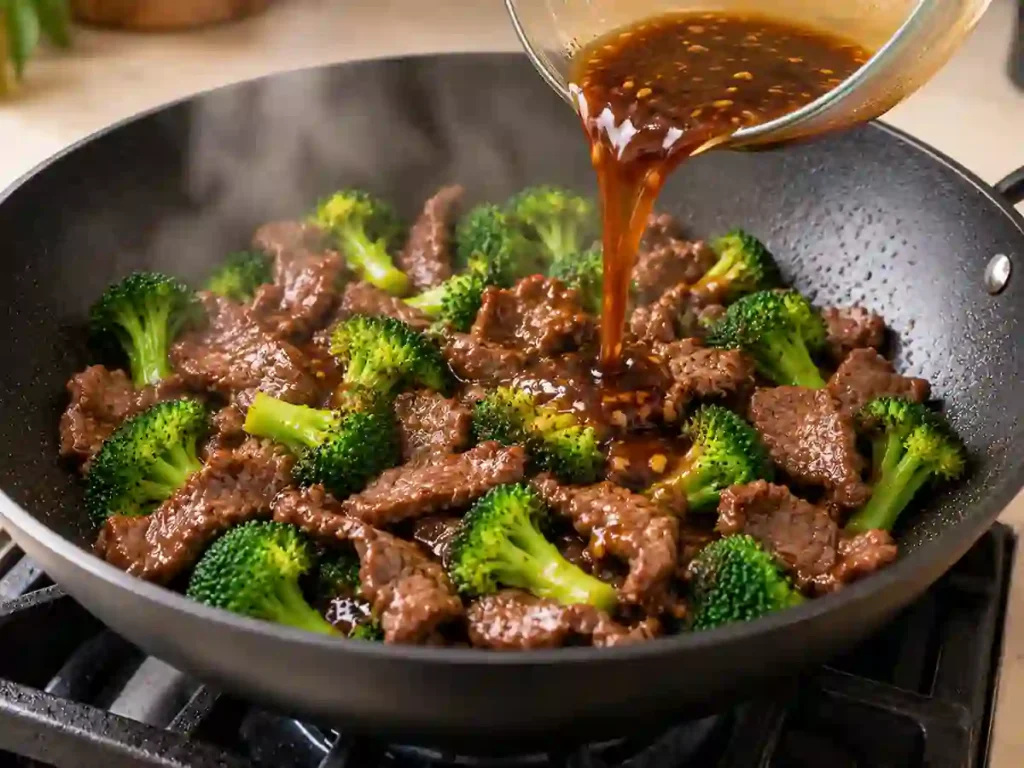
The sauce relies on a starch slurry built directly into the mixture. Because cornstarch settles while it sits, whisking the sauce again immediately before it goes into the skillet is important. Once the sauce reaches a gentle simmer, it should change from thin and opaque-looking to glossy enough to leave a light coating on a spatula.
Oyster sauce adds body and savory depth, while soy sauce provides the salty base. Rice vinegar keeps the sauce from tasting flat, and toasted sesame oil is used for aroma rather than as the main frying oil. If you use tamari instead of soy sauce, check the label if gluten matters to you because formulas vary by brand. A mushroom-based stir-fry sauce can replace oyster sauce, but it changes the flavor profile.
Skillet or Wok?
A wok is useful when you already cook with one and have enough heat to keep its center very hot. For many US home kitchens, a heavy 12-inch skillet is more predictable because more food can stay in direct contact with the hot surface. If your skillet is smaller, use an extra batch for the beef rather than crowding the pan.
The Cooking Cues That Matter Most
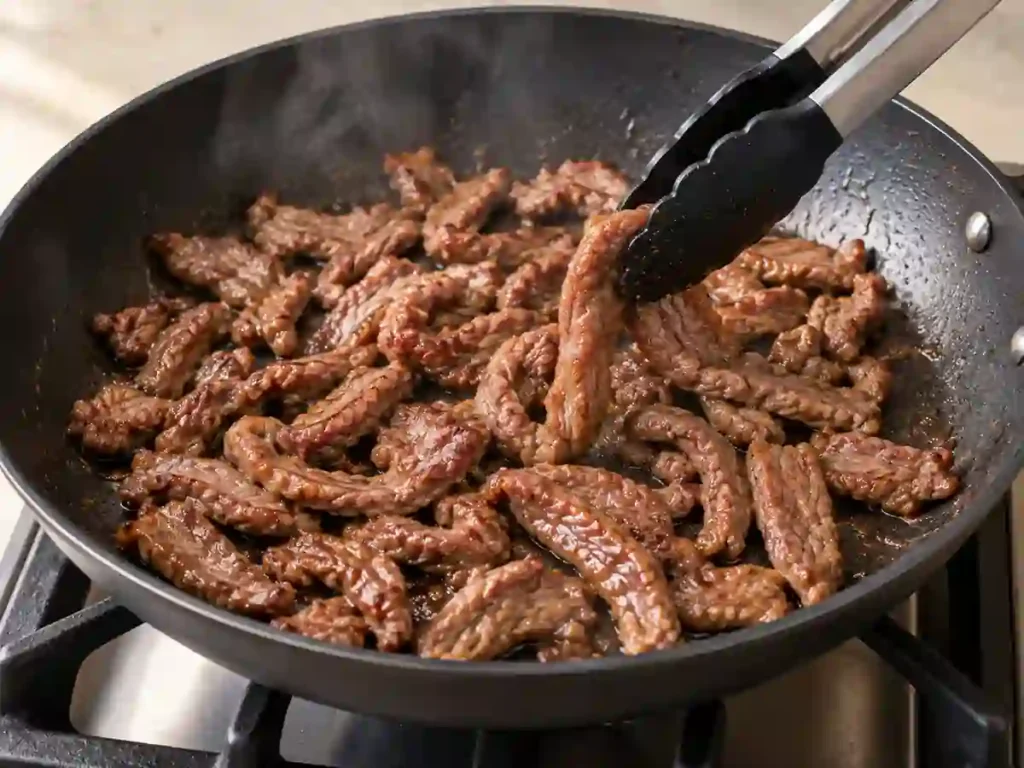
Watch the surface of the skillet instead of relying only on the clock. During the beef phase, you want browned contact points and separated slices with little free liquid. If a puddle forms, the pan has cooled too far. Remove the meat, let the excess moisture cook off, and continue in smaller batches once the skillet is hot again.
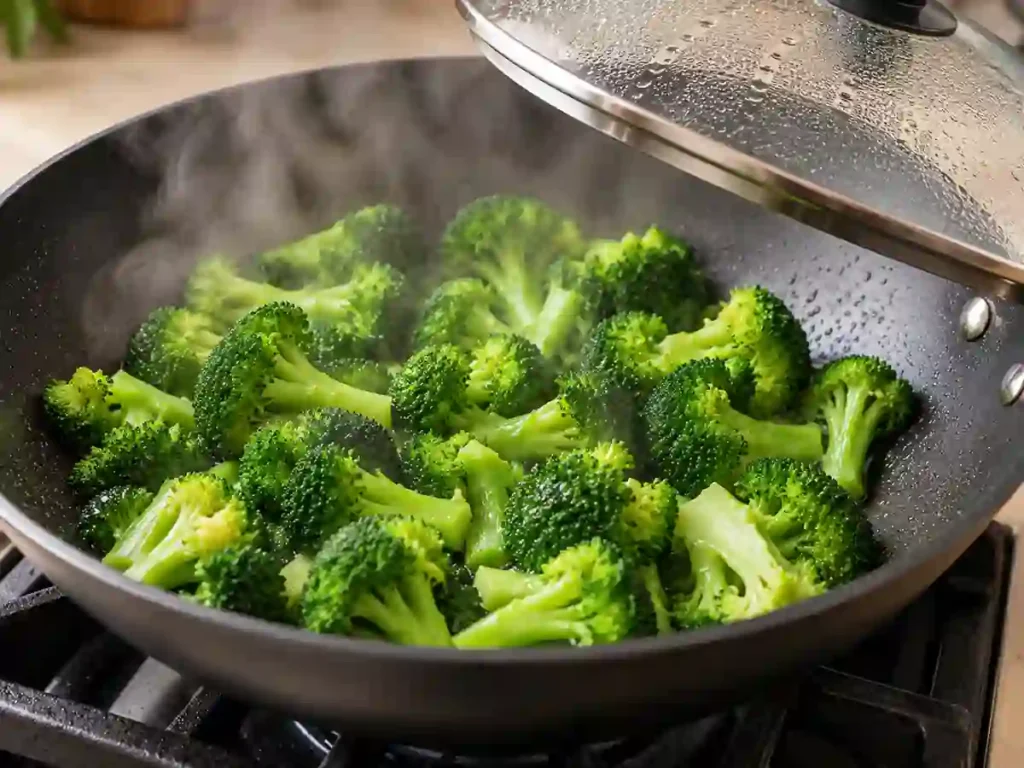
For the broccoli, color and resistance are better guides than softness. The florets should be vivid green, and a fork should enter the thicker stems with some resistance. Once the broccoli looks fully soft in the skillet, it will usually become even softer during the final toss.
At the finish, the sauce should cling to both the beef and broccoli with only a thin film left in the pan. If it stays watery, whisking before pouring and allowing a short simmer usually fixes the problem. If it tightens too much, loosen it with a small splash of water while tossing.
Troubleshooting Beef and Broccoli
The beef is gray instead of browned: The skillet was probably overcrowded or not hot enough. Work in smaller batches and let the pan recover its heat between them.
The beef is chewy: Check the slice direction and thickness first. Cutting thinly across the grain is the key correction for the next batch; overcooking during the initial sear can also make the final texture firmer than intended.
The broccoli is soft: It likely stayed covered too long or remained in the skillet while the beef cooked. Remove it as soon as it reaches crisp-tender and return it only for the final coating.
The sauce is too thick: Add water a little at a time while tossing until the sauce coats the food rather than clumping. If garlic starts browning before the sauce is added, lower the heat before the aromatics next time.
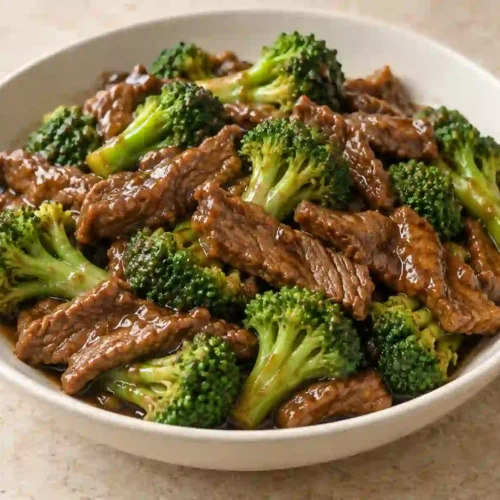
Beef and Broccoli Recipe (Takeout-Style)
Equipment
- 12-inch heavy-bottomed skillet Use a 14-inch carbon-steel wok if preferred.
- Instant-read thermometer For checking the thickest beef strips.
Ingredients
For the Beef
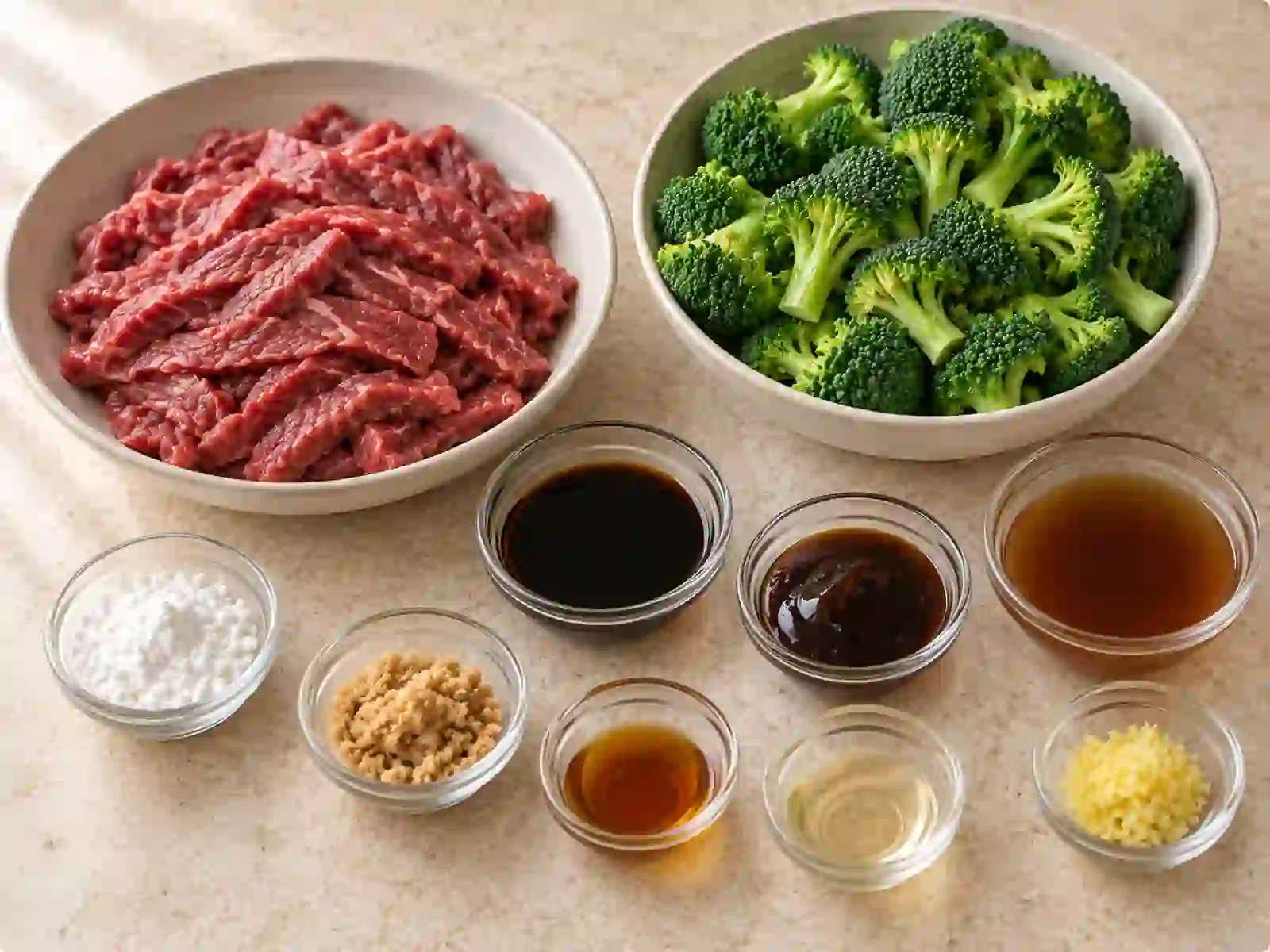
- 1 1/4 lb flank steak trimmed; sliced about 1/8-inch thick across the grain
- 1 tbsp reduced-sodium soy sauce
- 2 tsp cornstarch
- 1 tsp neutral high-heat oil such as avocado or canola oil
For the Sauce
- 1/2 cup low-sodium beef broth cold
- 3 tbsp reduced-sodium soy sauce
- 2 tbsp oyster sauce
- 1 tbsp light brown sugar packed
- 2 tsp cornstarch
- 1 tsp toasted sesame oil
- 1 tsp unseasoned rice vinegar
For the Stir-Fry
- 1 lb broccoli florets cut into roughly 1 1/2-inch pieces
- 2 tbsp neutral high-heat oil divided
- 2 tbsp water
- 3 cloves garlic finely minced
- 2 tsp fresh ginger finely grated
Instructions
Prepare the Beef and Sauce
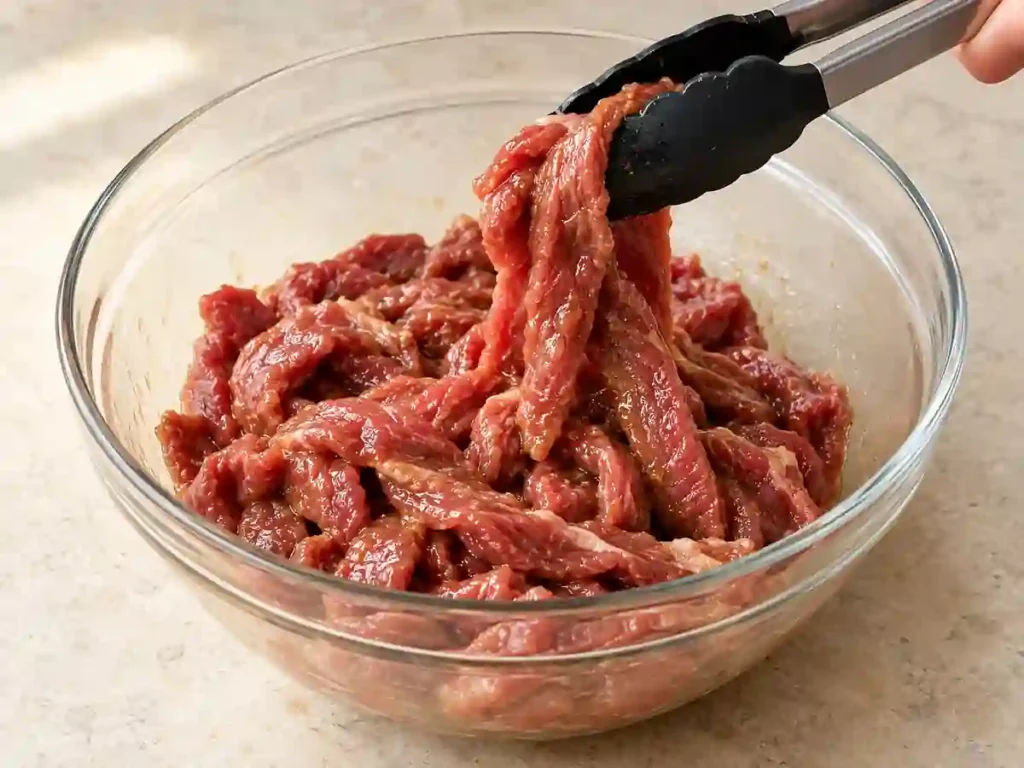
- Toss the thinly sliced flank steak with 1 tablespoon reduced-sodium soy sauce, 2 teaspoons cornstarch, and 1 teaspoon neutral oil until every slice has a thin, even coating. Set aside while you mix the sauce. The beef should look lightly coated and moist without sitting in liquid.
- Whisk the beef broth, 3 tablespoons reduced-sodium soy sauce, oyster sauce, brown sugar, 2 teaspoons cornstarch, toasted sesame oil, and rice vinegar until the cornstarch is completely dispersed. Keep the sauce near the stove and whisk it again immediately before adding it to the skillet.
Cook and Finish
- Heat 1 tablespoon neutral oil in a 12-inch skillet over medium-high heat. Add the broccoli and toss for about 30 seconds. Add 2 tablespoons water and cover for 2 minutes. Uncover and cook for another 1 to 2 minutes, tossing occasionally, until the broccoli is bright green and crisp-tender. Transfer it to a plate.
- Return the skillet to medium-high heat and add the remaining 1 tablespoon neutral oil. Spread half of the beef in a single layer. Sear for 60 to 90 seconds without moving it, then turn and cook for another 30 to 60 seconds, until browned around the edges. Transfer to the plate and repeat with the remaining beef. The beef does not need to be fully finished because it returns to the skillet in the sauce.
- Reduce the heat to medium. Add the garlic and ginger and stir for 20 to 30 seconds, just until fragrant without browning. Whisk the sauce again, pour it into the skillet, and cook for 45 to 90 seconds, stirring, until glossy and lightly coating the spatula. Return the beef and broccoli and toss for 30 to 60 seconds, until evenly coated and heated through. Verify the thickest beef strips reach at least 145°F. Remove from the heat and let the stir-fry stand for 3 minutes before serving.
Notes
Nutrition
Serving Ideas
Steamed jasmine rice or long-grain white rice keeps the meal close to the familiar takeout format and gives the sauce somewhere to go. Brown rice also works. If you want a different quick dinner built around rice and a glossy sauce, try these hot honey chicken rice bowls.
Storage and Reheating
Refrigerate leftovers promptly in shallow covered containers and use them within 3 to 4 days. Reheat until the food reaches 165°F. A skillet over medium heat with a small splash of water gives the broccoli a better chance of keeping some texture than prolonged reheating.
For make-ahead prep, the sauce and cut broccoli can be refrigerated separately. The finished dish is best when the broccoli is cooked close to serving; freezing is possible for many cooked foods, but it is not the preferred method here because broccoli loses much of its crisp-tender texture.
Chinese-American Takeout Context
Beef and broccoli is best described here as a Chinese-American takeout classic, not as a recipe with one proven inventor or a single traditional Chinese origin. The broader history of Chinese food in the United States reflects adaptation between Chinese cooking traditions and American ingredients and tastes, a pattern documented by the Smithsonian Center for Folklife and Cultural Heritage.
If you have ground beef rather than sliced steak, use the separate ground beef and broccoli stir-fry version. Keeping that variation separate matters because ground beef browns, releases fat, and interacts with the sauce differently from thin slices of steak.