
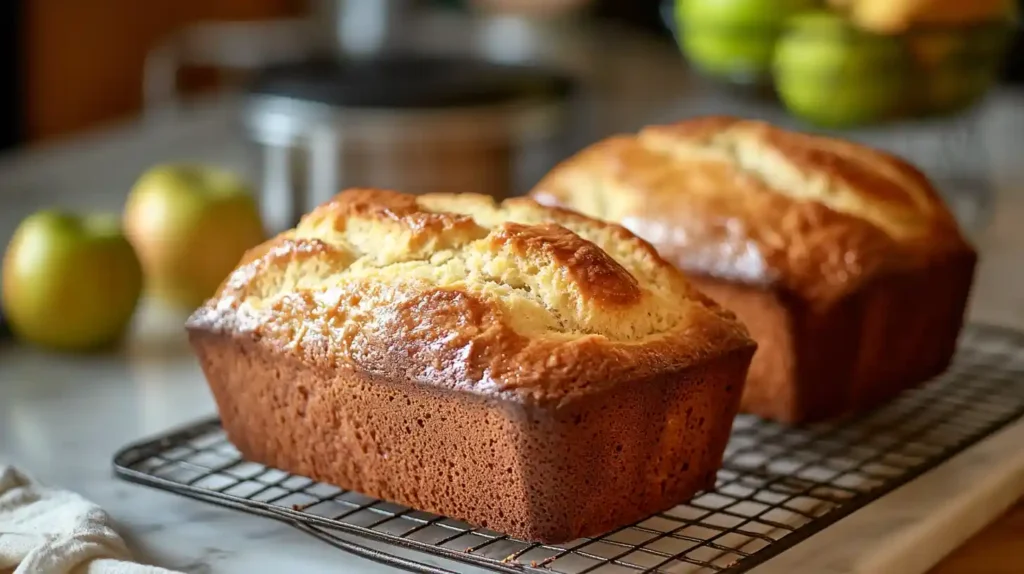
Banana bread became an American pantry staple during the Great Depression, when tossing an overripe banana felt like a small crime. Apple-studded cakes have been warming New England kitchens for even longer. This Apple Banana Bread fuses both traditions into a single loaf that is denser, more aromatic, and far more interesting than either recipe alone.
Tart Granny Smith cubes interrupt the sweetness of mashed bananas. A generous pour of cinnamon bridges the two fruits. And a brown sugar–sour cream base delivers a crumb so moist you will catch yourself eating slices straight from the cooling rack.
But here is the honest truth: folding raw apple chunks into a moisture-heavy banana batter is an invitation for a soggy, sunken disaster. That exact problem is what this recipe was engineered to solve. A specific flour-toss technique, a calibrated dual-sugar ratio, and a foolproof baking timeline guarantee a tall, tender loaf with perfectly suspended apple pieces — every single time.What You Will Find in This Post
- The Flavor Marriage — Why Apple and Banana Belong Together
- Texture Mastery — The Flour-Toss Secret
- Ingredient Breakdown and Smart Substitutions
- Step-by-Step Instructions with Visual Cues
- The “Cheat Code” — Bakery Upgrades in Five Minutes
- Troubleshooting Soggy, Sunken, and Dense Loaves
- Storage, Freezing, and the Day-Two Secret
- Frequently Asked Questions
- Jump to Recipe
The Flavor Marriage: Why Apple and Banana Belong in One Loaf
Great recipes are built on contrast. Bananas bring deep, caramel-like sweetness and an almost custard-soft texture. On their own, though, that sweetness can feel one-dimensional after the first few bites. Granny Smith apples solve this instantly. Their bright tartness and firm, almost snappy texture give every slice a push-and-pull between sweet and sour, soft and toothsome.
Cinnamon is the ingredient that marries the two. It shares flavor compounds with both fruits, acting as a bridge that makes the apple notes and banana notes taste intentional rather than random. A whisper of nutmeg rounds out the spice, adding the warm, almost nutty depth you would expect from a slice of Dutch apple pie.
The brown sugar component is equally deliberate. Its molasses undertones lean toward the apple side of the flavor spectrum, reinforcing the “apple pie” impression even though this is, at its heart, a banana bread. Combined, these four layers — banana sweetness, apple tartness, warm spice, and molasses depth — create a loaf that tastes far more sophisticated than its simple ingredient list suggests.
Texture Mastery: The Flour-Toss Secret That Prevents Sogginess
This is the section that separates a perfect loaf from a gummy disappointment. Understanding why apples threaten the texture — and how to neutralize that threat — is the single most important skill for this recipe.
The problem: A medium Granny Smith apple is roughly 86 percent water. When you dice it and bury it in batter, that water has nowhere to go. It leaks into the surrounding crumb during the long bake, creating wet pockets, a gummy center, or fruit that sinks straight to the bottom of the pan.
The flour-toss fix: Before the apples go anywhere near the batter, toss them in one tablespoon of all-purpose flour and half a teaspoon of cinnamon. The flour coating does two things. First, it absorbs surface moisture so less water migrates into the crumb. Second, it creates a thin starchy skin with enough friction to grip the batter, preventing the cubes from sliding downward during baking.
The sour cream safety net: A quarter cup of sour cream (or thick Greek yogurt) might seem like it would add even more moisture, but it works in the opposite direction. The acidity tightens the gluten network around the fruit, reinforcing the crumb’s structure. It also reacts with the baking soda to produce a stronger, more reliable rise — critical when the batter is weighed down with heavy fruit.
The dual-leavening system: Most banana bread recipes use baking soda alone. This one adds half a teaspoon of baking powder as insurance. The extra lift counteracts the weight of the apple and banana, keeping the loaf tall and airy rather than dense and flat.
Ingredient Breakdown and Smart Substitutions
Every ingredient earns its place. Here is why each one matters, and what you can swap if you need to.
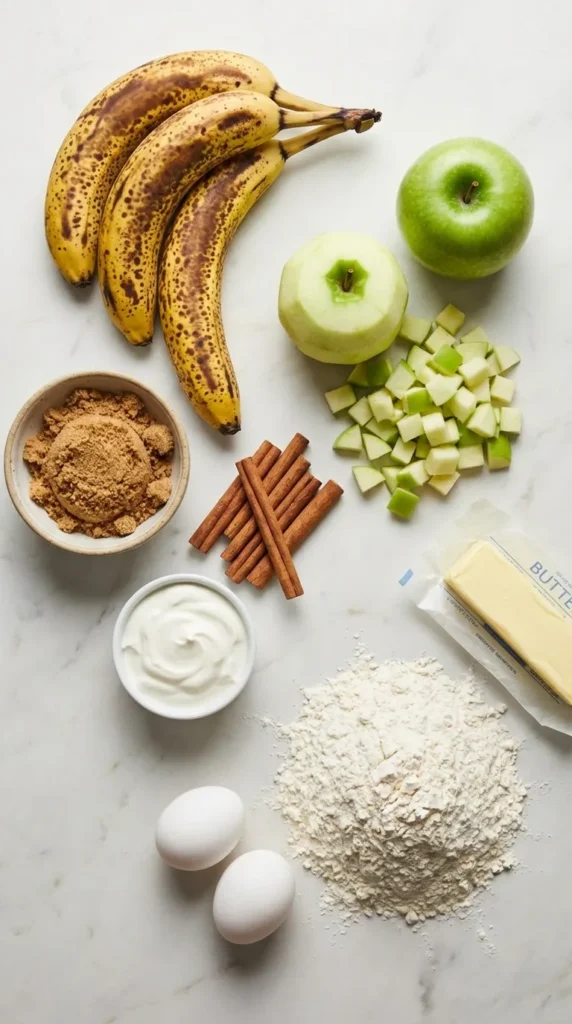
- Bananas (3 medium, very ripe): You want heavily spotted or fully brown peels. As bananas ripen, their starch converts to sugar, which means more sweetness, more moisture, and a stronger banana flavor without adding extra sugar. Yellow bananas will work in a pinch, but the loaf will taste flatter.
- Apples (1½ cups diced, about 2 medium): Granny Smith is the top pick. Its high acidity cuts through the banana’s sweetness, and its firm flesh holds shape through a long bake. Honeycrisp is a solid runner-up if you prefer a sweeter, juicier bite. Avoid Red Delicious — it turns mealy.
- Brown sugar (½ cup, packed): Adds moisture and molasses depth. Dark brown sugar intensifies the caramel notes if you want to lean further into that direction.
- White sugar (¼ cup): Creates slightly crisper edges and a lighter crumb at the surface. The dual-sugar blend is key to the bakery-style texture.
- Unsalted butter (½ cup, melted): Delivers richness that oil cannot match. For a dairy-free version, melted refined coconut oil is the best substitute — it adds a subtle sweetness of its own.
- Sour cream or Greek yogurt (¼ cup): The secret weapon. It tenderizes the crumb, reacts with the leavening for a taller rise, and keeps the bread moist for days. Full-fat yields the best results.
- Eggs (2 large, room temperature): Structure and binding. Room-temperature eggs emulsify into the melted butter more smoothly, preventing a greasy batter.
- All-purpose flour (1¾ cups plus 1 tablespoon for the apple toss): Do not pack it. Spoon the flour into the measuring cup and level it off with a knife. Over-measured flour is the number one cause of dense, heavy quick breads.
- Vanilla extract (1 teaspoon): Amplifies every other flavor without calling attention to itself.
- Cinnamon (1½ teaspoons total), nutmeg (¼ teaspoon): Warm spice that binds the apple and banana notes together.
- Baking soda (1 teaspoon) and baking powder (½ teaspoon): The dual-leavening system described above.
- Salt (½ teaspoon): Non-negotiable. Salt suppresses bitterness and makes the sweetness taste fuller.
Step-by-Step Instructions with Success Indicators
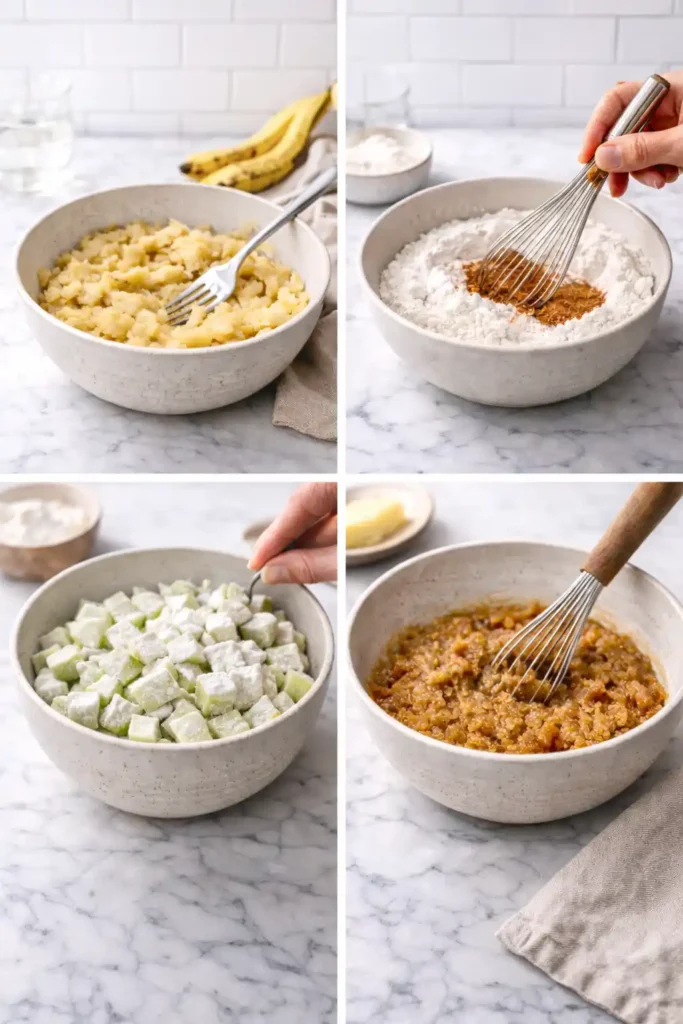
Step 1 — Preheat and prep the pan. Set your oven to 350°F. Grease a 9×5-inch loaf pan with non-stick spray and line the bottom and two long sides with a single strip of parchment paper, leaving a slight overhang. This creates handles for lifting the loaf out cleanly.
Step 2 — Coat the apples. Peel and dice your apples into roughly ¼-inch cubes. Keep the pieces small — large chunks create structural weak spots that crack when you slice the loaf. In a small bowl, toss the diced apples with 1 tablespoon flour and ½ teaspoon cinnamon until every cube is lightly coated. Success indicator: the apples should look dry and matte, not shiny or wet.
Step 3 — Mash the bananas. Peel the bananas into a bowl and mash them with a fork. Leave a few small lumps the size of a pea — they become sweet pockets of flavor in the finished loaf. Success indicator: the mash should look like chunky applesauce, not a smooth purée.
Step 4 — Whisk the dry ingredients. In a medium bowl, whisk together the 1¾ cups flour, baking soda, baking powder, 1 teaspoon cinnamon, nutmeg, and salt. Set aside.
Step 5 — Build the wet mix. In a large bowl, stir the melted butter, brown sugar, and white sugar together until the mixture looks like wet sand. Add the eggs one at a time, stirring after each until just combined. Stir in the vanilla and sour cream. Finally, fold in the mashed bananas. Success indicator: the mixture should be thick, glossy, and a warm caramel color.
Step 6 — The critical fold. Pour the dry ingredients on top of the wet ingredients. Using a silicone spatula, fold gently with broad, sweeping strokes — not vigorous stirring. Stop when you still see a few flour streaks. Over-mixing activates gluten and creates a tough, rubbery loaf.
Step 7 — Add the apples. Scatter the flour-coated apple cubes over the batter and fold them in with 5 to 6 gentle strokes, just until distributed. Success indicator: the apples should be roughly even throughout the batter, not clumped in one area.
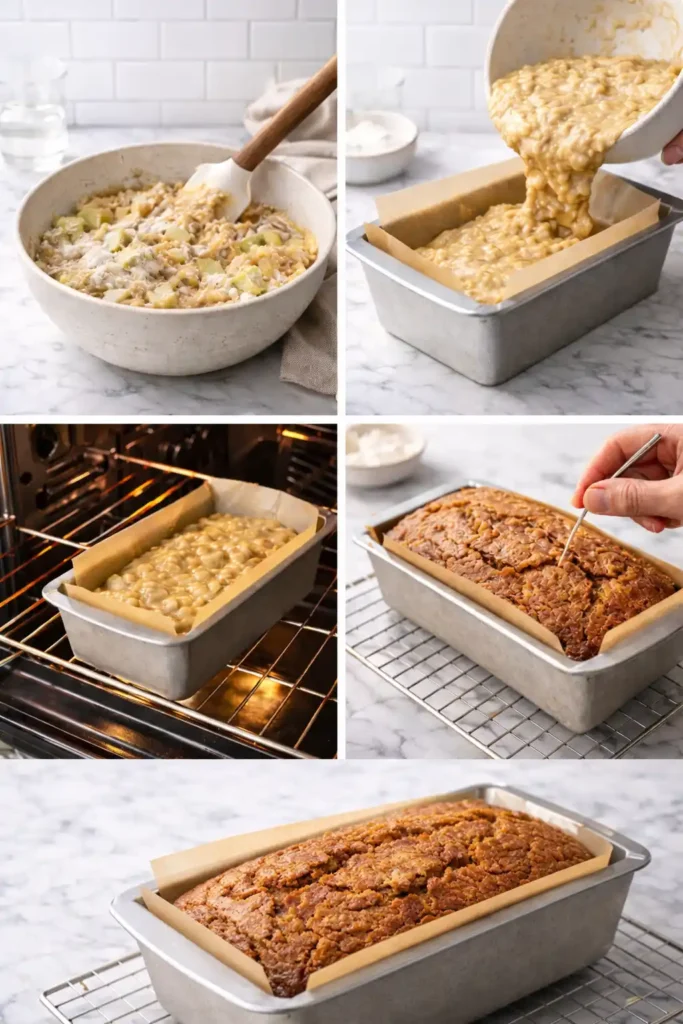
Step 8 — Pour and smooth. Transfer the batter to the prepared pan. Use the back of the spatula to smooth the top into a slight dome shape. This encourages an even rise.
Step 9 — Bake with a foil check. Bake at 350°F for 55 to 65 minutes. At the 40-minute mark, open the oven and check the top. If it is deep golden brown, tent the pan loosely with a sheet of aluminum foil to prevent over-browning while the center finishes cooking.
Step 10 — The toothpick test. Insert a wooden toothpick or thin skewer into the center of the loaf. Success indicator: it should come out with a few moist crumbs clinging to it, but no wet, shiny batter. If you see liquid, bake for another 5 minutes and test again.
Step 11 — Cool with patience. Let the loaf rest in the pan for 15 full minutes. Then use the parchment overhang to lift it onto a wire rack to cool completely — at least 30 minutes — before slicing. Cutting too early releases steam and makes the interior gummy.
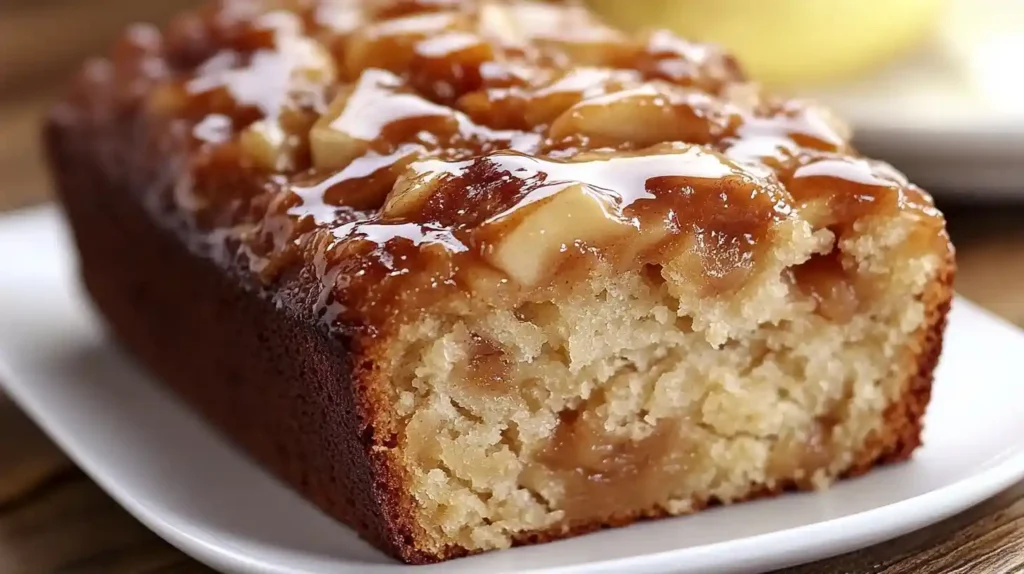
The “Cheat Code”: Bakery Upgrades in Five Minutes
The base recipe stands on its own, but these quick add-ons turn a great loaf into a showstopper.
- Cinnamon Streusel Crown: Mix ¼ cup flour, ¼ cup packed brown sugar, ½ teaspoon cinnamon, and 2 tablespoons cold butter (cut into pea-size pieces) with your fingers until crumbly. Scatter over the batter before it goes into the oven. The result is a crunchy, coffee-cake-style top that shatters when you slice.
- Toasted Walnut or Pecan Crunch: Fold ½ cup of roughly chopped, toasted nuts into the batter alongside the apples. Toasting deepens the flavor and keeps them from turning soft during the bake.
- Cream Cheese Ribbon: Beat 4 ounces of softened cream cheese with 2 tablespoons sugar and 1 egg yolk. Pour half the banana batter into the pan, spoon the cream cheese mixture down the center, then top with the remaining batter. Drag a knife through once for a marbled swirl.
- Healthy Swap: Replace all-purpose flour with white whole wheat flour and substitute the white and brown sugars with ¾ cup pure maple syrup (reduce sour cream to 2 tablespoons to compensate for the extra liquid). The loaf will be slightly denser but beautifully nutty.
If you love experimenting with seasonal quick breads, our Pumpkin Banana Loaf offers another fall-forward twist worth trying.
Troubleshooting: Soggy, Sunken, and Dense Loaves
The center is soggy or gummy.
This is almost always underbaking or oversized apple chunks. Apples release water slowly during the bake, and large pieces dump more liquid into a smaller area. Stick to ¼-inch dice and trust the toothpick test — moist crumbs are fine, but any trace of wet batter means the loaf needs more time. If your oven runs cool, add 5 to 8 extra minutes.
The apples sank to the bottom.
Two likely causes. First, you skipped the flour-toss step, so the cubes had nothing to grip. Second, the batter was too thin — probably from over-mashing the bananas into a liquid purée or from measuring the flour by scooping (which under-measures). Spoon-and-level your flour and keep a few banana chunks intact.
The loaf is dense and heavy.
Over-mixing is the usual suspect. Once the flour hits the wet ingredients, fold — do not stir, do not whisk, and do not use an electric mixer. Ten to fifteen gentle spatula strokes is enough. Also double-check your leaveners: baking soda and baking powder lose potency after about six months in the pantry.
The top cracked down the middle.
This is actually a sign of a good rise and is completely normal for a quick bread. The surface sets before the interior finishes expanding, forcing a crack. If you prefer a smoother top for photos, run a butter-coated knife down the center of the raw batter before baking — this gives the crack a controlled path.
Storage, Freezing, and the Day-Two Secret
Counter (up to 3 days): Wrap the cooled loaf tightly in plastic wrap or store sliced in an airtight container at room temperature. The loaf actually tastes better on day two — overnight, the moisture redistributes evenly, the spices deepen, and the crumb firms up just enough for cleaner slices.
Refrigerator (up to 5 days): If your kitchen is warm or humid, refrigerate. Wrap tightly to prevent the bread from absorbing fridge odors. Let slices come to room temperature for 10 minutes before eating, or warm them briefly.
Freezer (up to 3 months): Slice the loaf first, then wrap each slice individually in plastic wrap and store them all inside a freezer-safe bag. Freezing pre-sliced means you can grab one serving at a time without thawing the whole loaf.
Reheating: Microwave a single slice for 15 to 20 seconds — just until the center is warm and the edges are still soft. For a lightly toasted exterior, place the slice in a dry skillet over medium heat for about 90 seconds per side.
Frequently Asked Questions
Can I use applesauce instead of diced apples?
Applesauce changes the recipe significantly. It adds moisture but removes the textural contrast that makes this bread special. If you prefer a puréed fruit approach, you might enjoy our Matcha Tiramisu for a completely different dessert direction, or simply stick to diced fruit here.
Which apple varieties work best?
Granny Smith is the gold standard for baking — tart, firm, and resilient. Honeycrisp is a close second with a sweeter, juicier profile. Fuji and Gala are acceptable but softer. Avoid Red Delicious and McIntosh; they break down into mush.
Can I make this gluten-free?
Yes. Use a reputable one-to-one gluten-free flour blend such as Bob’s Red Mill “Measure for Measure.” The high moisture from the bananas and the structural support from the eggs and sour cream compensate well for the missing gluten. Expect a slightly more crumbly texture.
Why did my loaf take longer than 65 minutes?
Dark-colored or glass loaf pans absorb and distribute heat differently than light metal pans. Glass in particular slows the bake. If you use glass, lower the oven temperature to 325°F and expect to add 10 to 15 minutes to the total time.
Can I double the recipe?
You can double the batter, but do not bake it in a single oversized pan — the center will not cook through. Instead, divide it between two standard 9×5-inch pans and bake them on the same oven rack.
Do I really need sour cream?
You can technically omit it, but the loaf will be noticeably less moist by day two and the rise will be slightly flatter. Full-fat plain Greek yogurt is a seamless one-to-one replacement.
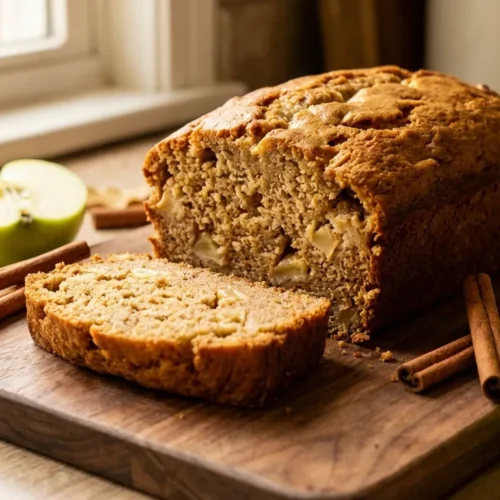
The Best Apple Banana Bread
Equipment
- 9×5-inch loaf pan
- Parchment paper
- Large mixing bowl
- Medium mixing bowl
- Silicone Spatula
- Whisk
- Wire cooling rack
Ingredients
Fruit Prep
- 1.5 cups Granny Smith apples peeled and diced into 1/4-inch cubes (about 2 medium)
- 1 tbsp all-purpose flour for coating the apples
- 0.5 tsp ground cinnamon for coating the apples
- 1.5 cups mashed ripe bananas about 3 medium, heavily spotted or brown
Dry Ingredients
- 1.75 cups all-purpose flour spooned and leveled
- 1 tsp baking soda
- 0.5 tsp baking powder
- 1 tsp ground cinnamon
- 0.25 tsp ground nutmeg
- 0.5 tsp fine salt
Wet Ingredients
- 0.5 cup unsalted butter melted and cooled for 5 minutes
- 0.5 cup light brown sugar packed
- 0.25 cup granulated white sugar
- 2 large eggs at room temperature
- 1 tsp pure vanilla extract
- 0.25 cup full-fat sour cream or plain Greek yogurt
Instructions
Prep
- Preheat the oven to 350°F. Grease a 9×5-inch loaf pan with non-stick spray and line the bottom and two long sides with a strip of parchment paper, leaving a 1-inch overhang on each side for easy removal.
- Peel and dice the apples into 1/4-inch cubes. In a small bowl, toss the cubes with 1 tablespoon flour and 1/2 teaspoon cinnamon until every piece is matte and dry. Set aside.
- Mash the bananas with a fork, leaving a few small pea-sized lumps for texture.
Make the Batter
- In a medium bowl, whisk together 1 3/4 cups flour, baking soda, baking powder, 1 teaspoon cinnamon, nutmeg, and salt.
- In a large bowl, stir the melted butter with the brown sugar and white sugar until the mixture resembles wet sand. Beat in the eggs one at a time, then stir in the vanilla extract and sour cream until smooth. Fold in the mashed bananas.
- Pour the dry ingredients over the wet ingredients. Fold gently with a silicone spatula using broad strokes. Stop when a few visible streaks of flour remain — do not overmix.
- Scatter the flour-coated apple cubes over the batter and fold in with 5 to 6 gentle strokes until evenly distributed.
Bake and Cool
- Transfer the batter to the prepared loaf pan and smooth the top into a gentle dome. Bake for 55 to 65 minutes.
- Check at the 40-minute mark. If the top is deep golden brown, tent the pan loosely with aluminum foil and continue baking. The bread is done when a toothpick inserted into the center comes out with moist crumbs but no wet batter.
- Cool in the pan for 15 minutes, then use the parchment overhang to lift the loaf onto a wire rack. Cool completely (at least 30 minutes) before slicing.
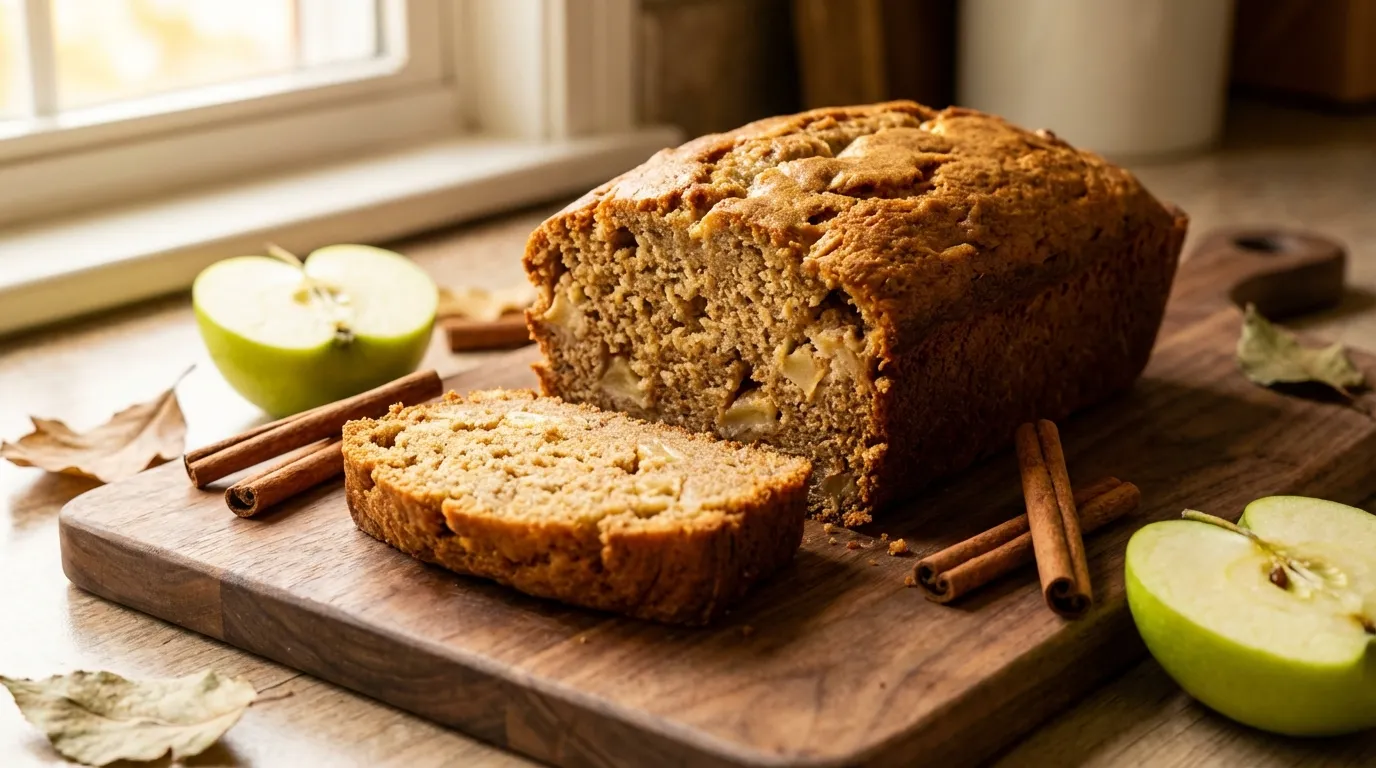
Nutrition
Update : 17/02/2026