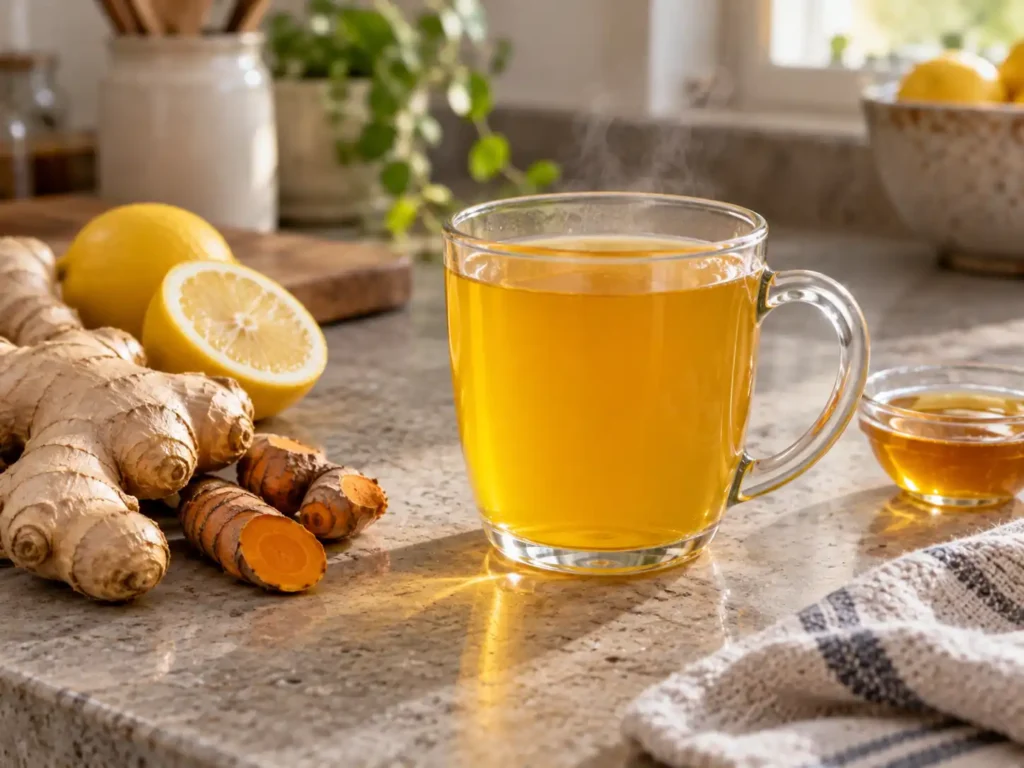
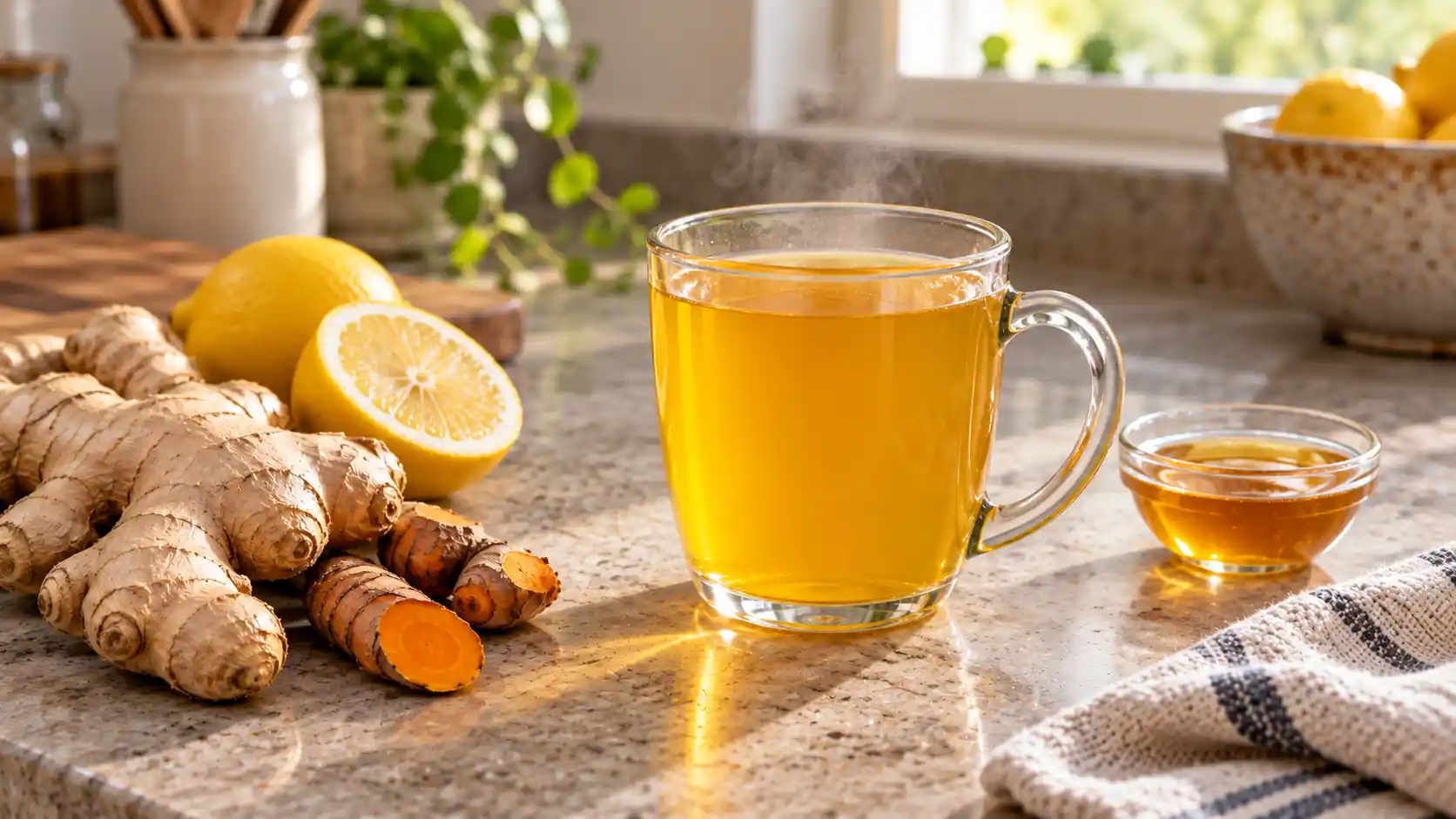
Lemon ginger turmeric tea is a warm, citrusy drink with three clear flavor notes: fresh ginger brings heat, fresh turmeric adds an earthy golden base, and lemon brightens the cup at the end. This version keeps the recipe simple and fast, with optional honey only if you prefer a sweeter finish.
The goal here is flavor, not a wellness claim. This is a homemade ginger turmeric tea recipe, not a detox, weight-loss treatment, metabolism booster, or substitute for medical care. The most useful decisions are culinary: how strong to make the ginger, how to avoid an overly earthy turmeric flavor, and when to add the lemon so the cup stays fresh-tasting.
What Lemon Ginger Turmeric Tea Tastes Like
Fresh ginger gives the tea a clean, peppery warmth that builds as you sip. Fresh turmeric is milder than many people expect, but it still adds a distinctly earthy note and the characteristic golden color. Lemon cuts through both roots with acidity, so the finished tea tastes brighter and less heavy than a plain turmeric infusion.
Honey is optional. It softens the sharp edge of ginger and lemon, but the tea does not need to taste sweet to be balanced. If you prefer a clean, tart cup, leave it out and taste the tea first.
Why Fresh Ginger and Fresh Turmeric Work Well Here
Fresh roots give this lemon ginger and turmeric tea a cleaner flavor than a heavily powdered mixture. Grating exposes more surface area to the hot water, which helps the tea pick up flavor quickly during a short simmer. The ginger should smell bright and spicy; the turmeric should smell earthy but fresh rather than dusty or stale.
Lemon plays a different role. It is not simmered with the roots in this version; it is stirred in after straining so its flavor stays sharp and recognizable. That choice is about taste, not about promising a special nutritional effect.
Why This 10-Minute Method Works
This recipe uses finely grated ginger and turmeric rather than thick slices. The smaller pieces put more cut surface in contact with the hot water, so their flavor develops quickly during a short simmer. Five minutes is enough to build a golden, aromatic cup without deliberately extending the simmer just to make the tea darker or more intense.
Straining before adding the lemon keeps the finished tea cleaner and lets you adjust the citrus at the end. That gives you more control over ginger heat, turmeric earthiness, and lemon brightness without changing the basic recipe.
Fresh Turmeric vs. Ground Turmeric
This recipe is written for fresh turmeric root. Ground turmeric can make a usable variation, but it behaves differently: it disperses through the water, settles as fine sediment, and can taste more concentrated and powdery. Because the two forms do not create the same cup, this recipe does not treat them as a direct 1:1 substitution.
If you use ground turmeric in another preparation, expect more sediment and stir before drinking if the powder settles. For this recipe, fresh turmeric gives the clearest result and makes it easier to control the earthy flavor.
How to Control the Flavor
The easiest way to control a ginger turmeric lemon tea is to adjust strength after the base recipe works for you. A longer simmer makes both roots stronger, but it can also push turmeric toward a more earthy, slightly bitter flavor. More ginger increases heat much faster than it increases sweetness or citrus character.
- For a gentler cup: keep the simmer short and avoid packing extra turmeric into the saucepan.
- For more ginger heat: increase ginger slightly on a future batch rather than extending the simmer indefinitely.
- For more brightness: adjust lemon after straining so you can taste the change immediately.
- For sweetness: add honey after tasting the finished tea, not automatically.
Troubleshooting
The tea tastes too earthy or bitter
The most likely causes are too much turmeric or too much extraction time. Do not keep simmering simply to make the color darker. Dilute the cup with a little hot water, then add lemon to restore balance.
The ginger is too sharp
Ginger intensity builds quickly when it is finely grated. A little honey can soften the heat, or you can dilute the tea. On the next batch, reduce the ginger rather than trying to mask it with extra turmeric.
The tea looks cloudy
Very finely grated roots can pass through a coarse strainer. Use a fine-mesh strainer for a cleaner cup. A small amount of natural cloudiness is normal and does not mean the tea failed.
Turmeric stained the grater or counter
Fresh turmeric stains easily. Rinse tools and wipe light-colored surfaces promptly instead of letting the pigment dry in place.
Lemon Ginger Turmeric Tea

Ingredients
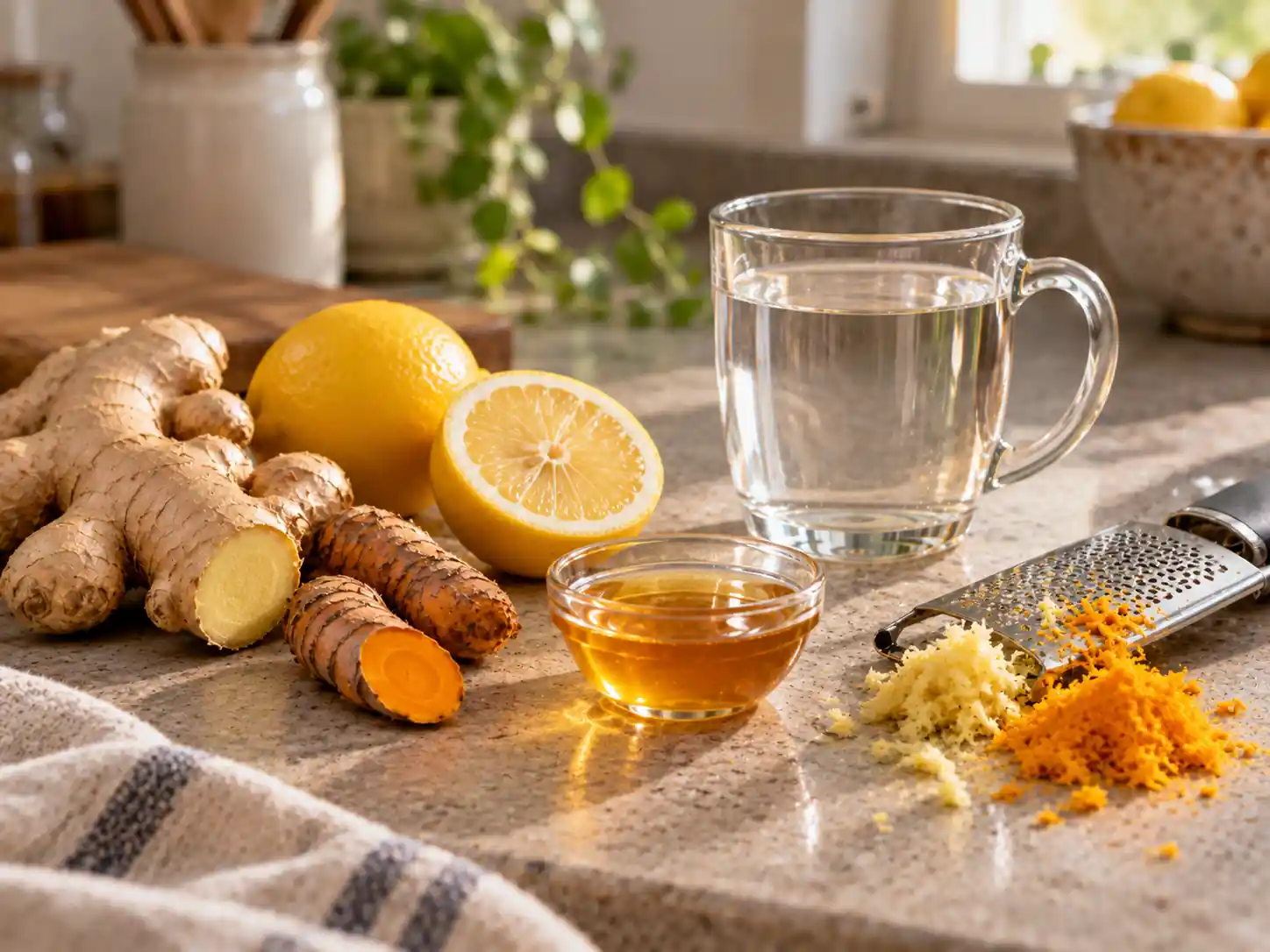
- 1 cup water
- 1 teaspoon fresh ginger finely grated
- 1 teaspoon fresh turmeric root finely grated
- 1/2 medium lemon juiced
- 1 teaspoon honey optional, to taste
Instructions
- Bring the water to a boil in a small saucepan.
- Reduce the heat to a gentle simmer. Stir in the grated ginger and turmeric, then simmer for 5 minutes, until the water is deep golden and aromatic.
- Remove the saucepan from the heat and strain the tea through a fine-mesh strainer into a mug.
- Stir in the fresh lemon juice. Add honey only if you want a sweeter cup.
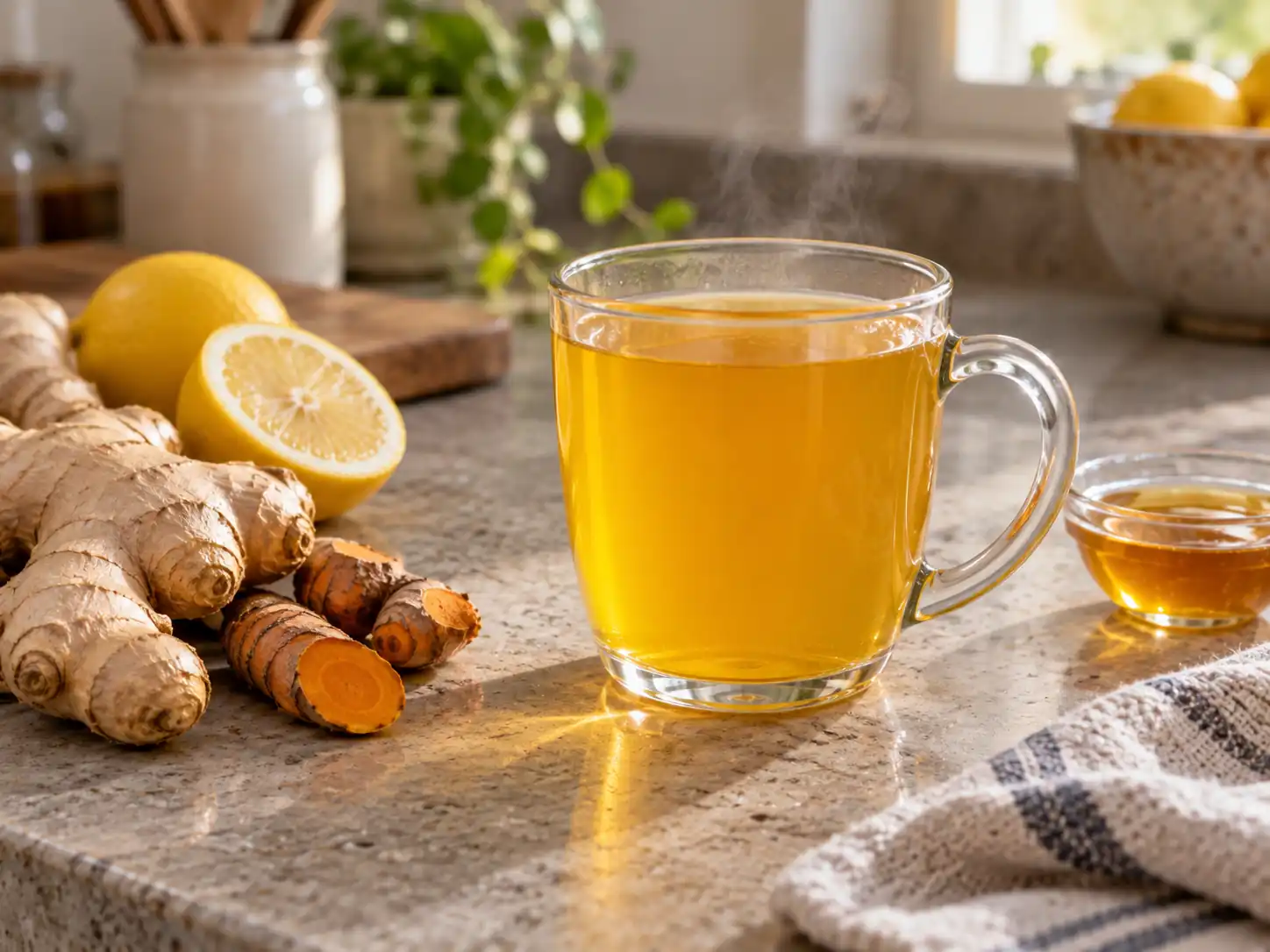
- Serve the tea warm. Taste before adding any additional sweetener.
Notes
Nutrition
What the Research Does — and Does Not — Show
Turmeric and ginger are widely promoted with health claims, but a cup of homemade tea should not be treated as equivalent to a concentrated supplement or a tested medical intervention. The National Center for Complementary and Integrative Health says that, despite substantial research, there is not enough evidence to definitively conclude that turmeric or curcumin is beneficial for general health purposes. Read the NCCIH turmeric overview.
For ginger, NCCIH notes that much of the human research has tested supplements rather than foods, and findings depend on the specific condition studied. That is why this page does not describe turmeric ginger tea as a treatment for inflammation, pain, nausea, or other conditions. See the NCCIH ginger overview.
Lemon contributes vitamin C, and vitamin C is an essential nutrient involved in normal immune function. That does not mean adding lemon to tea turns the drink into an “immune booster” or prevents illness. NIH’s Office of Dietary Supplements explains that adequate vitamin and mineral intake supports normal immune function, while taking more is not automatically better. See the NIH ODS immune-function fact sheet.
Storage and Make-Ahead
This is a one-cup recipe, so the best flavor comes from making it fresh. If you prepare extra tea, cool it promptly, refrigerate it in a covered container, and reheat only what you plan to drink. Add fresh lemon after reheating if you want the brightest citrus flavor.
Common Questions
Can I make lemon ginger tea with turmeric powder?
Yes, but ground turmeric produces a different texture and flavor from fresh turmeric root. Expect more sediment and a stronger earthy note. The recipe card is written for fresh turmeric, so a powdered version should be treated as a variation rather than a direct 1:1 swap.
Can I drink this tea cold?
Yes. Chill the strained tea, then add lemon and honey to taste before serving. The flavor will seem slightly less aromatic when cold, so taste it again before adjusting.
Is lemon ginger turmeric tea a detox or weight-loss drink?
No evidence establishes this homemade tea as a detox treatment or a drink that causes meaningful weight loss. It is best treated as an unsweetened or lightly sweetened flavored tea.
Do I need black pepper in turmeric tea?
No. Black pepper is not required to make this tea. A 1998 human study found that 20 mg of piperine increased the bioavailability of a controlled 2 g curcumin dose, but those study conditions are not equivalent to adding a pinch of black pepper to a homemade cup of turmeric tea. This recipe therefore treats black pepper as an optional flavor choice, not as a required or proven health booster. See the PubMed study.
More Drinks to Explore
For another evidence-first look at a popular spiced drink, see Turmeric and Cinnamon in Coffee. If you prefer cold infused water, try Fennel and Orange Detox Water or Fennel and Pear Water; both pages separate the recipe from the marketing claims around detox or weight loss.