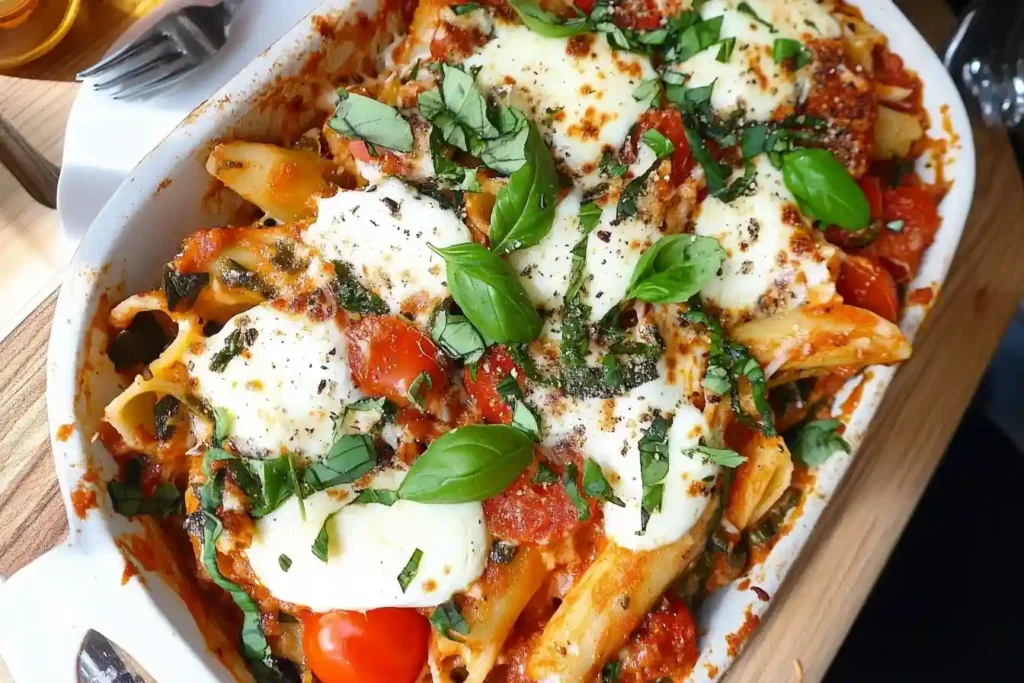
This 30-minute deconstructed lasagna delivers all the deeply comforting flavors of classic Italian baked lasagna without the time-consuming oven layering. Tender ruffles of broken lasagna noodles are tossed in a rich, savory beef marinara ragù and topped with creamy dollops of seasoned whole-milk ricotta, melted mozzarella, and fresh basil. With 48 grams of protein and 710 calories per generous bowl, it is the ultimate weeknight one-pan comfort dinner.
Table of Contents
Why Deconstructed Lasagna Outperforms Traditional Baked Layers
Traditional lasagna is an undisputed classic, but between parboiling pasta sheets, simmering meat sauce, layering baking dishes, and waiting an hour for the oven to bake and rest, it easily demands two hours. A deconstructed lasagna (often called skillet lasagna or lazy lasagna) captures the exact same textural contrast and flavor profile in just 30 minutes on the stovetop.
Instead of dense, pressed layers that can trap excess moisture and turn soggy, cooking broken noodles directly in a wide skillet allows the starchy pasta surface to grip the ragù. Every single forkful gives you the ideal ratio of al dente pasta, hearty beef sauce, and cool, velvety ricotta cheese.
Key Ingredients & Smart Substitutions

Building restaurant-quality skillet pasta relies on high-quality basics. If you love garlic-forward skillet dinners, you will recognize the aromatic base used in our Garlic Parmesan Chicken Pasta:
- Lasagna Noodles (8 oz / 225 g): Standard ridged (curly edge) dried lasagna sheets work best. Snap them by hand into irregular 2-inch pieces before boiling so they hold sauce pockets. In a pinch, wide pappardelle or campanelle make seamless stand-ins.
- Ground Beef (1 lb / 450 g): Lean 90/10 ground beef provides rich savory depth without leaving excess grease in the skillet. Sweet Italian sausage or lean ground turkey are excellent alternatives.
- Marinara Sauce (2 cups / 480 ml): Choose a thick, slow-simmered marinara made with San Marzano style tomatoes and olive oil.
- Whole-Milk Ricotta (1 cup / 245 g): Whole-milk ricotta delivers superior creaminess compared to skim varieties, which can weep watery whey when heated.
- Low-Moisture Mozzarella & Parmesan: Freshly shredded mozzarella guarantees an elastic melt, while salty, nutty aged Parmesan balances the rich tomato acidity.
- Reserved Pasta Water: The unsung hero of stovetop pasta cookery—never dump your pasta water down the drain!
The Culinary Science of Sauce Emulsion & Silky Ricotta
The primary reason home cooks struggle with lazy skillet lasagna is sauce separation: acidic tomato sauce pools watery in the bottom of the bowl while ground meat sits greasy on top. Overcoming this requires two straightforward culinary techniques:
1. Starch Emulsification: When boiling broken noodles, starch granules leach into the water. Reserving 1/2 cup (120 ml) of this starchy liquid and simmering it directly into the beef and marinara mixture creates a stable emulsion between the rendered meat fats and water. The result is a glossy, cohesive ragù that clings to the curly noodle edges, identical to the technique used in slow-simmered comfort meals like our French Onion Beef Stew.
2. Ricotta Tempering: Ricotta cheese contains heat-sensitive proteins that can curdle and turn grainy if dropped cold onto boiling sauce. In a small bowl, briskly whisk the ricotta with half the grated Parmesan, a pinch of sea salt, and a splash of fresh lemon juice or zest. Whisking loosens the protein network, allowing dollops to melt into luxurious, warm pools without breaking.
For food safety, always cook the ground beef thoroughly until it reaches an internal temperature of 160°F (71°C), as recommended by the official FoodSafety.gov Safe Minimum Internal Temperatures Guidelines.
Slow Cooker & Instant Pot Appliance Conversions
While a 12-inch skillet remains the fastest method, this recipe adapts effortlessly to modern kitchen appliances:
- Slow Cooker (Crock-Pot): Brown the ground beef, onions, and garlic in a skillet first, then transfer to a 5- to 6-quart slow cooker with the marinara and seasonings. Cook on LOW for 4 to 5 hours. During the final 30 minutes, stir in 8 oz of broken noodles and 1/2 cup of hot beef broth. Cover until the pasta is tender, then top with dolloped ricotta and mozzarella for the last 10 minutes until melted.
- Instant Pot (Pressure Cooker): Use the Sauté function to brown beef, onions, and garlic. Deglaze thoroughly with 1/2 cup of broth to prevent a BURN notice. Layer the broken noodles criss-cross over the beef, pour the marinara and 1.5 cups of water over top (do not stir), and pressure cook on HIGH for 4 minutes with a quick pressure release. Stir, dollop with seasoned cheeses, and close the lid for 2 minutes to melt.
Meal Prep, Reheating & Freezing Protocols
Deconstructed lasagna stores remarkably well because individual pasta pieces hold their structural integrity better than a multi-layered casserole slice:
- Refrigeration: Store leftovers in airtight glass containers in the refrigerator for up to 4 days. As documented in USDA FoodData Central, lean beef and pasteurized dairy retain optimal nutritional profiles and moisture when sealed promptly after cooling.
- Reheating: Stovetop reheating is best. Add 2 tablespoons of water or broth to a skillet over medium-low heat, add the pasta, and cover for 4 to 5 minutes until warmed through and saucy again. In the microwave, reheat at 70% power in 90-second bursts to keep the cheese creamy.
- Freezing: For long-term freezer meal prep, freeze the prepared meat sauce separately for up to 3 months. Boil fresh broken noodles the night of serving for the freshest texture. If you enjoy make-ahead comforting casseroles, explore our cozy Chicken Pot Pie Noodle Casserole.

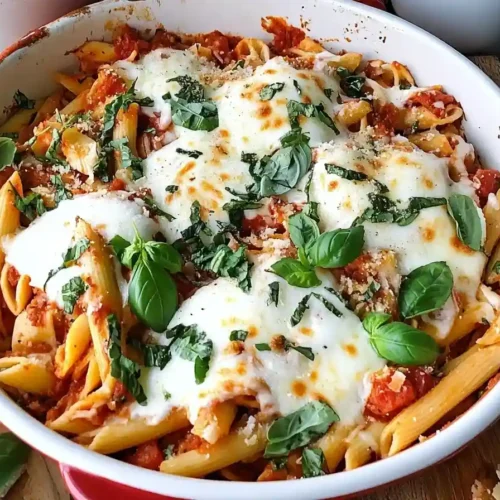
Deconstructed Lasagna
Equipment
- 12-inch cast-iron or heavy stainless-steel skillet
- 6-quart Dutch oven or large stockpot
- Instant-read thermometer
- Mixing bowl
- Thin spatula or wooden spoon
Ingredients
- 8 oz (225 g) lasagna noodles broken into 2-inch pieces
- 1 lb (450 g) 90/10 ground beef or sweet Italian sausage
- 1 tbsp (15 ml) olive oil extra virgin
- ½ medium yellow onion finely diced
- 3 cloves garlic cloves minced
- 2 cups (480 ml) marinara sauce store-bought or homemade
- ½ cup (120 ml) starchy pasta cooking water reserved before draining
- 1 tsp (2 g) dried Italian seasoning
- ½ tsp (3 g) fine sea salt to taste
- ¼ tsp (0.5 g) black pepper freshly cracked
- ¼ tsp (0.5 g) red pepper flakes optional for mild heat
- 1 cup (245 g) whole-milk ricotta cheese
- ½ cup (50 g) Parmesan cheese grated, divided
- 1 cup (115 g) mozzarella cheese shredded low-moisture
- 1 tsp (5 ml) fresh lemon zest or juice whisked into ricotta to prevent graininess
- ¼ cup fresh basil leaves torn for garnish
Instructions
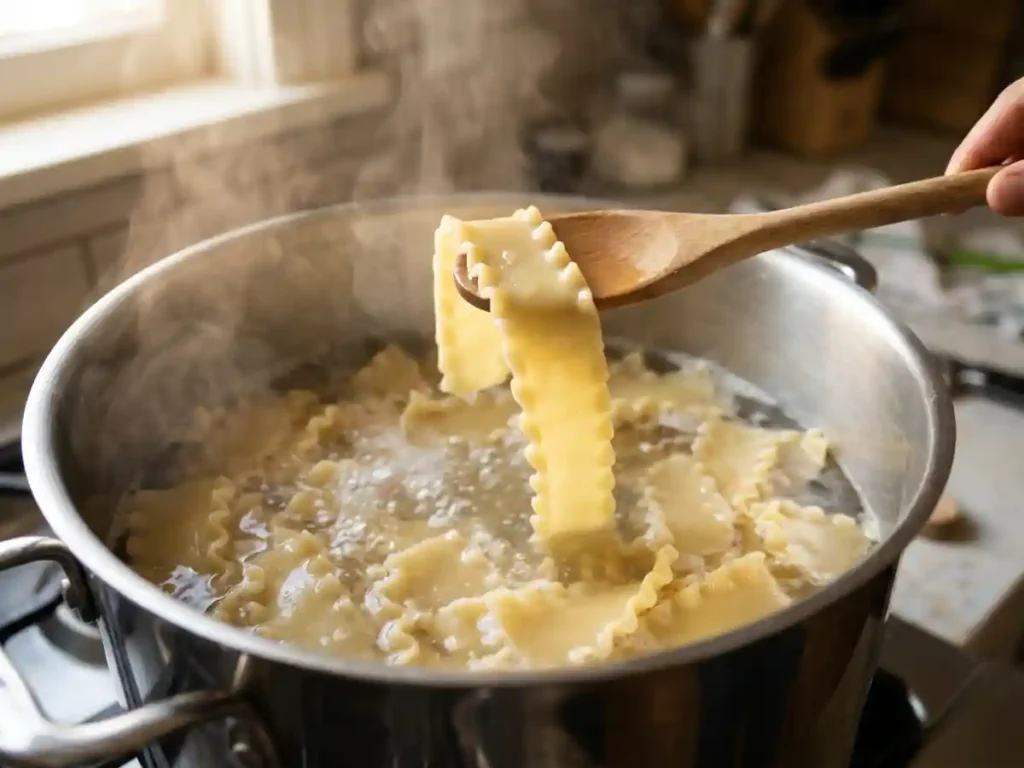
- Boil the Broken Noodles: Bring a large stockpot of salted water to a rolling boil. Add the broken lasagna noodles and cook until al dente, about 8 to 9 minutes, stirring during the first 2 minutes to prevent sticking. Carefully scoop out and reserve 1/2 cup (120 ml) of starchy pasta water, then drain noodles and toss with 1 teaspoon of olive oil.
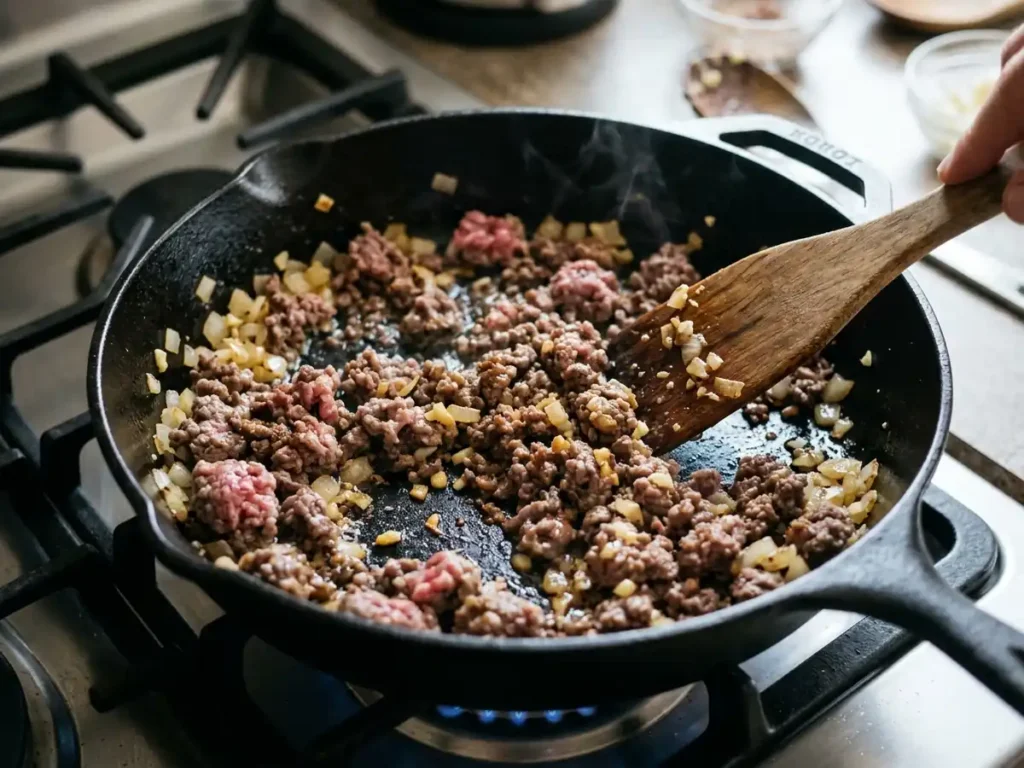
- Brown the Beef & Aromatics: Heat 1 tablespoon of olive oil in a 12-inch skillet over medium-high heat. Add ground beef and cook for 6 to 7 minutes until thoroughly browned (160°F / 71°C per FoodSafety.gov safe internal temperature guidelines). Drain excess rendered fat. Add diced onion and minced garlic, sautéing for 2 minutes until fragrant.
- Simmer & Emulsify the Sauce: Stir in marinara sauce, dried Italian seasoning, sea salt, black pepper, red pepper flakes, and the 1/2 cup of reserved starchy pasta cooking water. Simmer on medium-low for 6 to 8 minutes until the sauce slightly thickens into a glossy, emulsified ragù.
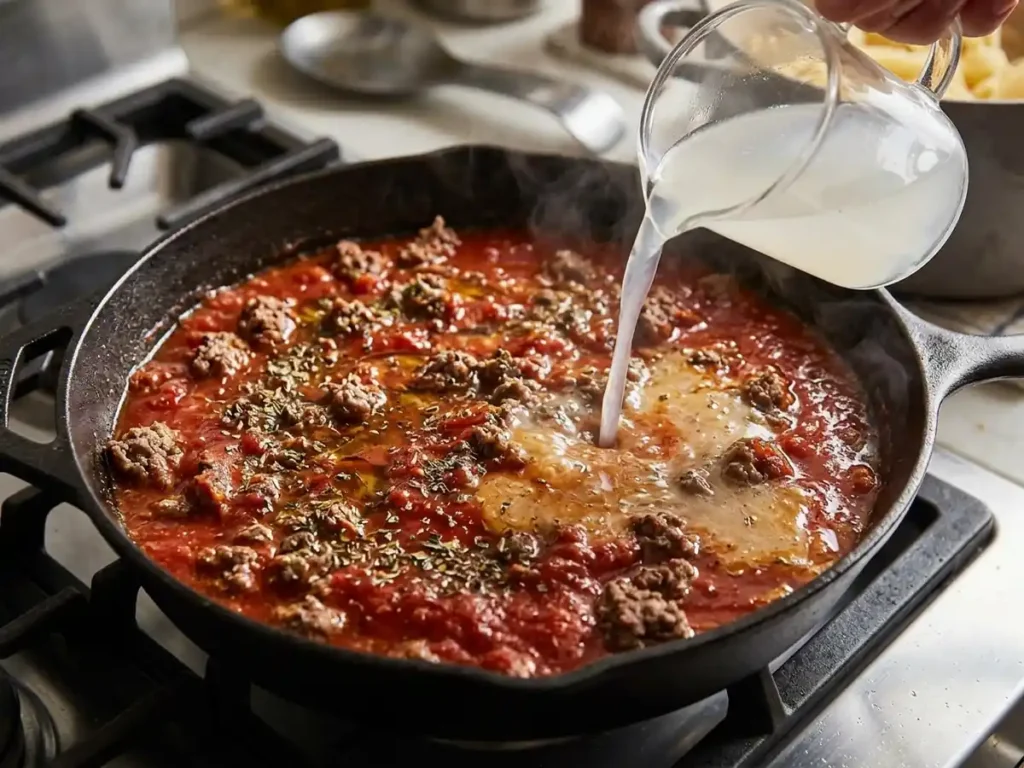
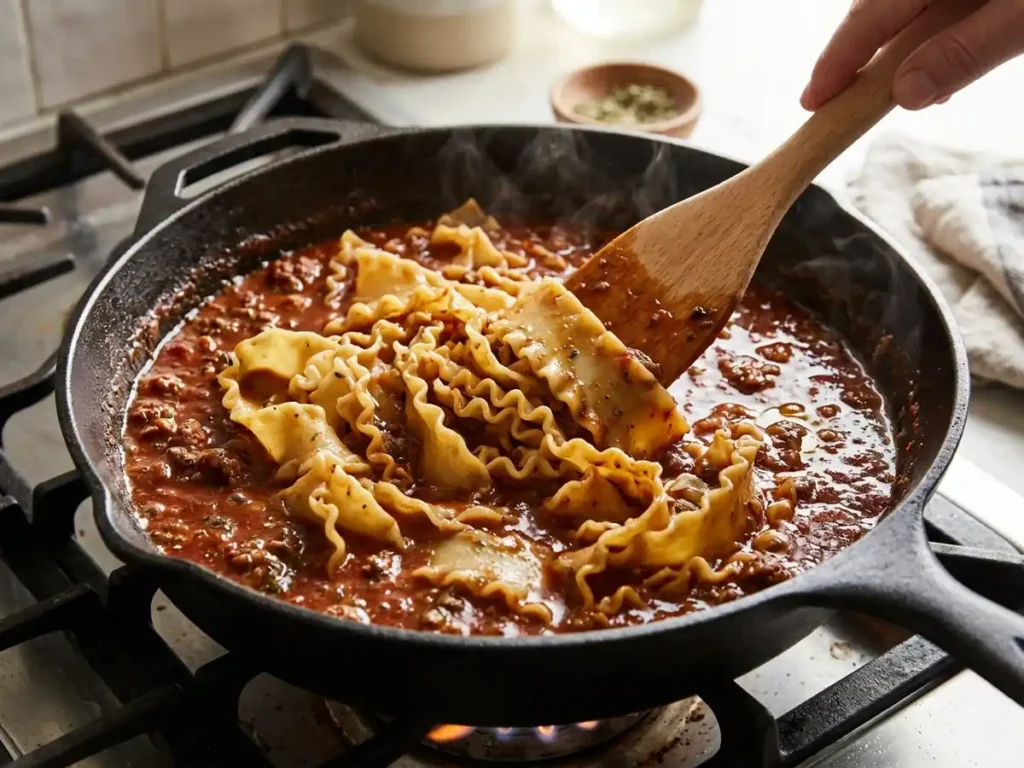
- Season Ricotta & Fold in Pasta: In a small bowl, whisk the whole-milk ricotta with half of the grated Parmesan and the lemon zest until silky smooth. Gently fold the drained broken lasagna noodles directly into the skillet with the hot meat sauce until evenly coated.
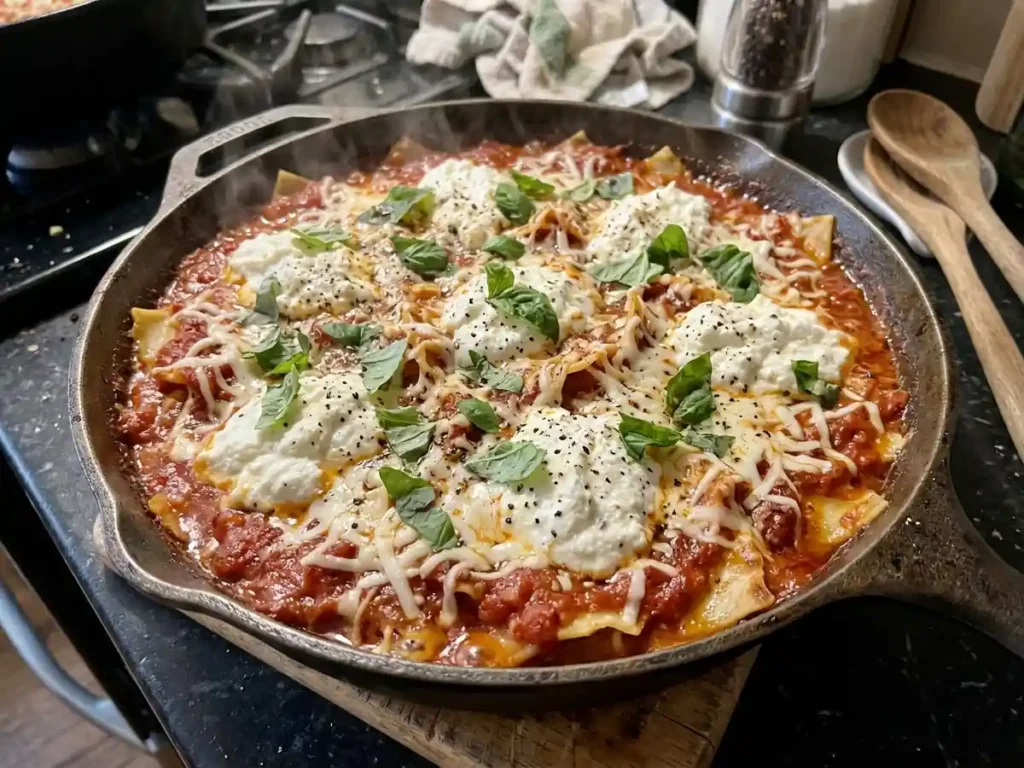
- Melt Cheeses & Garnish: Reduce heat to low. Spoon generous dollops of the seasoned whipped ricotta across the pasta, then scatter the shredded mozzarella and remaining grated Parmesan over the top. Cover with a lid for 2 to 3 minutes until cheeses melt and turn stretchy. Garnish with torn fresh basil and freshly cracked black pepper. Serve warm directly from the skillet.
Notes
👨🍳 Chef Amanda’s Expert Tips & Culinary Science
- The Starch Emulsion Key: Always reserve 1/2 cup of hot starchy pasta cooking water. The dissolved amylose and amylopectin starches bind the acidic marinara sauce and rendered beef fats into a glossy, clingy ragù that coats every noodle ribbon rather than weeping watery onto the plate.
- Silky Ricotta Protocol: Whisking whole-milk ricotta with finely grated Parmesan and a touch of lemon zest before dolloping tempers the curds, ensuring a velvety texture that stays smooth and creamy instead of separating or turning grainy under heat.
- Broiler Finish: For browned, blistered mozzarella spots, transfer the oven-safe skillet under a high broiler for 2 to 3 minutes instead of covering with a lid.
- USDA FoodData Central Transparency: Calculated per serving (4 servings total) from USDA FoodData Central reference values for the listed quantities; optional garnishes are not included.
Nutrition
Frequently Asked Questions
Can I use cottage cheese instead of ricotta cheese?
Yes. Full-fat small-curd cottage cheese makes a protein-dense alternative to ricotta. For the most authentic silky texture, blend the cottage cheese in a mini food processor for 30 seconds before dolloping it into the skillet.
What type of skillet is best for deconstructed lasagna?
A 12-inch heavy cast-iron skillet, enameled Dutch oven, or deep stainless steel sauté pan with straight sides is ideal. The wide cooking surface ensures rapid sauce reduction, and cast-iron allows you to finish the dish under the oven broiler for browned, bubbling cheese spots.
How do I prevent broken lasagna noodles from sticking together while boiling?
Drop the broken noodle pieces into rapidly boiling, heavily salted water a few pieces at a time rather than dumping them in a clump. Stir continuously for the first 2 minutes of boiling until the outer starch sets.