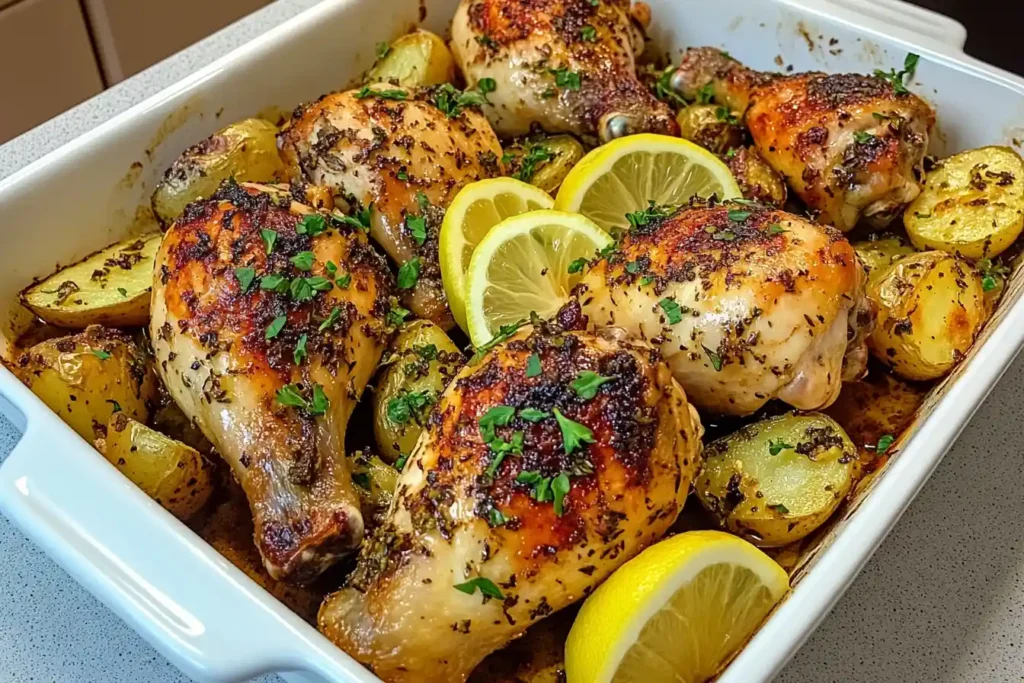
This Greek Lemon Chicken and Potatoes recipe roasts lemon-garlic chicken thighs and potato wedges together on one pan. Fresh oregano, thyme, and olive oil add flavor; the practical goal is golden, tender potatoes and chicken cooked safely to 165°F (74°C). The printable recipe below includes the exact quantities and a one-hour refrigerated marinade.
Table of Contents
Overview of Greek Cuisine & Mediterranean Flavors
Greek-inspired lemon chicken gets its distinctive flavor from lemon juice, olive oil, garlic, and oregano. This oven-roasted version pairs those flavors with potatoes on the same pan; unlike some kotopoulo lemonato variations, it is roasted rather than braised.
Health Benefits of This Classic Oven-Roasted Recipe
Chicken provides protein, while potatoes supply carbohydrates and fiber. Olive oil, lemon, and herbs season the dish without a cream-based sauce. Nutrient amounts depend on the cut of chicken, edible portion, potato size, and how much oil is served.
Recipe Inspiration and Background
Historical Roots of Greek Cooking
The Mediterranean diet is renowned for its heart-healthy benefits and vibrant flavors. Our Greek Lemon Chicken and Potatoes draws from centuries-old culinary traditions where fresh produce, robust herbs, and citrus fruits were staples. The dish’s simplicity is its strength—each ingredient is allowed to shine, creating a harmony of taste that has been cherished for generations.
What Makes This Recipe Unique
Cooking the bone-in chicken thighs and potato wedges on the same pan keeps the method straightforward. The key is to cut the potatoes evenly, leave space between the ingredients, and judge the chicken by internal temperature rather than color or clock time alone.
Ingredients and Their Benefits
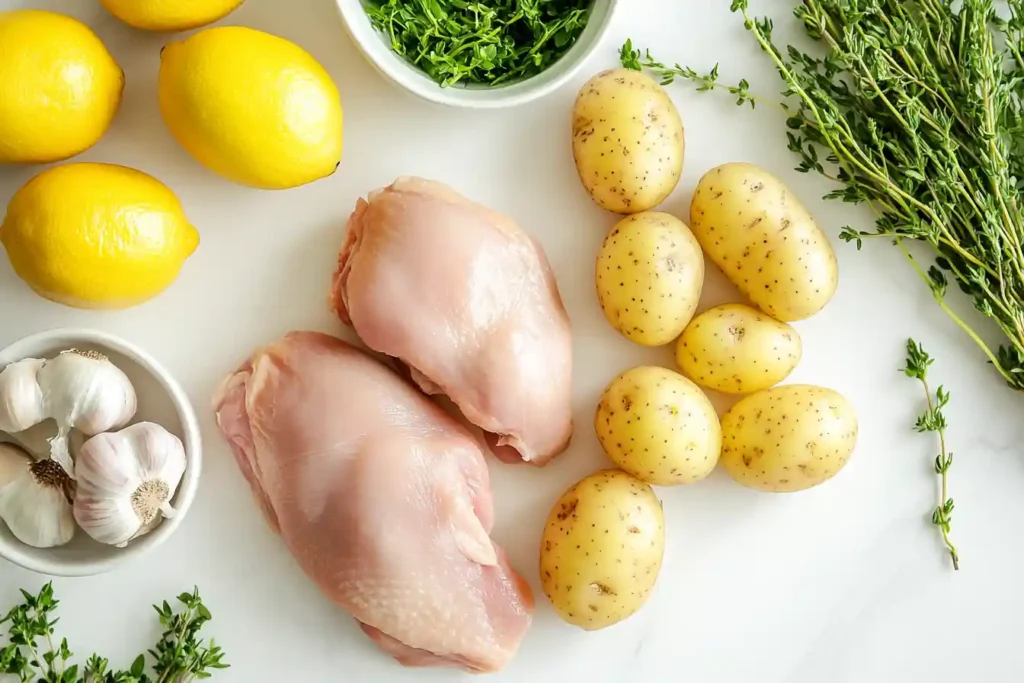
One of the best parts of this recipe is its straightforward ingredient list, which is as wholesome as it is flavorful. Below is a table summarizing the key components and their benefits:
| Ingredient | Benefit |
|---|---|
| Chicken (preferably thighs or breasts) | Provides high-quality protein; thighs add extra flavor, while breasts offer a lean option. |
| Potatoes | A great source of energy and fiber; they absorb flavors beautifully. |
| Lemons | Rich in vitamin C and antioxidants; lend a refreshing, tangy flavor. |
| Garlic | Boosts the immune system and adds depth to the marinade. |
| Olive Oil | A heart-healthy fat that enhances the flavor profile. |
| Fresh Herbs (such as oregano and thyme) | Imparts a distinct Mediterranean aroma and taste. |
| Salt & Pepper | Essential seasonings to balance and elevate natural flavors. |
Fresh Chicken & Potatoes: The Protein and Carb Power Duo
Chicken and potatoes are a dynamic duo in this recipe. The chicken not only provides a lean source of protein but also carries the marinade’s bold flavors deep into the meat. Meanwhile, the potatoes act as a savory canvas, soaking up every drop of the lemon-infused juices. This pairing is reminiscent of many comforting dishes, whether you’re making a classic lemon garlic chicken or experimenting with regional variations like kotopoulo lemonato.
Zesty Lemon, Garlic, and Herbs: The Heart of a Greek Marinade
The marinade combines lemon juice, garlic, olive oil, and herbs. Keep the chicken refrigerated while it marinates, and discard any leftover marinade that has touched raw chicken. Reserve a clean lemon half for slicing over the finished dish.
Optional Add-Ins and Substitution Ideas
Fresh oregano and thyme work well together here. For a more oregano-forward flavor, use more oregano within the same total herb quantity. If you substitute boneless chicken or breasts, check the temperature earlier rather than relying on the bone-in timing.
Step-by-Step Preparation
Use the recipe card for the complete measured method. These brief preparation notes focus on two choices that affect the final texture: keeping the chicken skin dry enough to brown and cutting the potatoes evenly.
Preparing the Chicken
Trimming, Marinating, and Seasoning Techniques
Trim excess fat but do not wash raw chicken. Keep the lemon-garlic marinade refrigerated. The card below gives the exact quantities and timing.
Prepping the Potatoes
Cutting, Seasoning, and Parboiling Methods
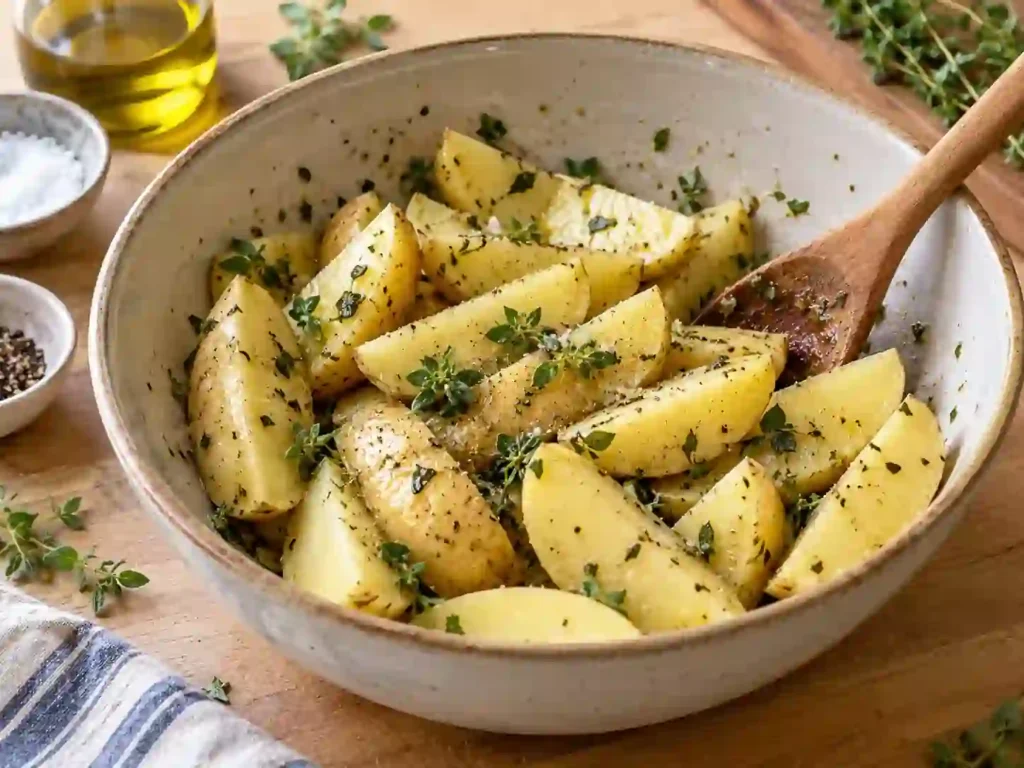
Cut all potato wedges to a similar thickness, about 3/4 inch. Season with the measured share of olive oil and herbs, then spread in a single layer so they roast rather than steam.
How to Roast Greek Chicken and Potatoes Together
Achieving Crispy Chicken Skin and Tender Potatoes
A key to the success of this dish is balancing crispiness and tenderness. Begin by preheating your oven to 400°F (200°C). Arrange the marinated chicken and seasoned potatoes in a single layer on a baking sheet, ensuring there is enough space for even roasting. The goal is to let the ingredients roast together so that the potatoes absorb some of the savory chicken drippings, enhancing their flavor.
Temperature Control and Optimal Cooking Time
At 400°F (200°C), bone-in thighs and even potato wedges will generally need about 45–55 minutes, depending on their size and the pan. Turn the potatoes halfway through, but avoid basting the chicken skin if you want it to brown. Measure 165°F (74°C) at the thickest part of the chicken, away from the bone; if it finishes first, let the potatoes continue roasting.
Plating and Presentation
A visually appealing presentation can elevate your Greek Lemon Chicken and Potatoes from a simple meal to a memorable dining experience. Thoughtful plating not only enhances the dish’s appeal but also invites you to savor every bite.
Garnishing with Fresh Herbs and Lemon Slices
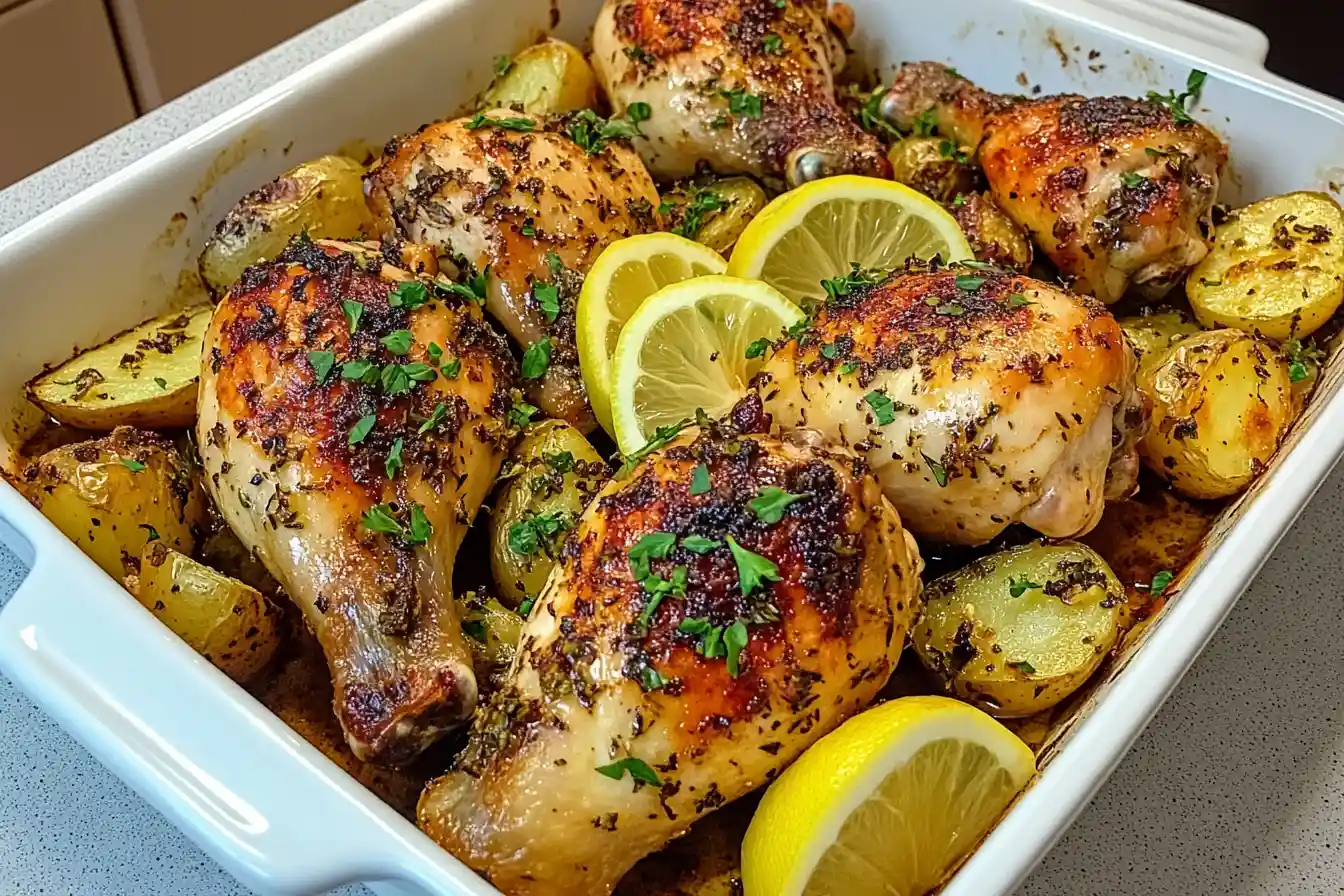
For an eye-catching presentation, garnish your plate with a generous scattering of fresh herbs like oregano or thyme. Place a few thin lemon slices on top of the chicken or artfully arranged around the plate. These vibrant colors not only add visual contrast but also hint at the zesty flavors within.
Serving Suggestions for a Complete Mediterranean Meal
Consider pairing your Greek Lemon Chicken and Potatoes with a crisp side salad or a light tzatziki dip. A bowl of Greek salad, with cucumbers, tomatoes, olives, and feta, complements the dish perfectly. You can also serve a side of warm pita bread to soak up the delicious juices. For a twist, try adding a spoonful of hummus or a drizzle of extra virgin olive oil for added richness.
A table below offers a quick guide to serving suggestions:
| Side Dish | Flavor Profile | Serving Tip |
|---|---|---|
| Greek Salad | Fresh, tangy, and savory | Toss with a splash of olive oil and a squeeze of lemon juice. |
| Tzatziki Dip | Cool and creamy | Serve in a small bowl with a drizzle of olive oil on top. |
| Warm Pita Bread | Soft and slightly chewy | Warm in the oven and serve folded with a sprinkle of za’atar. |
| Hummus | Smooth, nutty, and creamy | Drizzle extra virgin olive oil and garnish with paprika. |
Nutritional Information and Health Benefits
The nutritional composition of this dish depends on the weight of the edible chicken, the potatoes, and the olive oil used. Reliable per-serving values require those portions to be measured.
What Affects Nutrition Per Serving
The WPRM nutrition values use USDA reference foods and a standard cooked edible yield for bone-in chicken thighs, with four medium potatoes and all three tablespoons of olive oil counted. Actual values vary with thigh size, discarded marinade, and pan drippings. Sodium is not calculated because salt is added to taste.
- Chicken: A lean protein that aids in muscle repair and overall body maintenance. Chicken thighs, while slightly higher in fat than breasts, are rich in flavor and provide essential amino acids.
- Potatoes: An excellent source of complex carbohydrates, providing sustained energy. They also contribute dietary fiber, which is beneficial for digestion.
- Lemons: Packed with vitamin C and antioxidants, lemons help boost the immune system and add a tangy kick without the need for extra calories.
- Olive Oil: A heart-healthy fat known for its anti-inflammatory properties and benefits to cardiovascular health.
The default dish includes potatoes and olive oil, so it is not a low-carb recipe. Use ingredient labels and appropriate kitchen practices if cooking for someone with a gluten intolerance or allergy.
Dietary Considerations
- For Gluten-Free Diets: This recipe naturally avoids gluten, making it an excellent option for those with gluten sensitivities.
- Potato portions: The default recipe uses four potatoes for four servings. Changing the potato quantity changes the portions and any future nutrition calculation.
- Portion size: Nutrition is calculated for four servings. The edible amount of chicken and the skin eaten will change the values.
By keeping these nutritional insights in mind, you can adjust the recipe to meet your specific dietary goals without sacrificing flavor.
Variations and Creative Twists
While the classic Greek Lemon Chicken and Potatoes recipe is a tried-and-true favorite, there’s plenty of room for creativity in your kitchen. Experimenting with variations can cater to different tastes and dietary preferences, ensuring that you never tire of this delicious dish.
Spicy Greek Lemon Chicken Variation
For those who enjoy a little heat, add red pepper flakes or a dash of cayenne pepper to your marinade. This twist transforms your dish into a spicy delight while still preserving the essential Mediterranean flavors. A spicier version can be a refreshing change, especially when paired with a cooling yogurt-based dip.
Herb-Infused Twist
If you’re a fan of aromatic herbs, consider mixing in additional herbs like rosemary or basil into your marinade. This variation enhances the depth of flavor and brings a slightly different herbal profile, reminiscent of lemon garlic chicken recipes. Experiment with the quantity to balance the robust herbs with the subtle tang of lemon.
Incorporating Vegetables for a More Hearty Meal
For a vegetable variation, add zucchini or bell pepper pieces during the latter part of roasting so they do not overcook. Do not crowd the pan; use a second pan if necessary.
Troubleshooting Common Cooking Challenges
Even the most delicious recipes can sometimes face hiccups in the kitchen. Here are some common issues you might encounter, along with practical tips to overcome them.
Preventing Overcooked or Dry Chicken
- Marinating Time: Use 1 hour in the refrigerator for the default recipe; up to 4 hours is an option. Do not leave the chicken marinating on the counter.
- Crispy skin: Avoid repeatedly basting the skin; moisture on the surface works against browning. Turn the potatoes instead.
- Temperature Control: Use an oven thermometer to make sure your oven is at the correct temperature. Overheating can dry out the chicken quickly.
Ensuring Perfectly Crispy Potatoes
- Uniform Cutting: Cut the potatoes into evenly sized pieces so they cook at the same rate.
- Space on the Pan: Avoid overcrowding the baking sheet. Giving the potatoes enough room ensures they roast rather than steam.
- Parboiling: As mentioned earlier, parboiling the potatoes for 5 minutes can help achieve that perfect balance of a crispy exterior with a soft, tender interior.
Balancing Flavors
Sometimes the acidity of the lemon or the intensity of garlic can be overwhelming. Taste your marinade before applying it, and adjust with a bit more olive oil or a pinch of sugar if needed. Remember, achieving a harmonious balance of flavors is key to a successful dish.
Chef’s Tips and Reader Insights
Expert advice and reader insights often provide those little tweaks that make a big difference in your cooking.
Expert Advice for Home Cooks
- Invest in Quality Ingredients: Fresh herbs, ripe lemons, and high-quality chicken make all the difference in the final dish.
- Use a Cast-Iron Skillet: If available, a cast-iron skillet can help achieve a beautiful sear on the chicken before transferring it to the oven.
- Experiment with Marination Times: While a longer marination yields more flavor, even a 1-hour soak can make a noticeable difference. Adjust based on your schedule.
Subtle Flavor Enhancements and Finishing Touches
- Finish with a Drizzle: Just before serving, drizzle a bit of extra virgin olive oil over the dish for added shine and flavor.
- Add a Squeeze of Fresh Lemon: A final squeeze of lemon juice right before serving can brighten the flavors and add a fresh zest.
- Garnish Thoughtfully: A sprinkle of sea salt or freshly cracked black pepper over the finished dish can enhance the overall taste and presentation.
Recipe
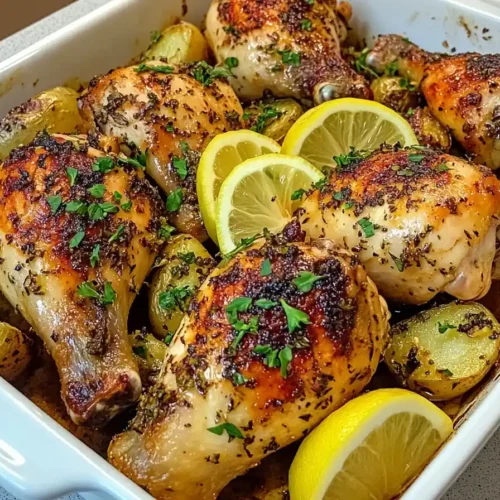
Greek Lemon Chicken and Potatoes Recipe
Ingredients
Chicken and Potatoes
- 1.5 lbs Bone-in, skin-on chicken thighs About 4 small pieces; trim excess fat, do not rinse
- 4 medium Potatoes Cut into 3/4-inch wedges
- 2 Lemons Juice 1 1/2 lemons; slice remaining 1/2 for serving
- 4 cloves Garlic Minced
- 3 tbsp Olive Oil 2 tbsp for marinade, 1 tbsp for potatoes
- 2 tbsp Fresh Herbs (oregano and thyme) 1 tbsp for marinade, 1 tbsp for potatoes
- Salt To taste
- Black Pepper To taste
Instructions
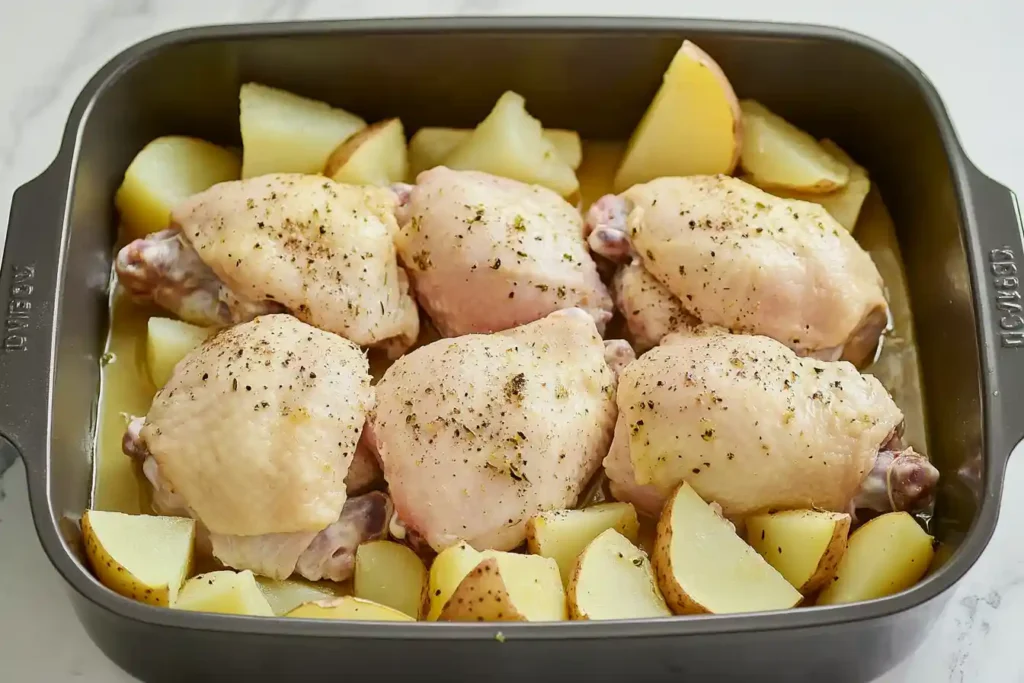
- Combine the juice of 1 1/2 lemons, minced garlic, 2 tbsp olive oil, 1 tbsp herbs, and salt and pepper. Add the chicken, cover and marinate in the refrigerator for 1 hour (up to 4 hours).
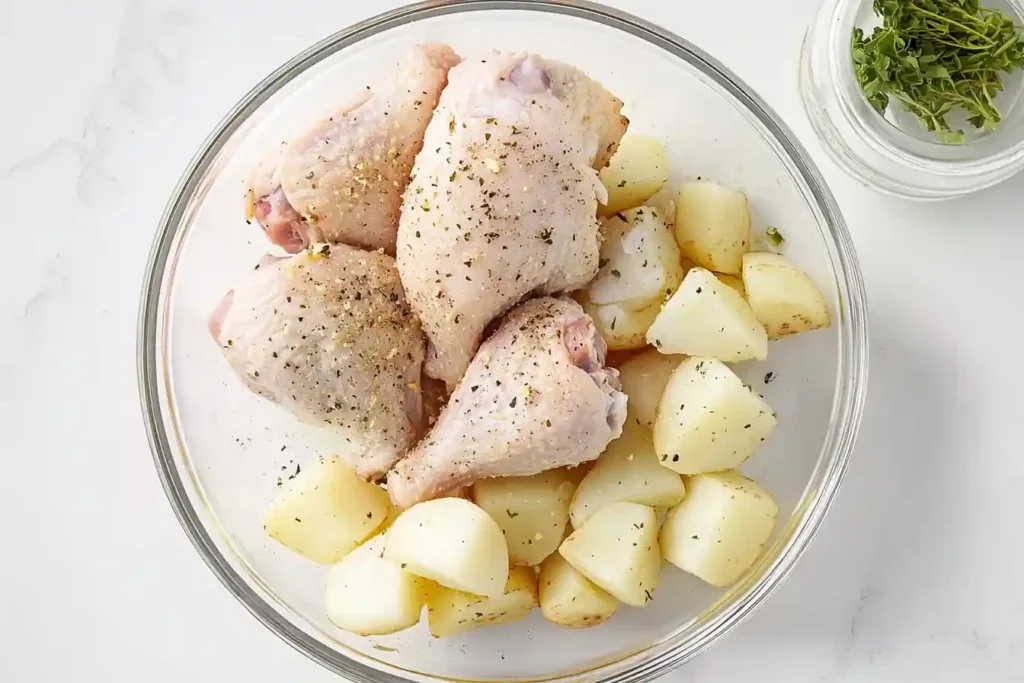
- Near the end of marinating, preheat the oven to 400°F (200°C). Use a large rimmed baking sheet or roasting pan.
- Cut the potatoes into even 3/4-inch wedges. Toss with the remaining 1 tbsp olive oil, 1 tbsp herbs, and salt and pepper.
- Place chicken skin-side up and potatoes in one layer on the pan with space between pieces. For roasted lemon slices, tuck a few thin slices from the reserved half lemon around the chicken, leaving any remaining slices for serving. Discard any leftover marinade that touched raw chicken.
- Roast for approximately 45–55 minutes, turning potatoes halfway through. Avoid basting the chicken skin if you want it to brown. If the chicken finishes first, keep it warm while the potatoes cook.
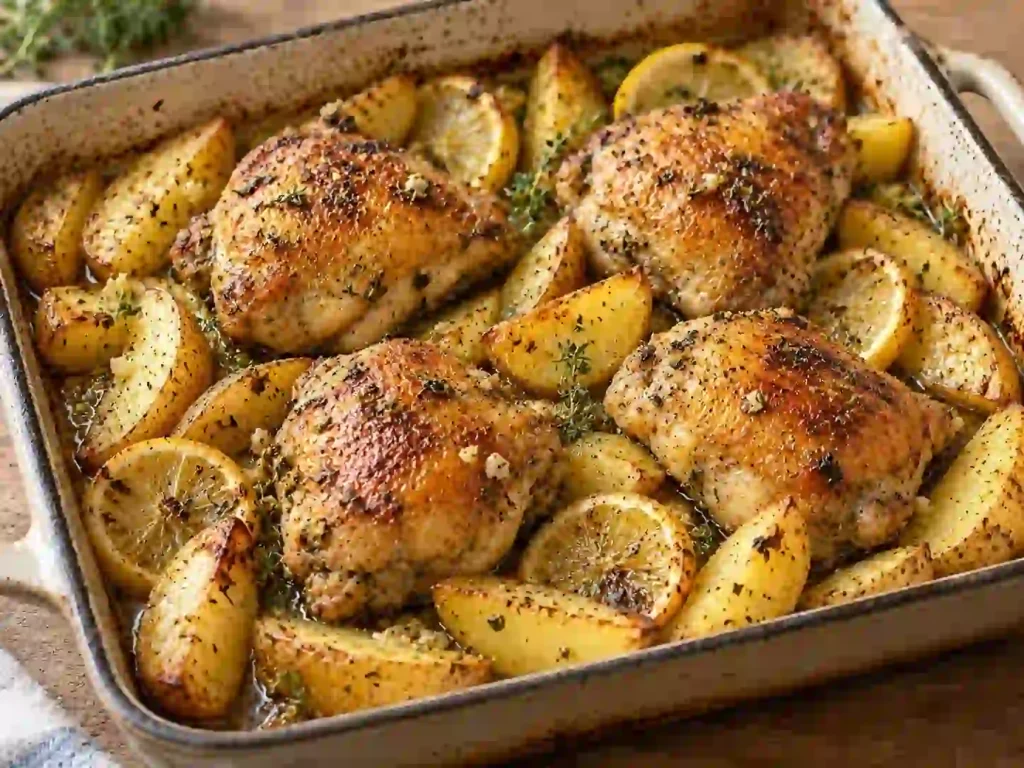
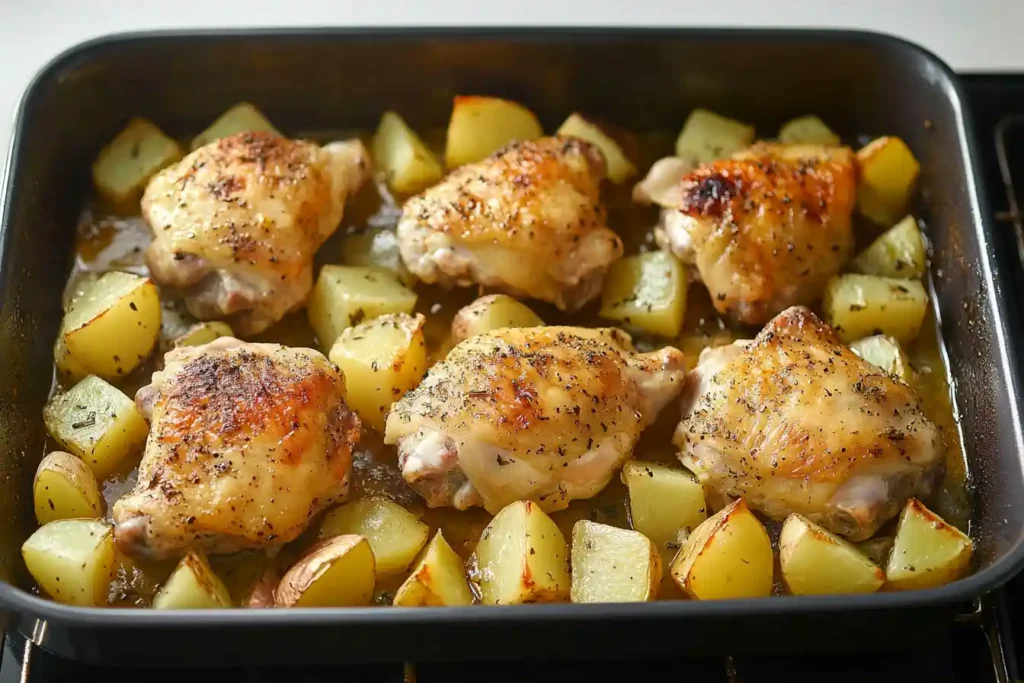
- Check the thickest part of the chicken with a food thermometer, without touching bone. The internal temperature must reach at least 165°F (74°C). Potatoes should be golden and fork-tender.
- Let the chicken rest for 5 minutes, garnish with the reserved fresh lemon slices, and serve alongside the potatoes.
Notes
Nutrition
FAQs: Greek Lemon Chicken and Potatoes
Incorporating frequently asked questions can help address common concerns and enhance the reader’s understanding of the dish.
What’s the best type of chicken to use?
Bone-in, skin-on chicken thighs are the default for this recipe’s roasting time. Boneless thighs or breasts can cook faster; use a thermometer and remove them once the thickest part reaches 165°F (74°C).
Can I prepare this dish ahead of time?
Yes. Cut the potatoes ahead and refrigerate them separately. Marinate the chicken covered in the refrigerator for 1 hour or up to 4 hours, then keep it chilled until it goes into the roasting pan.
Is this recipe suitable for a gluten-free diet?
The ingredients listed do not intentionally contain gluten. For someone with celiac disease, check all packaged seasonings and take precautions against cross-contact.
How do I achieve crispy skin on the chicken?
Pat the chicken dry before marinating, then place the thighs skin-side up with space between pieces. Avoid repeatedly basting the skin; cook until browned and the chicken reaches 165°F (74°C).
Can I use other vegetables in this recipe?
Yes. Bell peppers or zucchini work well, but add them later in the roasting time so they do not become too soft. Use a second pan if needed to avoid overcrowding.
Conclusion and Final Thoughts
Recap of Key Steps and Techniques
Greek Lemon Chicken and Potatoes is a celebration of Mediterranean simplicity and robust flavors. From marinating the chicken in a zesty lemon and garlic blend to perfectly roasting potatoes that soak up every drop of flavor, every step is designed to enhance the overall dining experience. Whether you opt for a traditional approach or experiment with creative variations like a spicy twist or a creamy Dijon finish, the result is a dish that delights both the eyes and the palate.
Inspiring Your Next Mediterranean Cooking Adventure
This recipe isn’t just about preparing a meal—it’s an invitation to explore the rich culinary traditions of Greece. Embrace the opportunity to experiment with flavors, adjust techniques, and make the dish your own. With the practical tips and troubleshooting advice provided, you’re well-equipped to overcome any challenges in the kitchen and serve up a meal that’s as nutritious as it is delicious.
Additional Resources and References
For further inspiration, check out these related recipes and authoritative resources:
- Explore a variety of Sheet Pan Dinners for Busy Weeknights for quick and flavorful ideas.
- Discover comforting meals like the French Onion Chicken Crock Pot.
- Try a twist on classic comfort food with the Chicken Pot Pie Noodle Casserole.
- Learn more about the history and variations of lemon chicken on Wikipedia’s Lemon Chicken page.