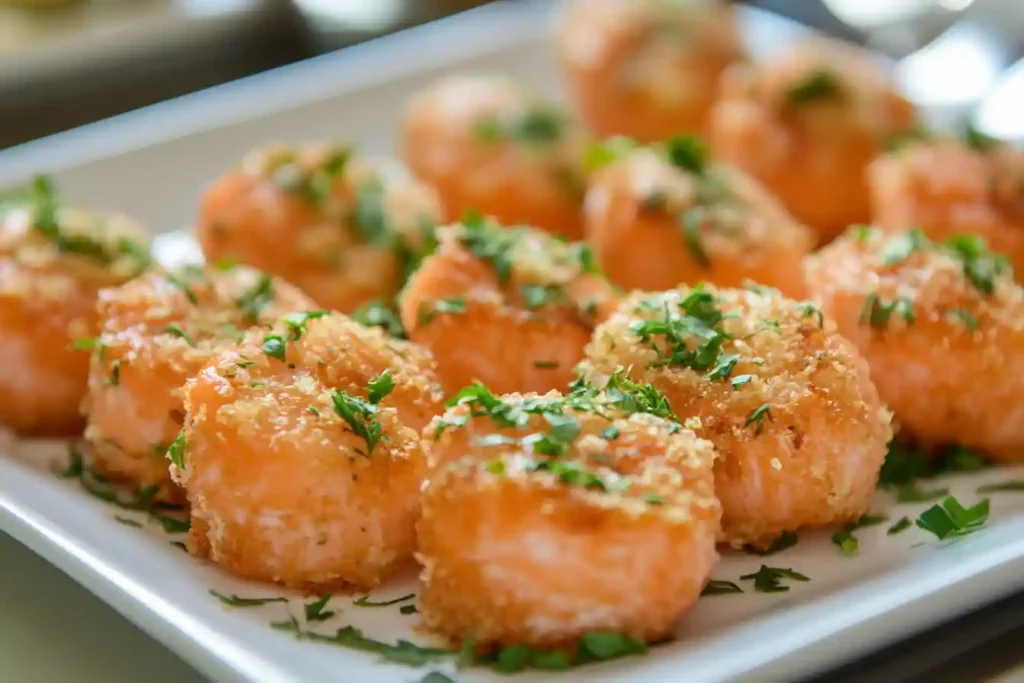
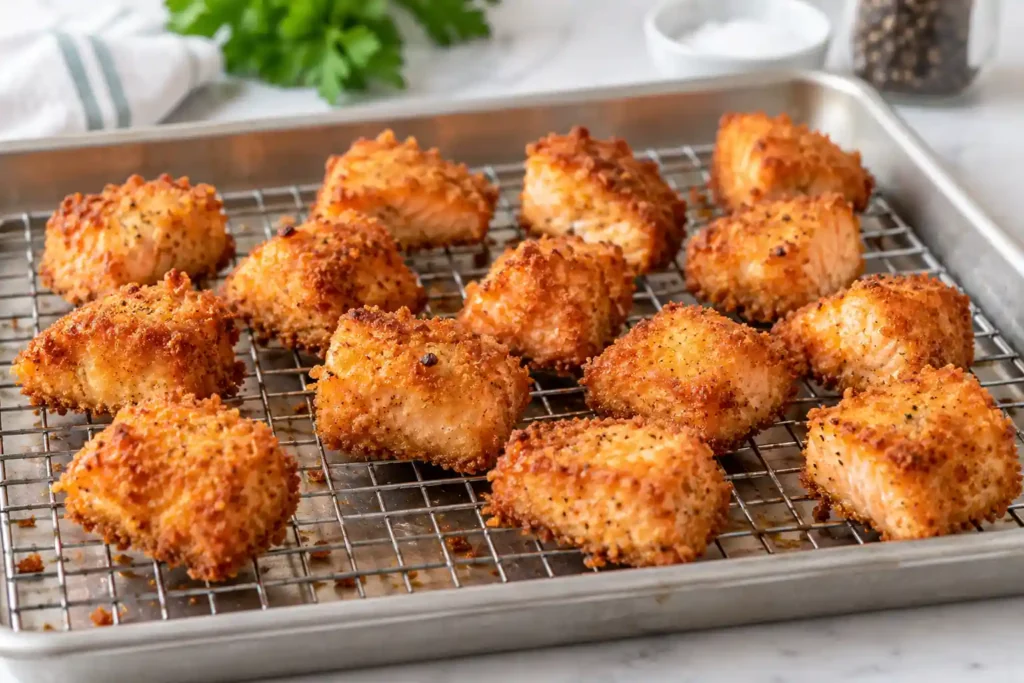
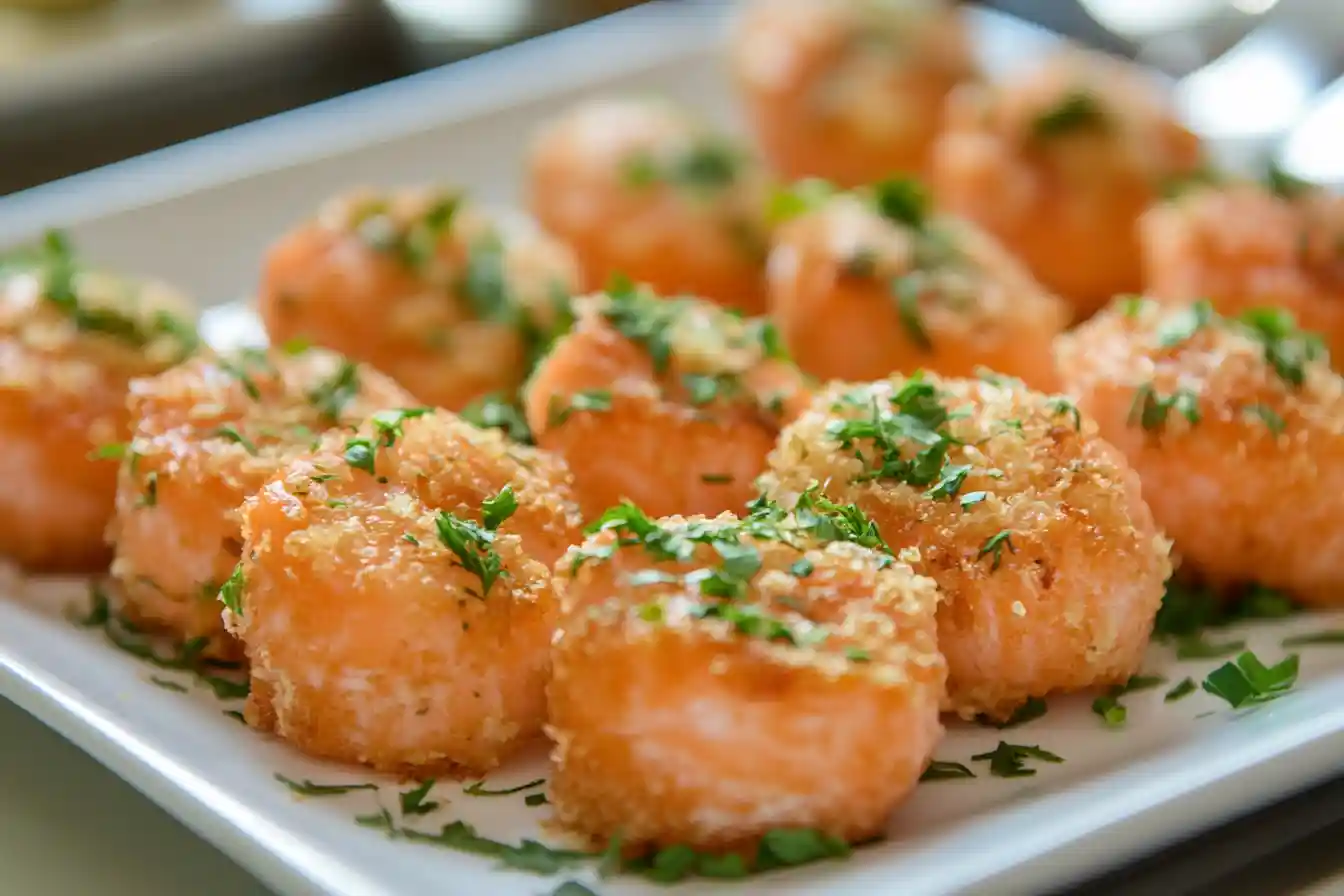
These fried salmon bites are crisp on the outside, flaky in the center, and coated with a light flour-cornstarch dredge, egg wash, and panko. The pieces fry quickly at 350°F, making them a practical option for a weeknight dinner, appetizer platter, or salmon nuggets with dipping sauce.
This updated version keeps the recipe focused on one clear method: breaded, deep-fried salmon bites. The salmon is cut into uniform 1-inch cubes, breaded in three stages, then cooked in small batches until the coating is golden and the fish reaches a safe internal temperature.
| Prep 15 minutes | Cook 12 minutes | Total 27 minutes | Serves 4 |
Why This Fried Salmon Bites Recipe Works
The coating uses both all-purpose flour and cornstarch. Flour gives the breading structure, while cornstarch helps keep the outer layer light and crisp. Egg wash gives the panko something to hold onto, and the coarse crumbs create the crunchy texture people expect from good salmon nuggets.
Oil temperature is just as important as the coating. Keeping the oil near 350°F helps the breading brown quickly instead of soaking up excess oil. Frying in small batches also prevents a sharp temperature drop, which is one of the main causes of greasy or soft fried food.
Key Ingredients & Smart Swaps
- Skinless salmon: Uniform 1-inch cubes cook more evenly and are easier to bread than mixed-size pieces.
- All-purpose flour + cornstarch: This combination creates a thin first coating and supports a crisp crust. Potato starch can replace cornstarch 1:1 if needed.
- Egg wash: The eggs bind the dry coating to the salmon and help the panko adhere.
- Panko breadcrumbs: Panko gives these breaded salmon bites a coarser, crunchier finish than fine breadcrumbs.
- High-heat oil: Canola, vegetable, or peanut oil all work well for frying at 350°F.
Smart Swaps at a Glance
| Original | Swap | Ratio | What Changes |
|---|---|---|---|
| Cornstarch | Potato starch | 1:1 | Similar light, crisp first coating; frying time stays the same. |
| Panko breadcrumbs | Fine breadcrumbs | 1:1 by volume | Creates a finer, less craggy crust; cooking method stays the same. |
| Panko breadcrumbs | Certified gluten-free panko | 1:1 by volume | Similar coarse crunch; use a gluten-free flour blend as well if the whole recipe must be gluten-free. |
| Canola oil | Vegetable or peanut oil | As needed | No method change; keep the frying oil near 350°F. |
Fried Salmon Bites Recipe
Equipment
- Heavy-bottomed pot or deep fryer
- Deep-fry thermometer
- Instant-read thermometer
- 3 shallow bowls for dredging
- Tongs or spider strainer
- Sharp chef’s knife
- Cutting board
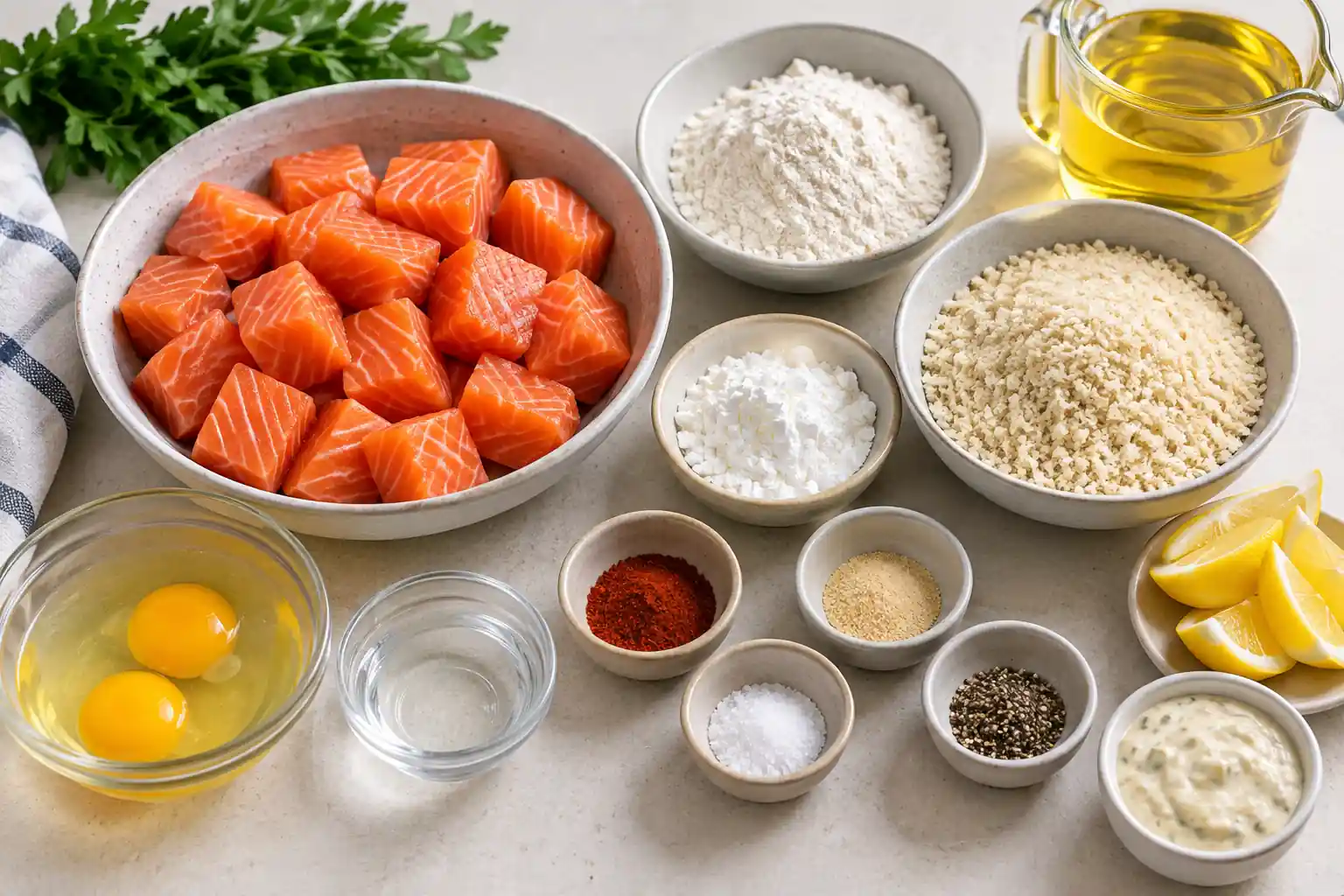
Ingredients
Salmon
- 1 lb skinless salmon fillet pin bones removed, cut into uniform 1-inch cubes
Crispy Coating
- 1/2 cup all-purpose flour
- 1/4 cup cornstarch
- 1 tsp paprika
- 1/2 tsp garlic powder
- 1/2 tsp kosher salt
- 1/4 tsp black pepper
- 2 large eggs
- 1 tbsp cold water
- 1 cup panko breadcrumbs
For Frying & Serving
- neutral high-heat oil such as canola, vegetable, or peanut oil; enough for about 1 1/2 inches in the pot
- lemon wedges optional, for serving
- dipping sauce optional, such as tartar sauce or spicy mayo
Instructions
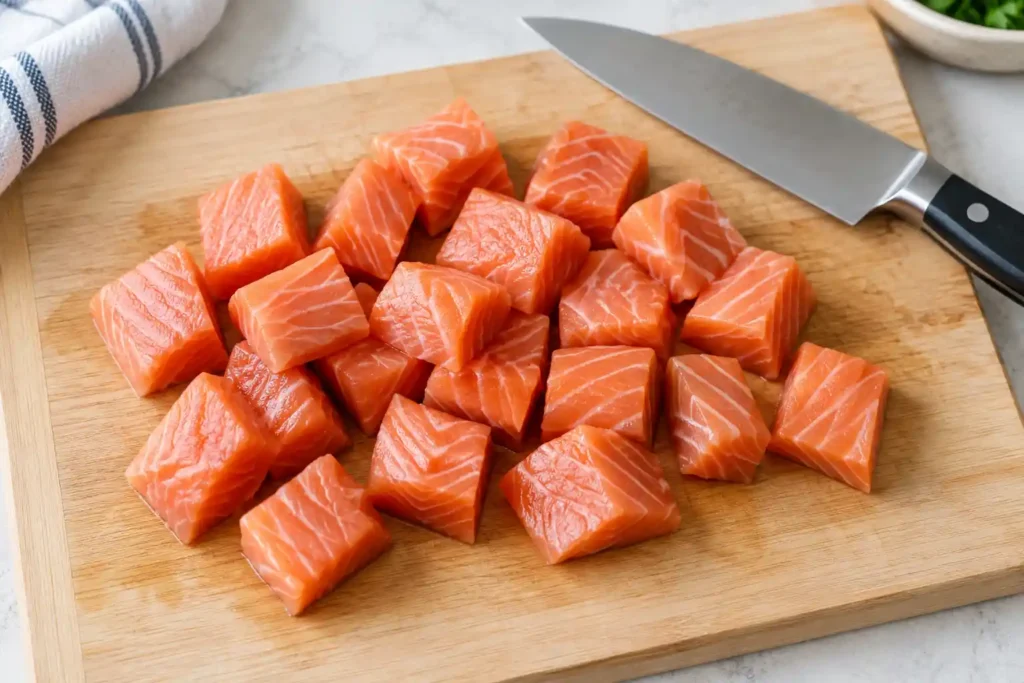
- Pat the salmon very dry with paper towels and cut it into uniform 1-inch cubes. Check for and remove any pin bones.
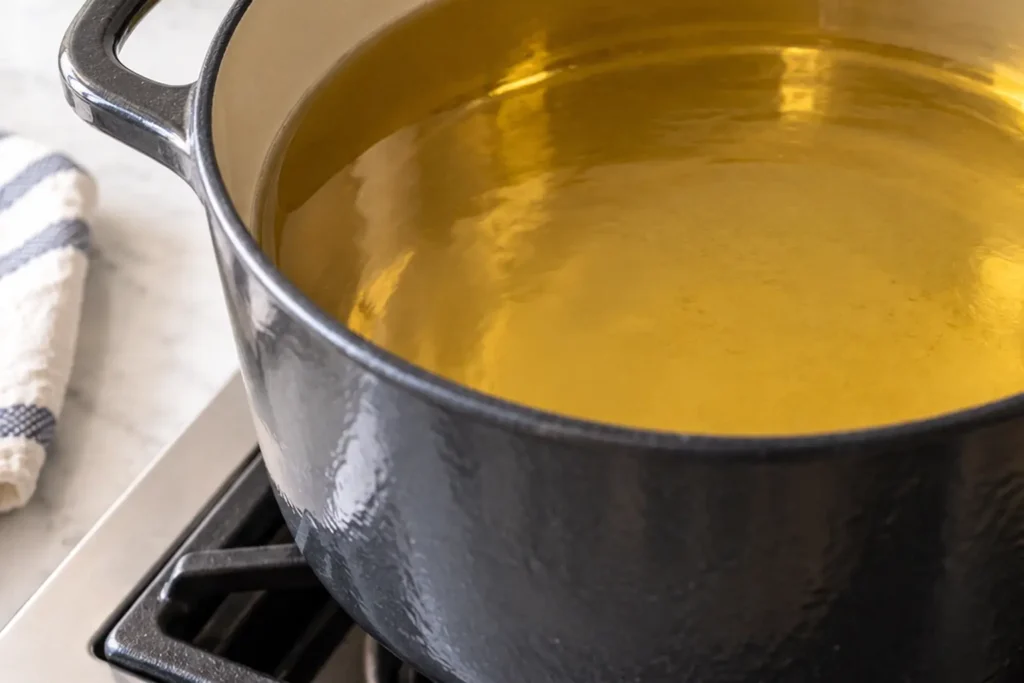
- Pour enough neutral oil into a heavy-bottomed pot to reach about 1 1/2 inches deep. Heat to 350°F (175°C), monitoring the temperature with a deep-fry thermometer.
- In the first shallow bowl, whisk together the flour, cornstarch, paprika, garlic powder, salt, and black pepper. In the second bowl, whisk the eggs with 1 tablespoon cold water. Add the panko to a third bowl.
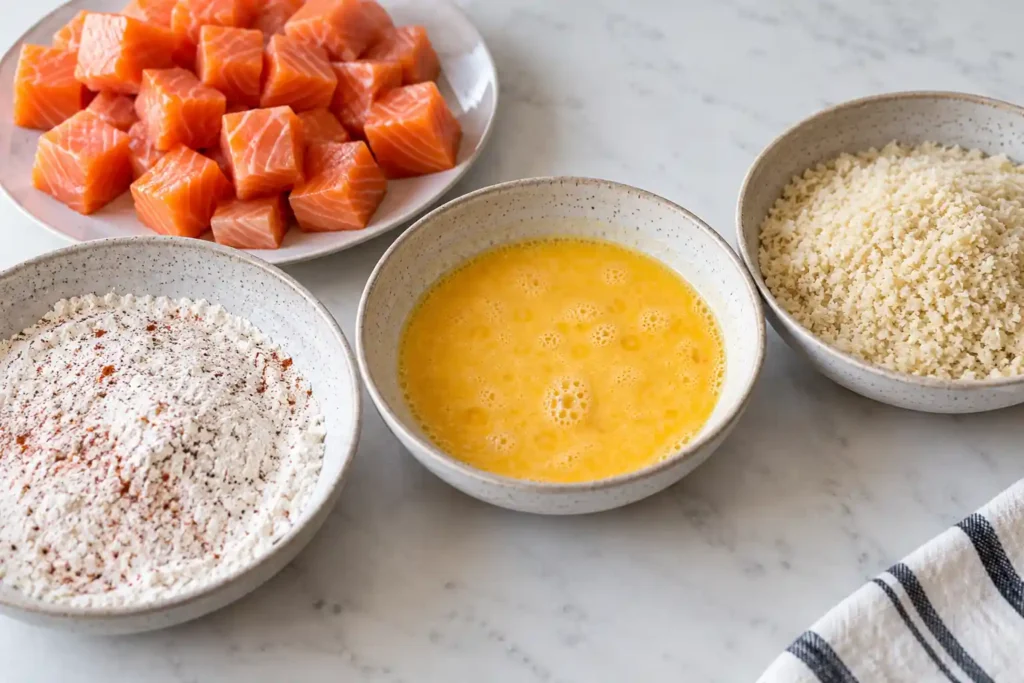
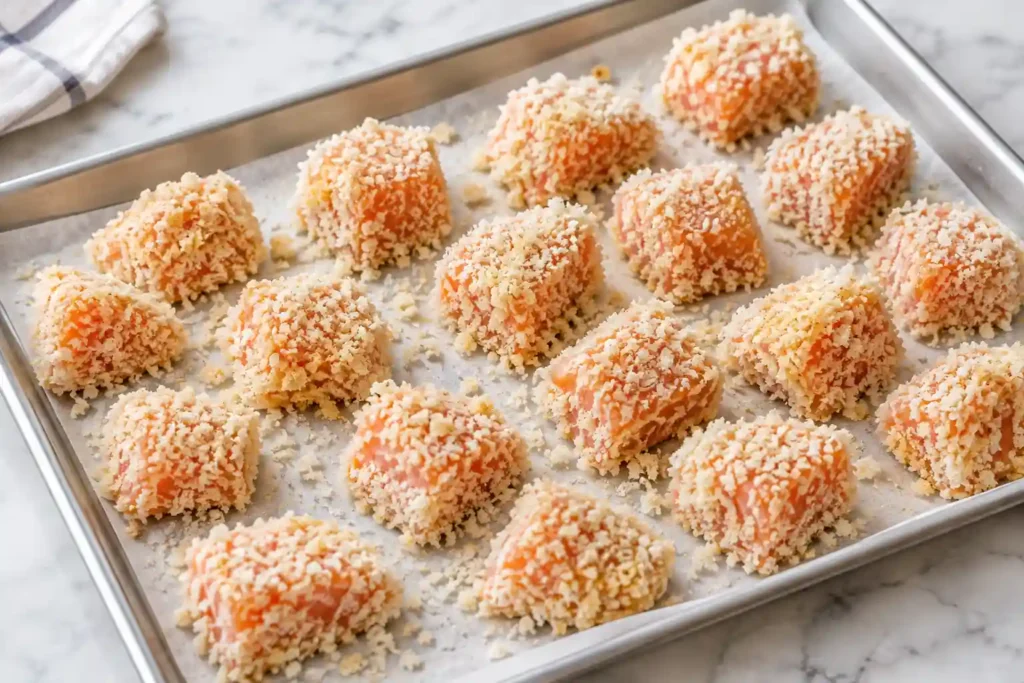
- Working a few pieces at a time, coat the salmon lightly in the flour mixture, dip in the egg wash, then press into the panko until evenly coated. Shake off loose crumbs.
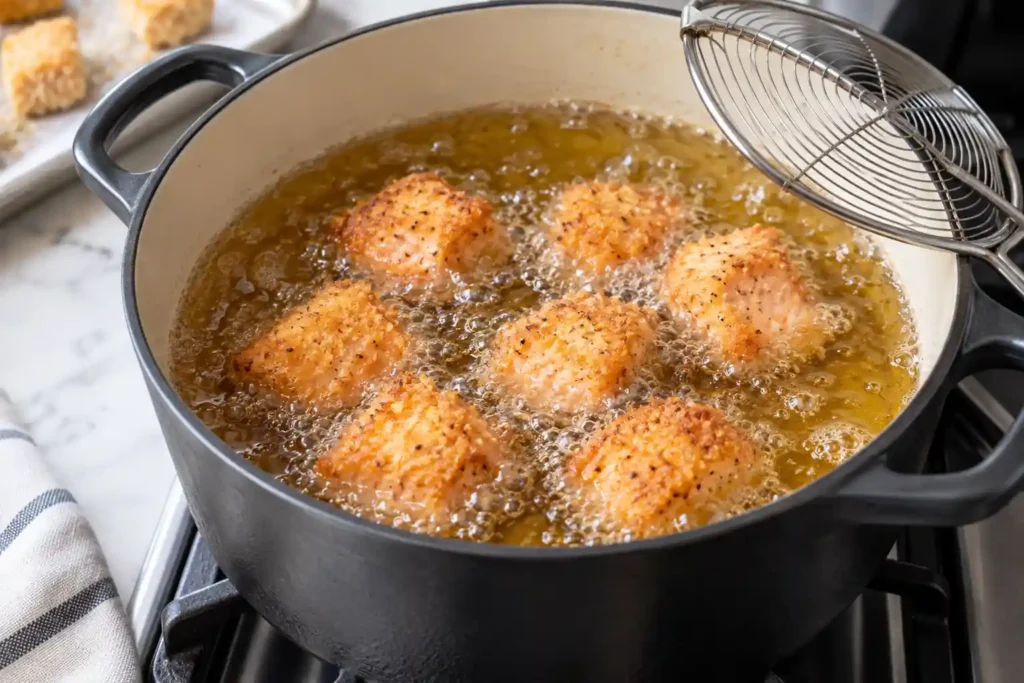
- Fry the salmon bites in small batches at 350°F (175°C) for about 3 to 4 minutes total, turning as needed, until the coating is deep golden and the thickest piece reaches 145°F (63°C). Let the oil return to temperature between batches.
- Transfer the fried salmon bites to a wire rack or paper towel-lined tray. Serve immediately with lemon wedges and your favorite dipping sauce.
Notes
Visual Doneness Cues
- The panko coating should be deep golden and crisp rather than pale or oily.
- The center of the salmon should look opaque and separate easily when gently pressed.
- For food safety, the thickest bite should reach 145°F (63°C). FoodSafety.gov lists 145°F as the safe minimum internal temperature for fish.
FoodSafety.gov safe minimum temperature chart
How to Keep Fried Salmon Bites Crispy
- Dry the salmon well. Surface moisture works against breading adhesion and crispness.
- Use uniform pieces. One-inch cubes finish at roughly the same time, reducing the chance of dry edges or undercooked centers.
- Keep the oil near 350°F. Let the oil recover between batches before adding more salmon.
- Do not crowd the pot. Too many pieces at once cool the oil and create a softer coating.
- Drain without trapping steam. A wire rack gives the crust the best chance to stay crisp; paper towels also work for a short drain.
Fried Salmon Bites with Flour, Cornstarch, and Panko
The three-stage coating is deliberate. The seasoned flour-cornstarch mixture dries and seasons the outside of the salmon. The egg wash forms a sticky middle layer, and the panko creates the final crunch. This is the main difference between these deep fried salmon bites and an unbreaded salmon cube recipe.
If the coating falls off, the most common causes are wet salmon, skipping the flour layer, or handling the breaded pieces too aggressively before frying. Coat a few pieces at a time and move them directly from the breading station to the hot oil.
Best Dipping Sauces and Sides
Tartar sauce, spicy mayo, remoulade, or a simple lemony yogurt sauce all work with crispy fried salmon bites. For a complete dinner, add a green salad, roasted vegetables, or rice. Prefer a lighter, unbreaded version? Try these air fryer salmon bites with sweet-soy glaze and spicy mayo.
For more salmon dinner ideas, try this Garlic Butter Salmon. If you want a creamy rice side, the Smoked Salmon Risotto is another option. For something lighter, use the Smoked Salmon Salad as inspiration for a fresh side.
Storage and Reheating
Refrigerate leftover fried salmon bites promptly in a covered container and use them within 3–4 days. For the best texture, reheat them in an oven or air fryer until thoroughly heated rather than microwaving them, which softens the panko coating.
Because breaded fried foods lose some crispness after freezing and thawing, refrigeration is the better choice when you expect to eat the leftovers within a few days.
Frequently Asked Questions
How long should I fry salmon bites?
For uniform 1-inch pieces, fry in small batches for about 3–4 minutes total at 350°F, turning as needed. Always check the thickest piece and cook fish to 145°F.
What oil is best for deep fried salmon bites?
Use a neutral high-heat oil such as canola, vegetable, or peanut oil. The important part is keeping the oil close to 350°F during frying.
Can I use frozen salmon?
Yes. Thaw it completely in the refrigerator first, then pat it very dry before cutting and breading. Excess water can make the coating harder to attach and less crisp.
Are fried salmon bites the same as salmon nuggets?
They can be. “Salmon nuggets” is commonly used for bite-size salmon pieces with a crisp coating. This recipe uses a flour-cornstarch dredge, egg wash, and panko for a classic breaded nugget-style crust.
Why did my breading come off?
The salmon may have been too wet, the flour layer may have been skipped, or the breaded pieces may have been handled too much before frying. Pat the salmon dry, follow the three-stage coating, and shake off only loose crumbs.