
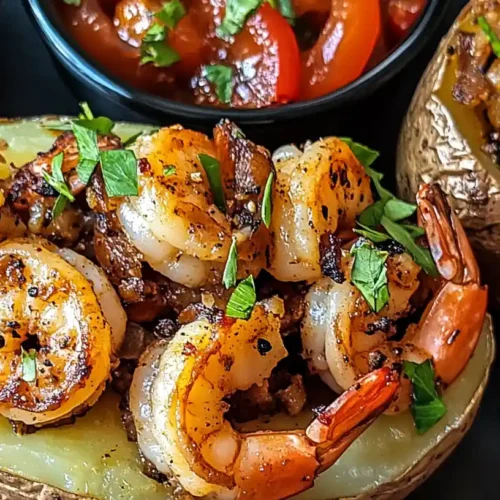
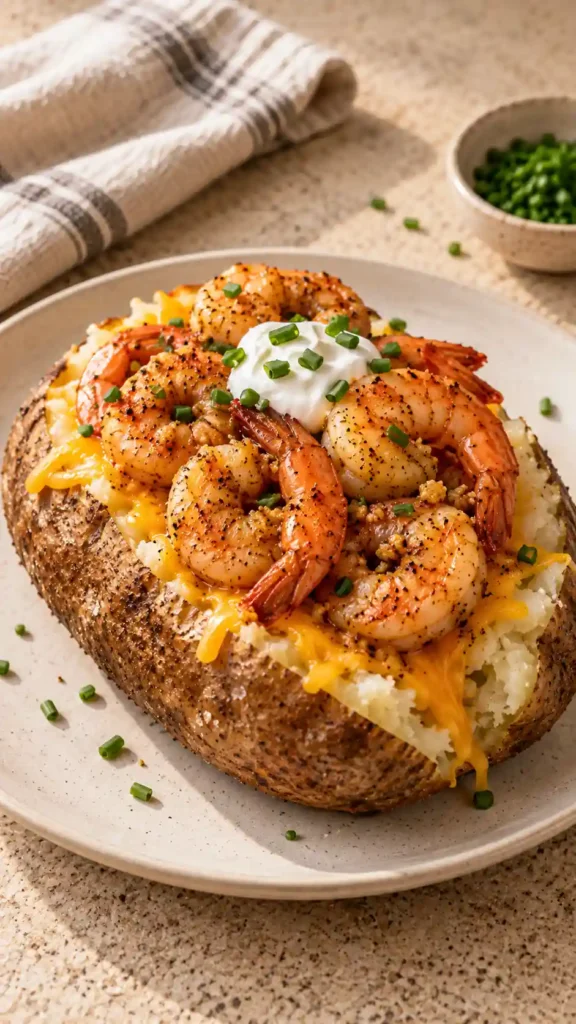
This shrimp baked potato pairs a hot, fluffy russet potato baked directly on the oven rack at 400°F (200°C) with tender garlic-paprika shrimp, melted sharp cheddar, cool sour cream, and fresh chives. Because the shrimp sears in a skillet during the final 5 minutes of baking, every loaded baked potato with shrimp reaches the table piping hot in 1 hour 15 minutes total (with just 15 minutes of active prep).
Table of Contents
Table of Contents
Why Direct-Rack Baking and Late-Stage Searing Work
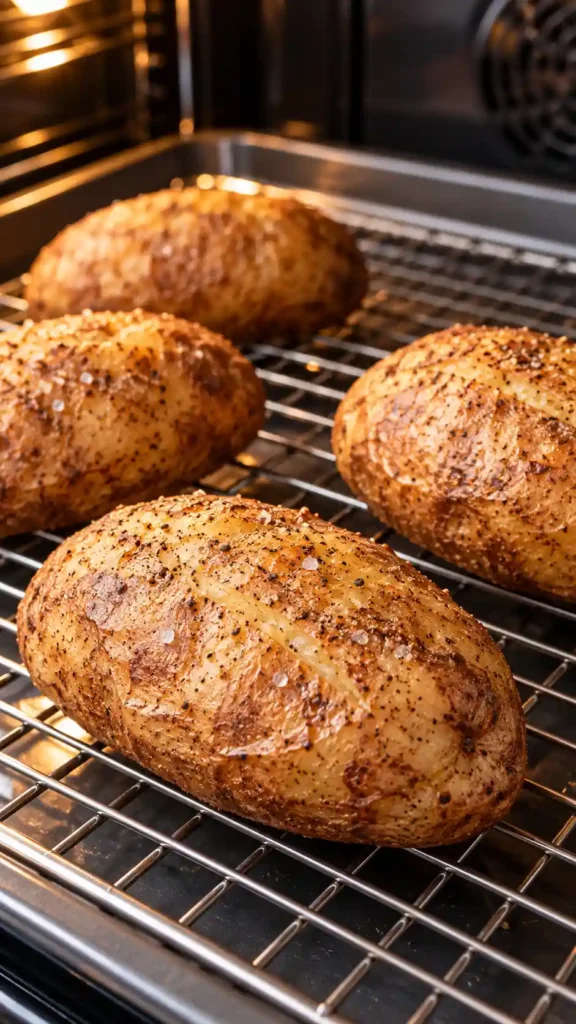
Most twice-baked or foil-wrapped recipes trap steam against the potato skin for 90 minutes, turning the exterior leathery and muting the roasted potato flavor. Baking pierced, oil-and-salt-rubbed russets directly on the middle oven rack at 400°F (200°C) lets dry convective heat dehydrate the outer skin into a crisp shell while gelatinizing the high-amylose starch granules inside until the center hits 205°F to 210°F (96°C to 99°C).
Meanwhile, cooking the garlic-paprika shrimp on the stovetop for just 2 to 3 minutes per side prevents the protein muscle fibers from contracting past 145°F (63°C). Instead of baking shrimp inside the oven—where residual heat turns seafood chalky and rubbery—you spoon freshly seared shrimp and warm lemon-garlic pan juices straight over the melted cheddar.
Key Ingredients and Smart Swaps
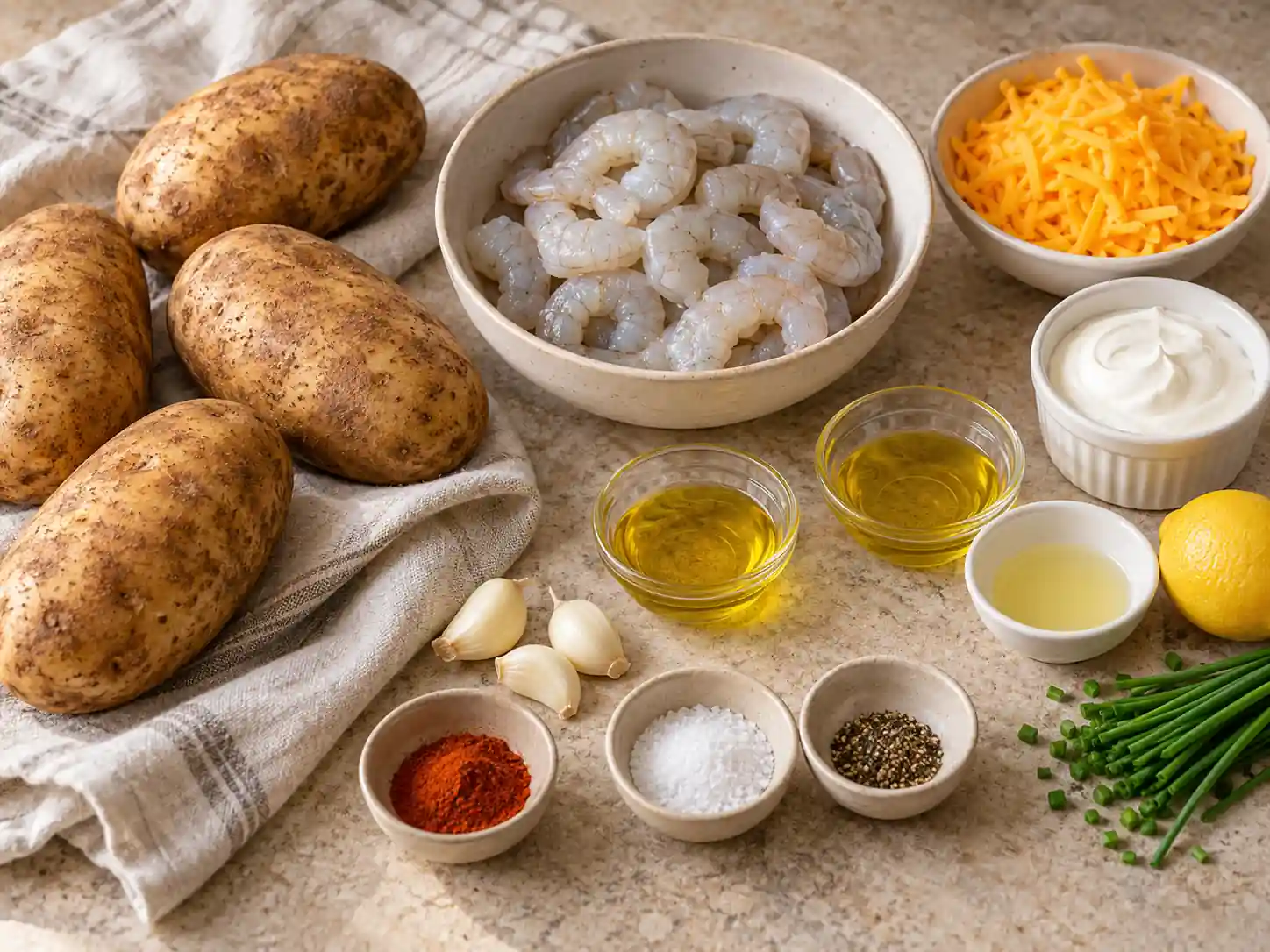
- Medium Russet Potatoes (8 to 10 oz / 225 to 285 g each): High-starch, low-moisture russet (Idaho) potatoes fluff up cleanly when forked open and form sturdy boats for heavy toppings. Avoid waxy red potatoes, which stay dense.
- Medium Raw Shrimp (26/30 or 31/40 count per pound): Bite-sized medium shrimp nestle inside a split potato without tumbling off. If using frozen shrimp, thaw them overnight in the refrigerator and blot completely dry before seasoning.
- Block Sharp Cheddar Cheese (freshly grated): Freshly shredded cheddar melts smoothly into the hot potato flesh because it contains no anti-caking potato starch.
- Sweet or Smoked Paprika & Fresh Garlic: Paprika colors the olive oil brick-red and adds warm depth that balances the bright lemon juice and rich sour cream.
| Ingredient or Variation | Tested Swap | Texture & Flavor Impact |
|---|---|---|
| Cajun Shrimp Baked Potato | Replace paprika with 1 ½ tsp (4 g) unsalted Cajun seasoning | Adds cayenne heat, oregano, and thyme notes without oversalting the shrimp. |
| Creamy Garlic Butter Twist | Fold 2 tbsp (28 g) roasted garlic herb butter into the hot potato flesh before the cheese | Creates a richer, steakhouse-style stuffed shrimp baked potato base. |
| Higher-Protein Topping | Swap full-fat sour cream for ½ cup (120 g) plain 2% Greek yogurt | Cuts saturated fat while adding tangy creaminess and extra protein per serving. |
| Cheese Variation | Use ½ cup (56 g) sharp cheddar + ½ cup (56 g) Monterey Jack or Gouda | Monterey Jack melts into extra-stretchy strings alongside sharp cheddar flavor. |
4 Details That Keep a Baked Potato with Shrimp Fluffy and Juicy
1. Match your potato weights within 1 ounce (30 g). Four 8-to-10-ounce (225 to 285 g) russets finish baking within 5 minutes of one another. Scrub the skins, dry them completely with a kitchen towel, and prick each potato 6 to 8 times with a fork so expanding internal steam never splits the skin prematurely.
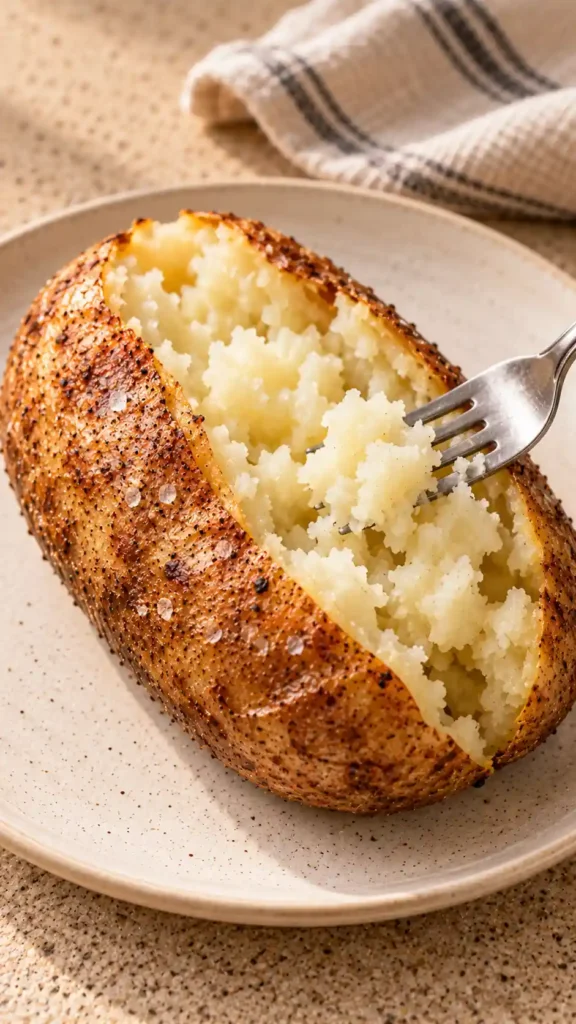
2. Vent steam the second the potatoes reach 208°F (98°C). If a baked potato sits uncut on the counter, trapped water vapor condenses back into the starch and turns the center heavy. Slice each potato lengthwise immediately, pinch the ends inward to pop the seam open, and lift the flesh with a fork.
3. Layer shredded cheddar before cold sour cream. Always scatter the shredded cheddar directly onto the steaming 200°F+ potato interior first. Adding cold sour cream before the cheese creates a thermal barrier that leaves the shredded cheddar stiff and unmelted.
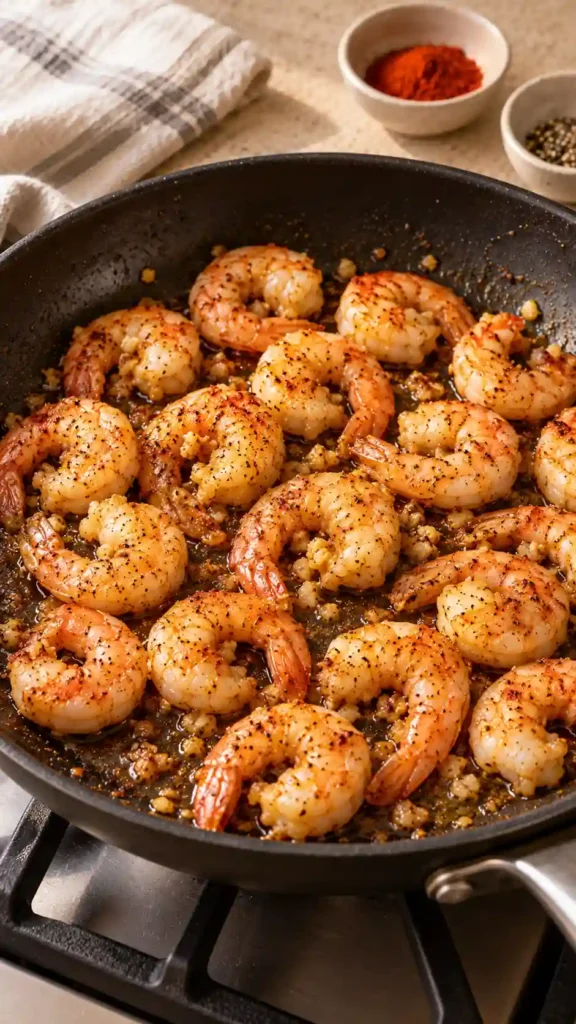
4. Sear dry shrimp in a single layer until they form a loose “C”. Pat thawed shrimp dry with paper towels so they sear instead of steaming in a 12-inch (30 cm) skillet. Pull the skillet off the heat as soon as the flesh turns pearly white and opaque with a gentle C-curl (145°F / 63°C); tightly coiled O-shaped shrimp are overcooked.
Troubleshooting Shrimp Baked Potatoes
- Potato center feels firm or waxy: The core temperature has not reached 205°F (96°C). Return the potato directly to the 400°F (200°C) oven rack for 10 to 12 minutes until a skewer glides through the thickest center without resistance.
- Shrimp pooled liquid in the skillet instead of browning: Wet shrimp or a crowded pan dropped the skillet temperature. Blot shrimp thoroughly with paper towels before tossing with oil and spices, and use a wide 12-inch (30 cm) skillet.
- Potato skin turned soft after baking: Wrapping potatoes in aluminum foil or resting them on a solid pan traps moisture underneath. Bake directly on the open wire rack and serve immediately after splitting.
The recipe card below contains the complete ingredients in US and metric measurements, step-by-step photos, and USDA nutrition facts for four loaded shrimp baked potatoes.
Shrimp Baked Potato Recipe
Equipment
- 12-inch skillet
- Instant-read thermometer
Ingredients
Baked Potatoes
- 4 medium russet potatoes (8 to 10 oz / 225 to 285 g each), scrubbed and dried
- 2 tablespoons extra-virgin olive oil (30 ml)
- 1 teaspoon coarse sea salt (6 g)
Garlic-Paprika Shrimp
- 1 pound medium raw shrimp (450 g, 26/30 or 31/40 count), peeled, deveined, and patted dry
- 2 tablespoons extra-virgin olive oil (30 ml), divided
- 3 cloves garlic (15 g), finely minced
- 1 teaspoon sweet or smoked paprika (2.3 g)
- 1 tablespoon fresh lemon juice (15 ml)
- ½ teaspoon kosher salt and freshly ground black pepper (3 g total, or to taste)
Loaded Toppings
- 1 cup shredded sharp cheddar cheese (113 g), freshly grated
- ½ cup full-fat sour cream (120 g)
- ¼ cup freshly chopped chives (12 g)
- ¼ cup cooked crumbled bacon bits (28 g, optional; or garnish with fresh chopped parsley and hot sauce)
Instructions
Bake the Russet Potatoes
- Preheat the oven to 400°F (200°C). Scrub and thoroughly dry the russet potatoes, pierce each potato 6 to 8 times with a fork so steam can escape, and rub the skins evenly with 2 tablespoons (30 ml) olive oil and 1 teaspoon (6 g) coarse sea salt. Bake directly on the middle oven rack for 50 to 60 minutes until the skins feel crisp and a thermometer or skewer inserted into the thickest center reaches 205°F to 210°F (96°C to 99°C) with zero firm resistance.
Sear the Garlic-Paprika Shrimp
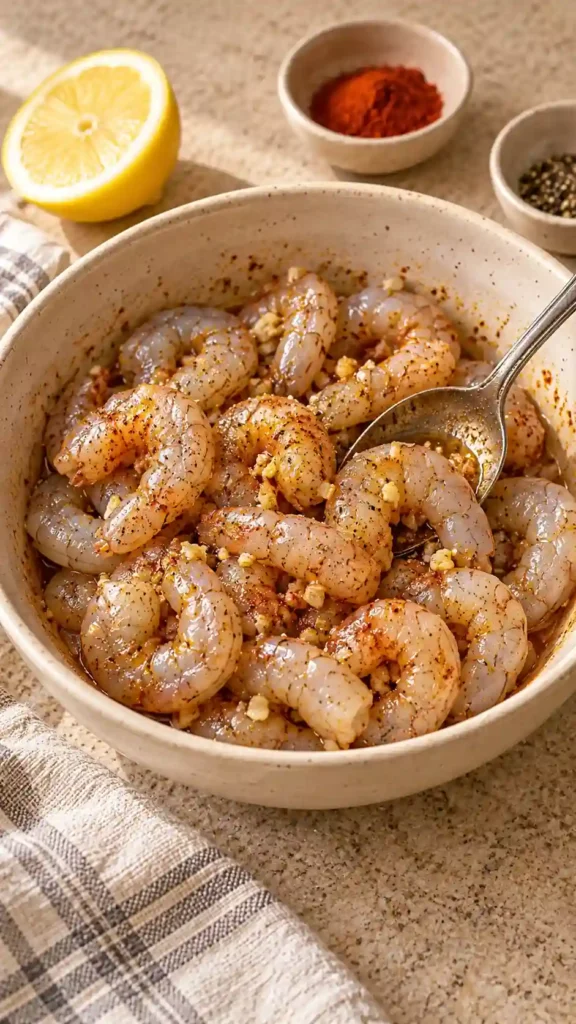
- During the final 10 minutes of baking, pat the peeled and deveined shrimp completely dry with paper towels. In a medium mixing bowl, toss the shrimp with 1 tablespoon (15 ml) olive oil, minced garlic, paprika, fresh lemon juice, kosher salt, and black pepper until evenly coated.
- Warm the remaining 1 tablespoon (15 ml) olive oil in a large 12-inch (30 cm) skillet over medium-high heat until shimmering. Arrange the shrimp in a single uncrowded layer and sear for 2 to 3 minutes per side until the flesh turns pearly opaque, the edges curl into a loose C-shape, and the internal temperature reaches 145°F (63°C). Transfer immediately off the heat so the shrimp stay juicy.
Fluff and Load the Potatoes
- Slice each hot baked potato lengthwise down the center, press both ends inward to pop the seam open, and fluff the starchy interior immediately with a fork to vent trapped steam.
- Scatter the shredded sharp cheddar directly over the steaming potato flesh so it melts on contact, then add a dollop of sour cream, spoon the warm garlic-paprika shrimp and skillet juices over top, and finish with chopped chives and optional bacon bits, parsley, or hot sauce.

Notes
Nutrition
Serving, Storage, and Reheating
Serve each stuffed shrimp baked potato immediately with extra lemon wedges, cracked black pepper, or hot sauce alongside a crisp green salad or roasted asparagus. If you enjoy rich seafood dinners, try our shrimp fettuccine Alfredo bake next, or pair your weekly menu with Greek lemon chicken and potatoes for another family-friendly potato meal.
Storage: Cool leftovers and store the baked potatoes, cooked garlic shrimp, and cold toppings in separate shallow, airtight containers in the refrigerator within 2 hours of cooking. Consume within 3 to 4 days (freezing assembled potatoes is not recommended, as thawed sour cream and russet starch separate and turn grainy).
Reheating: Reheat the plain baked potatoes unwrapped on a baking sheet at 350°F (175°C) for 15 to 18 minutes until hot, then add the cheddar and warm the shrimp gently during the last 3 minutes so the seafood stays tender. Verify leftovers reach an internal temperature of 165°F (74°C) with an instant-read thermometer in accordance with USDA leftovers and food safety guidelines.
Frequently Asked Questions
Can I use frozen shrimp for a shrimp baked potato?
Yes. Thaw frozen peeled and deveined medium shrimp (26/30 or 31/40 count) overnight in the refrigerator, or submerge them in a sealed leakproof bag in cold water for 15 to 20 minutes. Pat the shrimp completely dry with paper towels before tossing with olive oil, garlic, and paprika so they sear cleanly.
Can I bake the potatoes ahead of time?
Yes. You can bake the russet potatoes up to 2 days ahead, cool them, and refrigerate them in an airtight container. Reheat unwrapped at 350°F (175°C) for 15 to 20 minutes until the center reaches 165°F (74°C), then sear the fresh shrimp and load the toppings right before serving.
How do I make a Cajun or creamy shrimp baked potato?
For a Cajun shrimp baked potato, swap the paprika for 1 ½ teaspoons of unsalted Cajun seasoning. For a creamy shrimp topping, melt 1 tablespoon of butter in the warm skillet after removing the shrimp, whisk in ¼ cup of warm heavy cream and 2 tablespoons of freshly grated Parmesan for 60 seconds, and spoon the sauce over the loaded potato.
How should I store and reheat leftover shrimp baked potatoes?
Store the cooked potatoes, shrimp, and cold toppings in separate airtight containers in the refrigerator within 2 hours and use within 3 to 4 days. Reheat the potato first at 350°F (175°C), add the shrimp for the final 3 minutes until both reach 165°F (74°C), and finish with fresh sour cream and chives.