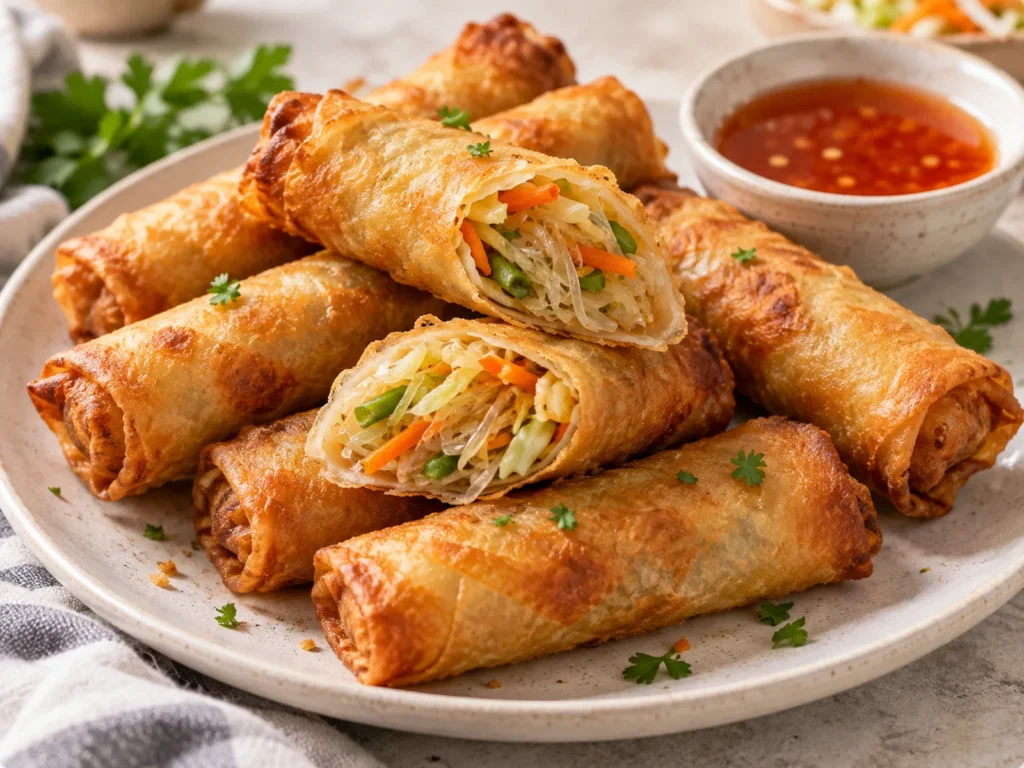
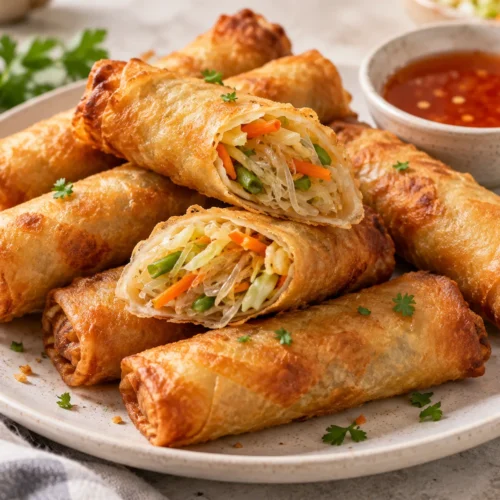
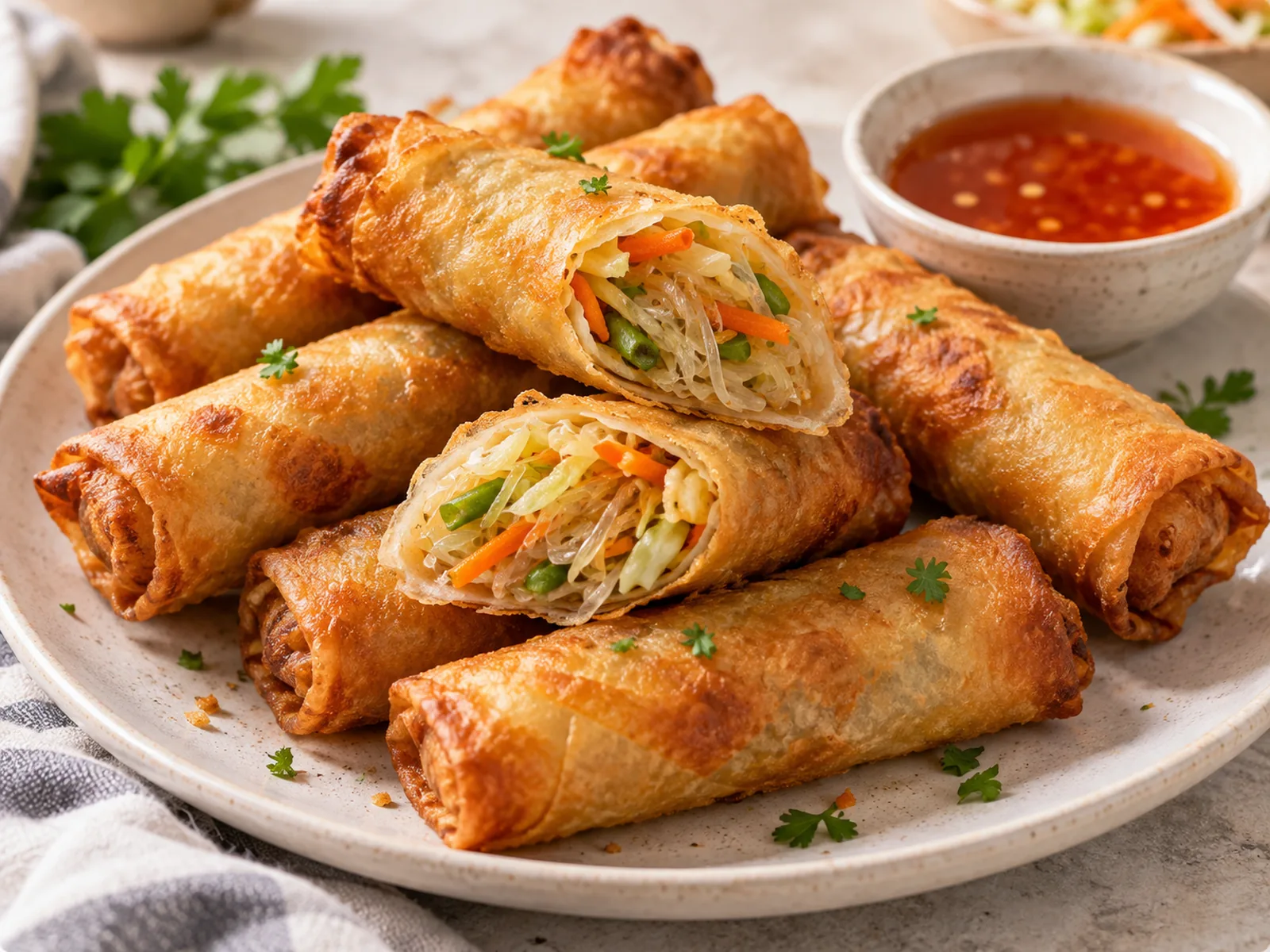
Lumpiang Sotanghon are crisp Filipino-style spring rolls filled with seasoned glass noodles and vegetables. This meatless version is designed for home cooks who want a crunchy appetizer or snack with familiar ingredients and clear visual cues for keeping the filling dry and the wrappers crisp.
What Is Lumpiang Sotanghon?
Sotanghon is the Filipino name commonly used for thin glass noodles. In this recipe, the noodles are softened, tossed with vegetables and savory seasonings, cooled, then wrapped in lumpia wrappers and fried until golden and crisp. If you shop in a US supermarket or Asian grocery store, look for packages labeled glass noodles, bean thread noodles, or mung bean noodles.
Why This Version Works for Busy Home Cooks
- Meatless filling: Glass noodles and vegetables keep the filling simple and flexible.
- Moisture control: Cooking off excess liquid before wrapping helps protect the crisp texture.
- Make-ahead friendly: The filling can be cooked and cooled before you are ready to wrap.
- Clear frying cue: The rolls are ready when the wrappers are evenly deep golden, crisp, and firm rather than leathery.
Ingredient Notes and Substitutions
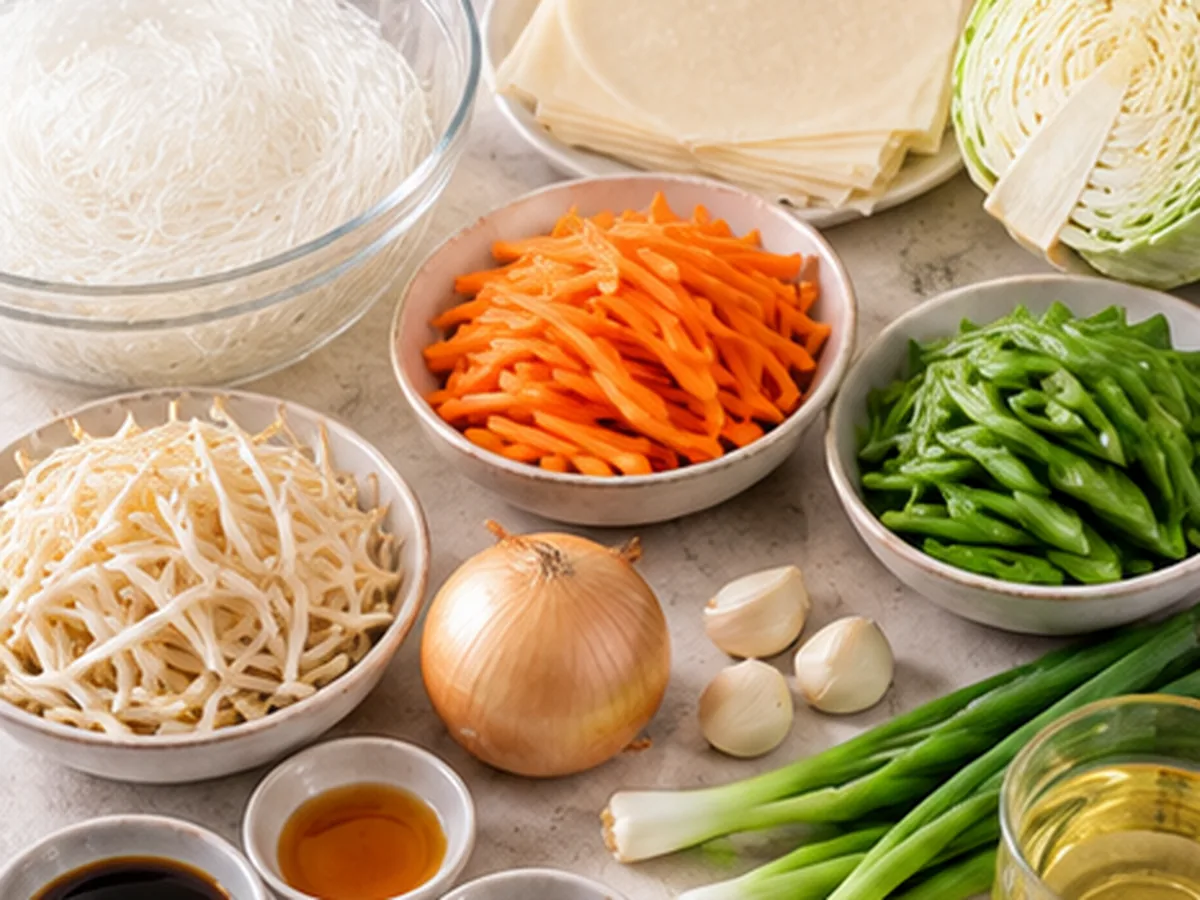
The key ingredient is sotanghon, or mung bean glass noodles. Green cabbage gives the filling body, while carrots, green beans, bean sprouts, garlic, onion, and green onions add texture and flavor. Soy sauce seasons the filling, and a small amount of toasted sesame oil adds aroma.
If mung bean glass noodles are unavailable, use another thin glass noodle that softens by soaking and remains springy after cooking. Keep substitutions similar in moisture and texture: very watery vegetables can make the wrappers harder to crisp. Lumpia wrappers give the thinnest, crispest result; thicker egg-roll wrappers will create a different texture and should not be treated as an exact substitute.
How to Keep Lumpia Crisp
- Drain the noodles well. Water left on the sotanghon goes straight into the filling.
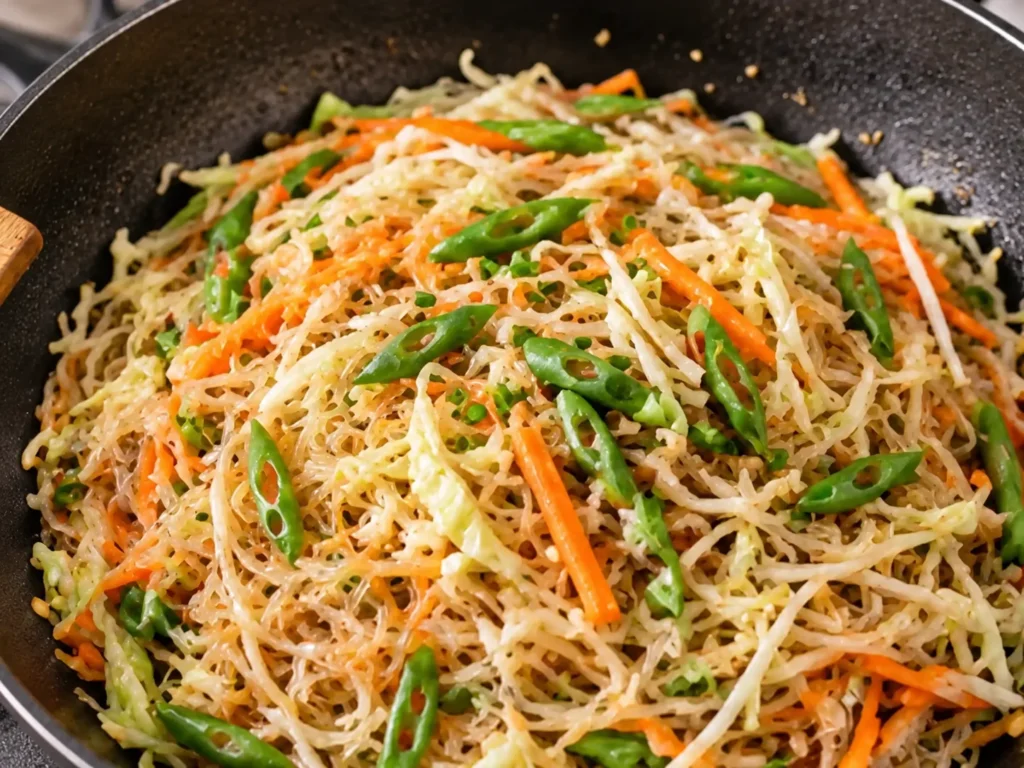
- Cook off visible liquid. The finished filling should be lightly glossy, not wet.
- Cool the filling before wrapping. Steam trapped inside the wrapper works against crispness.
- Do not overfill. A compact roll is easier to seal and less likely to split.
- Fry in batches. Crowding the pan can lower the oil temperature and slow browning.
- Drain on a wire rack. Stacking hot rolls traps steam underneath them.
Serving Ideas
Serve Lumpiang Sotanghon while the wrappers are still crisp, with your preferred dipping sauce and a fresh side. For a larger appetizer spread, pair them with crispy Parmesan zucchini fries or fried salmon bites.
Make Ahead and Storage
The cooked filling can be prepared ahead, cooled promptly, covered, and refrigerated before wrapping. For best texture, refrigerate cooked lumpia for up to 3 days and reheat in an oven or air fryer rather than a microwave. For food safety, reheat leftovers to 165°F. USDA food safety guidance recommends refrigerating perishable cooked foods within 2 hours.
Lumpiang Sotanghon Recipe
Lumpiang Sotanghon
Equipment
- Large bowl
- Colander
- Large skillet or wok
- Sheet pan or large plate
- Heavy skillet, sauté pan, or Dutch oven for frying
- Instant-read or frying thermometer
- Wire rack set over a sheet pan
Ingredients
For the filling
- 4 oz dried sotanghon or mung bean glass noodles
- 1 tbsp neutral cooking oil
- 3 cloves garlic minced
- 1/2 medium yellow onion finely sliced
- 1 cup carrots cut into thin matchsticks
- 1 cup green beans thinly sliced on the diagonal
- 2 cups green cabbage finely shredded
- 1 cup bean sprouts drained well
- 2 tbsp soy sauce
- 1 tsp toasted sesame oil
- 1/4 tsp ground black pepper
- 2 green onions thinly sliced
For wrapping
- 12 lumpia wrappers
- 2 tbsp water for sealing
For frying
- neutral frying oil enough for about 1 to 1 1/2 inches of oil in the pan
Instructions
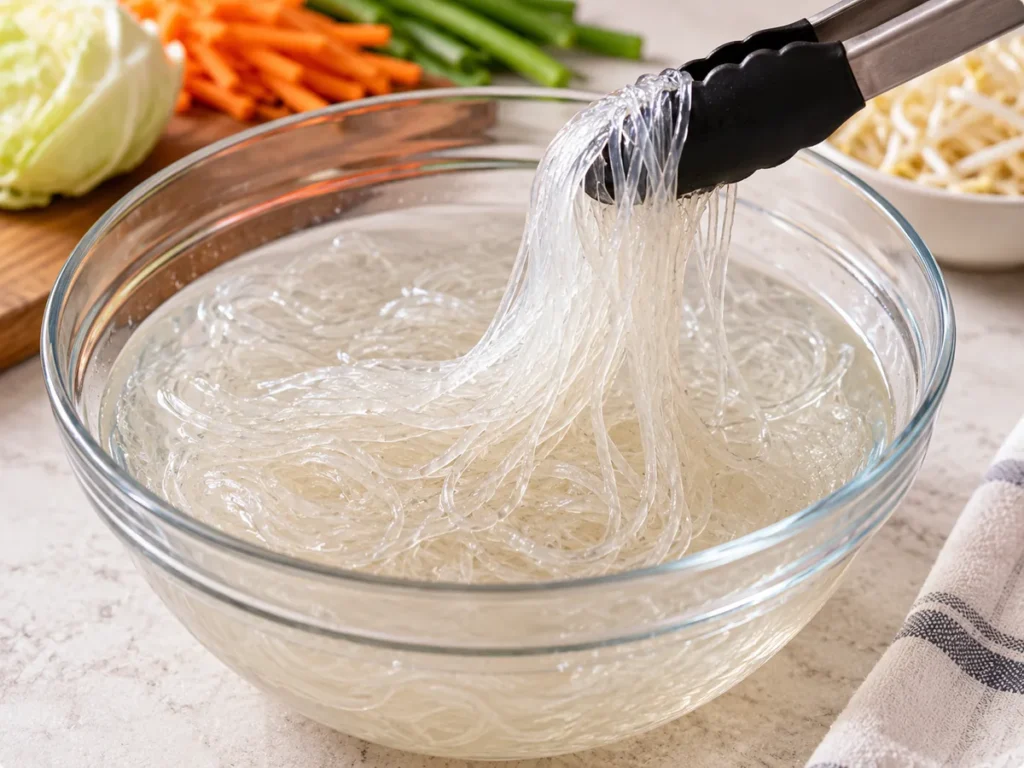
- Place the dried sotanghon in a bowl and cover with warm water. Soak until flexible but still slightly firm. Drain very thoroughly, then cut the noodles into shorter, easy-to-wrap lengths.
- Heat 1 tablespoon neutral oil in a large skillet over medium-high heat. Add the garlic and onion and cook, stirring, until fragrant and the onion begins to soften. Add the carrots and green beans and cook for about 2 minutes.
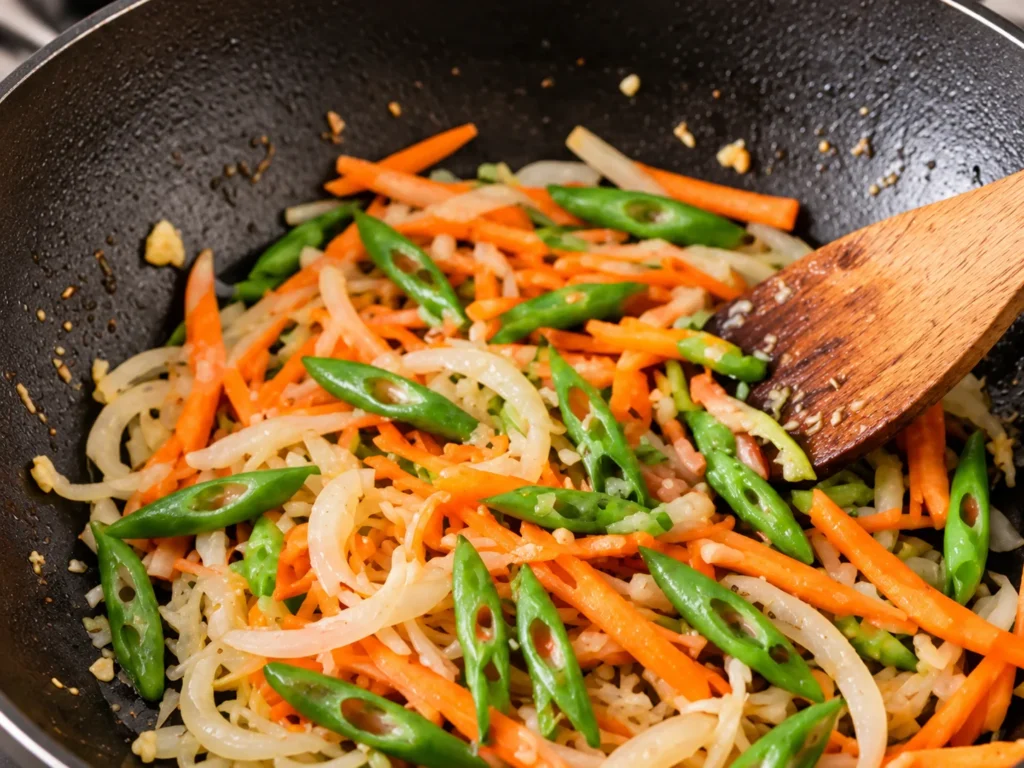
- Add the cabbage and bean sprouts. Cook while tossing until the cabbage begins to wilt but the vegetables still retain some structure. There should be no pool of liquid at the bottom of the pan.
- Add the drained noodles, soy sauce, sesame oil, black pepper, and green onions. Toss until the noodles absorb the seasoning and are tender but still separate. Cook off any visible excess moisture, then remove from the heat.
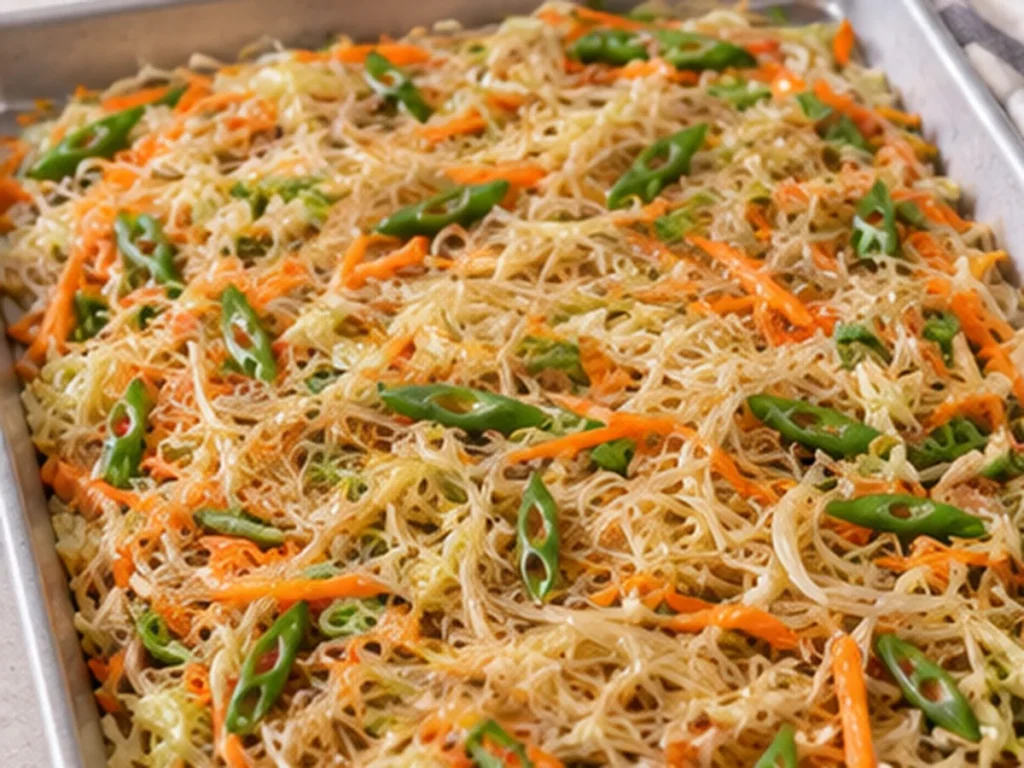
- Spread the filling in a relatively thin layer on a sheet pan or large plate. Let it cool until no longer warm. Do not wrap hot filling.
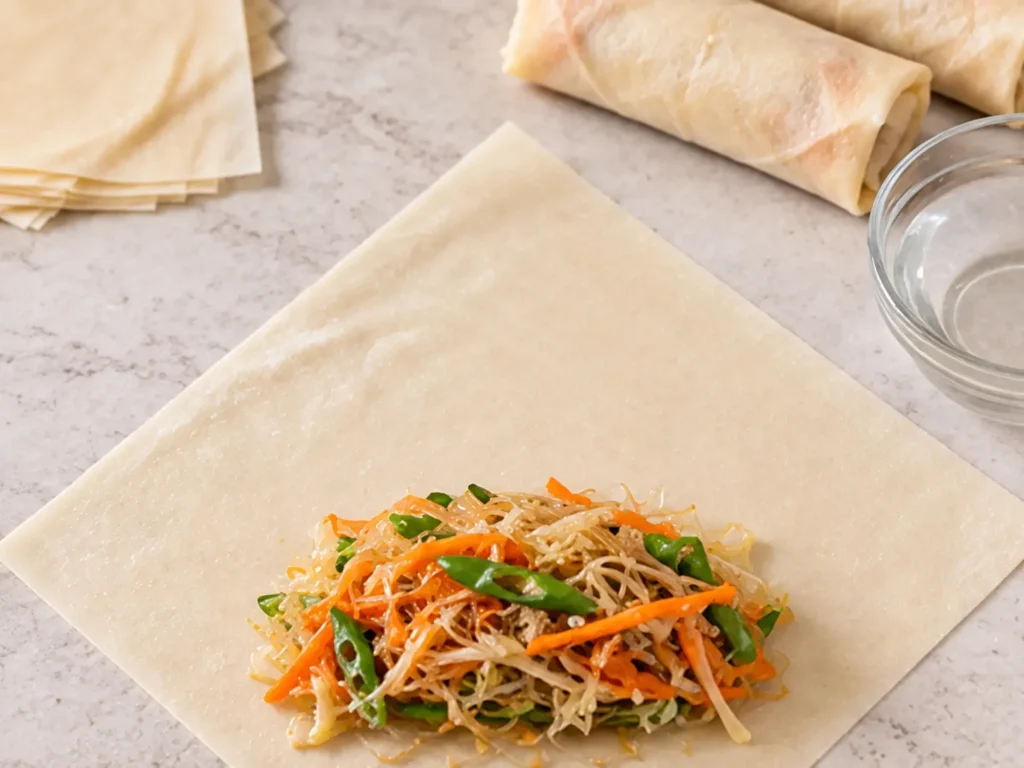
- Place one wrapper in a diamond position. Add about 1/3 cup filling across the lower third, leaving space around the edges. Fold the bottom corner over the filling, fold both side corners inward, and roll firmly without tearing. Moisten the final corner lightly with water and seal. Repeat to make 12 rolls.
- Heat about 1 to 1 1/2 inches neutral oil to 350°F.
- Working in batches so the pan is not crowded, carefully lower the lumpia into the oil. Fry, turning as needed, until evenly deep golden, crisp, and firm rather than leathery, about 3 to 4 minutes per batch. Transfer to a wire rack and do not stack while hot.
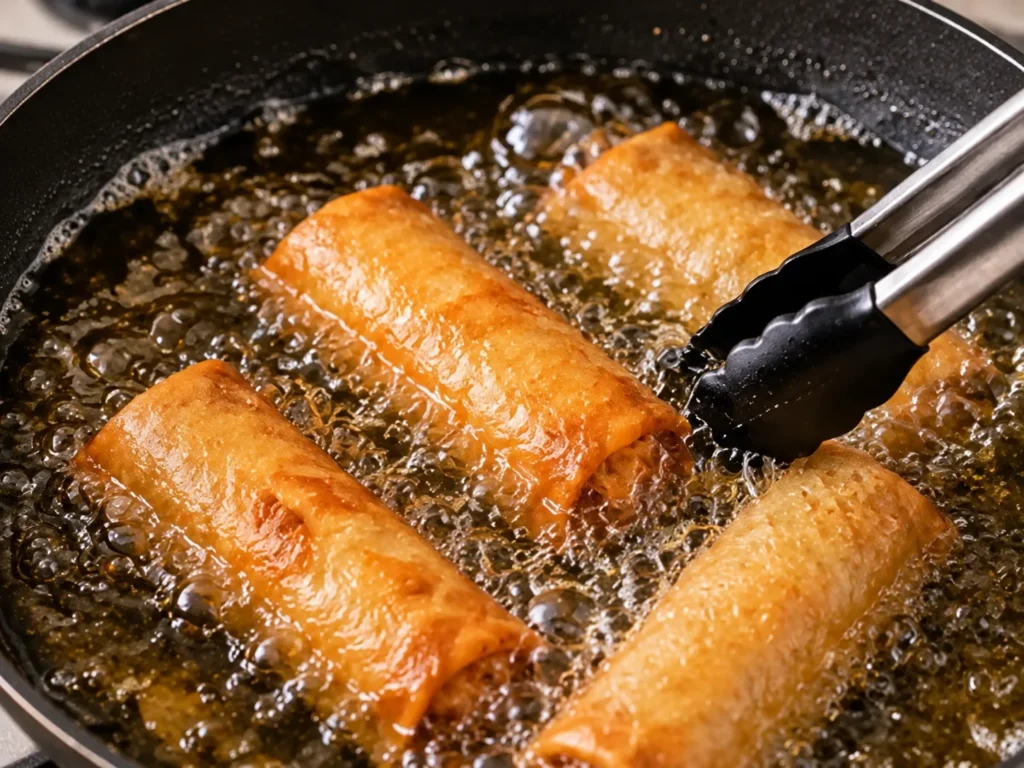
- Let the rolls stand for a few minutes so the filling is not dangerously hot, then serve while crisp with your preferred dipping sauce.
Notes
Nutrition
Frequently Asked Questions
What kind of noodles are used in Lumpiang Sotanghon?
This version uses thin mung bean glass noodles, often sold as bean thread noodles or glass noodles in US stores.
Why did my lumpia turn soggy?
The most common texture problems are a wet filling, wrapping while the filling is still warm, overcrowding the frying pan, or stacking the rolls immediately after frying.
Can I make the filling ahead of time?
Yes. Cook the filling, spread it out so it cools promptly, then cover and refrigerate it until you are ready to wrap the lumpia.
Can I use egg-roll wrappers?
You can, but the result will be thicker and less delicate than lumpia made with thin lumpia wrappers.